

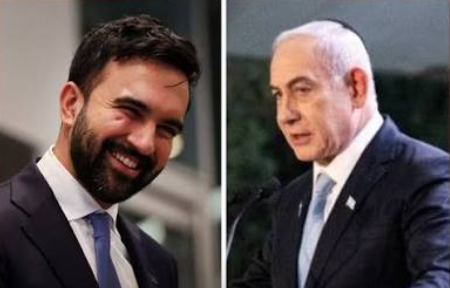

A public dispute has erupted between Donald Trump and Mayor Zohran Mamdani over whether Benjamin Netanyahu could face arrest if he visits the United States later this year for the United Nations General Assembly in New York.
The disagreement follows remarks by Mayor Mamdani, who said his administration is examining whether there is any legal basis to arrest Netanyahu during a planned visit to New York.
Mamdani said the city’s legal team is reviewing its options in light of the International Criminal Court (ICC) arrest warrant issued against the Israeli leader over alleged war crimes and crimes against humanity related to the Gaza conflict.
Israel rejects the allegations, disputes the ICC’s jurisdiction, and has described the warrant as politically motivated.
President Trump dismissed the possibility of any arrest, declaring that Netanyahu “will not be arrested” while in the United States.
In a post on Truth Social, Trump said the Israeli prime minister would not be detained “in any way, shape, or form,” signaling that his administration would not permit such action during Netanyahu’s visit.
The dispute has intensified debate over the legal authority of local officials and the role of international law in the United States. Legal experts note that the United States is not a member of the International Criminal Court and does not recognize the court’s jurisdiction.
They also argue that matters involving foreign leaders and international diplomacy generally fall under federal authority rather than the jurisdiction of a city government, making any attempt by New York officials to arrest a visiting head of government legally uncertain.
Netanyahu is expected to travel to New York in September to attend the annual UN General Assembly, where world leaders gather for high-level meetings.
His planned visit is likely to draw significant international attention as the disagreement between the White House and New York City continues to fuel political and legal debate over the limits of local authority, U.S. foreign policy, and the enforcement of international court warrants.