




For years, foreign passports have quietly become a lifeline for parts of Somalia’s political elite, offering easier international travel than the country’s own passport can provide.
The Somali passport remains among the world’s weakest travel documents. As of 2026, Somalia passport ranks 99th globally on the Henley Passport Index allowing access to only 32 destinations through visa-free or visa-on-arrival arrangements.
But Kenya’s crackdown on illegally obtained identity documents has now turned that long-standing practice into a political crisis, exposing questions about citizenship, corruption and accountability among Somalia’s senior officials.
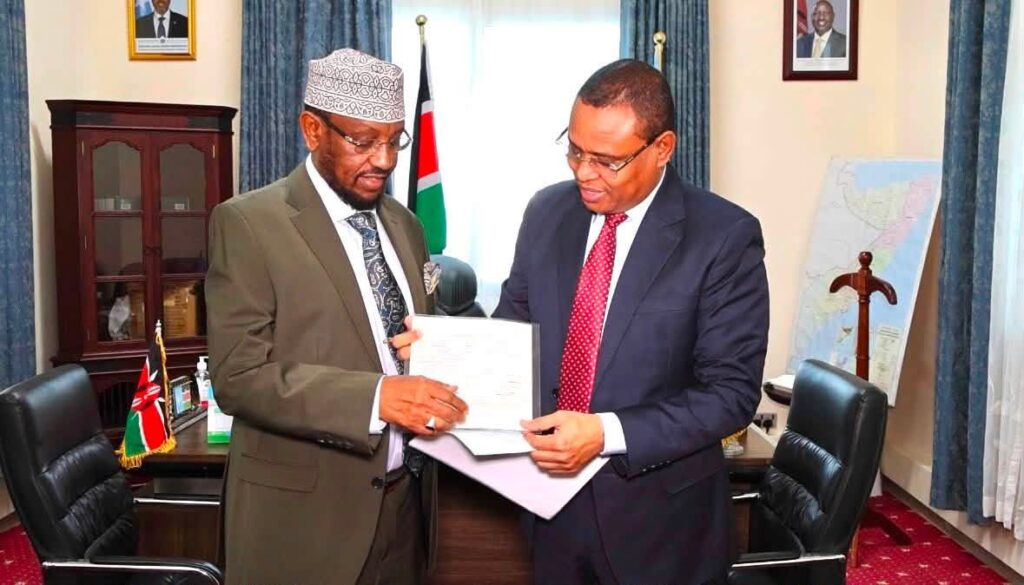
The controversy erupted after Somalia’s Deputy Prime Minister Jibril Abdirashid Haji was deported on late June from Jomo Kenyatta International Airport (JKIA) in Nairobi after Kenyan authorities questioned the legitimacy of his Kenyan passport. On August 3, he announced that he returned the document, following pressure from Somalia’s leadership.
“I have decided to return my Kenyan passport which I had for over twenty years,” he said defending that he obtained the document “legally” even though Kenyan authorities said he acquired “illegally“.
The incident was followed within weeks by the denial of entry and deportation of another Somali government official, Abshir Ahmed Mohamed, the state minister for presidency, over a disputed Kenyan passport, deepening concerns in Mogadishu.
The two incidents created significant embarrassment for Somalia’s government and forced President Hassan Sheikh Mohamud to address the issue directly.

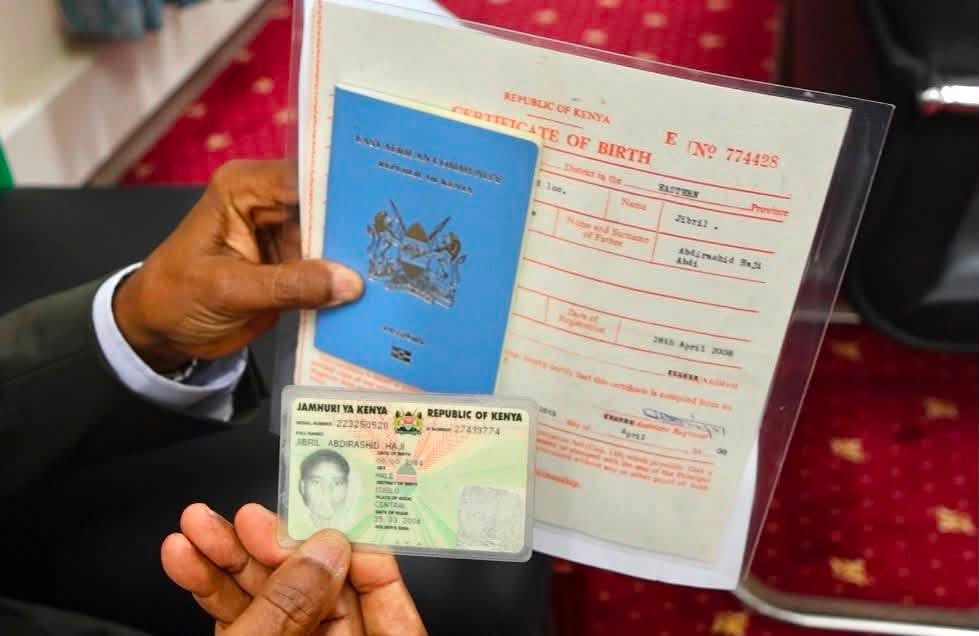
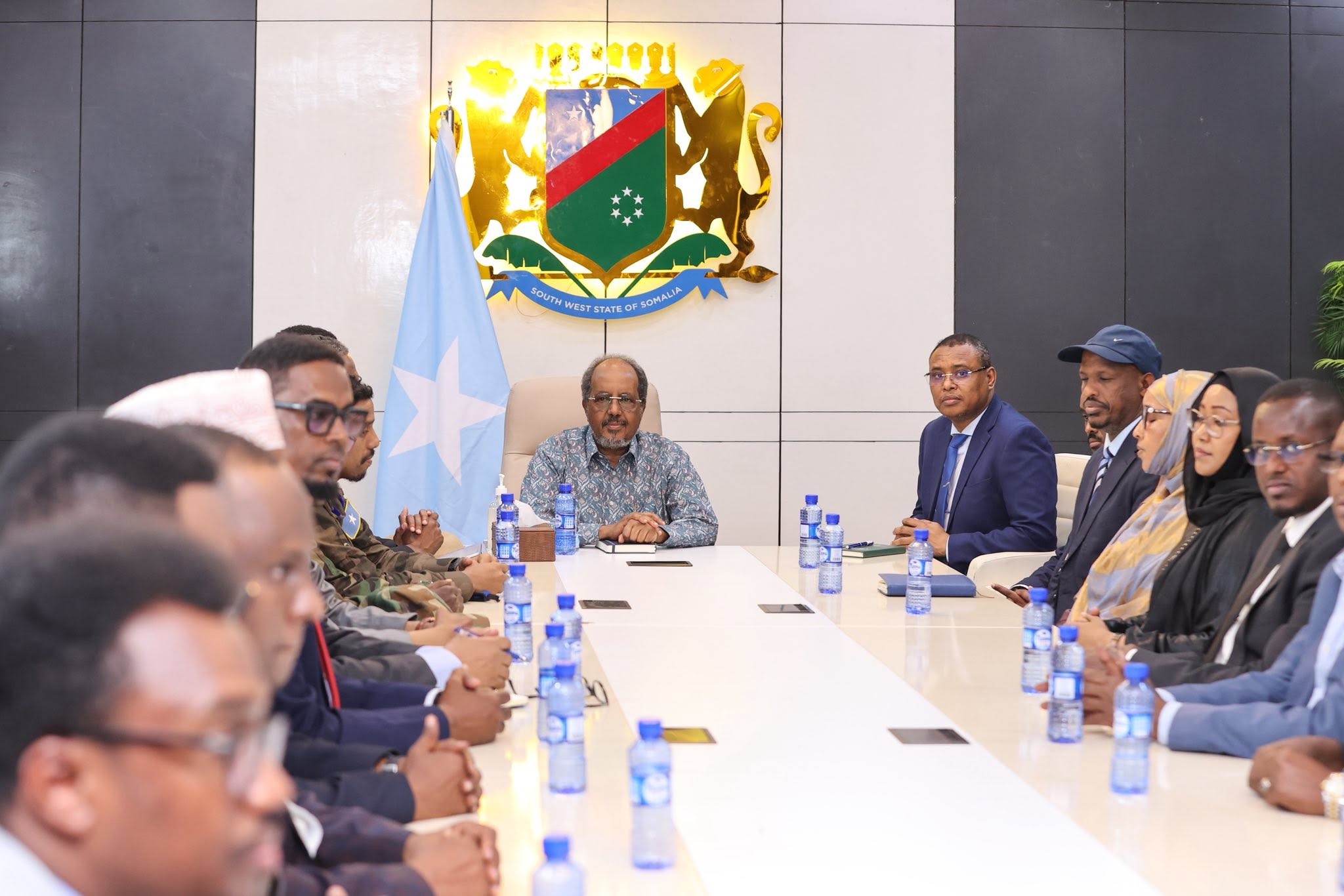
During a cabinet meeting on Thursday, 30 July, the president reportedly told ministers holding Kenyan passports that they had two choices: surrender the documents or leave the cabinet.
The directive reflected growing frustration inside Villa Somalia over the political damage caused by the deportations and the perception that senior officials were relying on foreign citizenship while representing the Somali state.
A passport more valuable than politics
The roots of the controversy lie in Somalia’s weak international travel position.
The Somali passport remains one of the least powerful travel documents globally, making international travel difficult even for government officials attending diplomatic meetings, regional summits and international conferences.
For many Somali elites, a Kenyan passport has provided a practical solution.
Kenya’s passport offers greater international mobility, easier access to many countries and fewer visa restrictions. For politicians, businessmen and officials with links to Kenya, obtaining Kenyan nationality has often been viewed as a strategic advantage.
But Kenya insists that citizenship documents must only be issued to those legally entitled to them.
Kenyan authorities have warned that passports and national identity cards are reserved for citizens and that individuals who acquired them through fraudulent means will face action.
The crackdown comes amid a wider debate in Kenya over corruption within immigration and registration systems.
For years, Kenyan citizens and politicians have raised concerns that corrupt officials facilitated the illegal issuance of national identity cards and passports to foreigners.
The alleged sale of identity documents has become a major national security concern, with critics warning that weak controls allow non-citizens to obtain official documents that provide access to travel, banking and other state services.
Kenya’s recent immigration reforms are aimed at strengthening verification systems and identifying individuals who may have obtained citizenship documents improperly.
The Somali community has come under particular scrutiny because of the deep historical, economic and family links between the two countries.
Somalia admits there is a passport problem
Somali officials have acknowledged that the controversy has exposed a real challenge.
State Minister for Foreign Affairs Ali Omar recently said the government was aware of the deportations but defended Kenya’s authority to control entry into its territory.
“We are aware that two officials were deported. It is Kenya’s right to reject anyone they do not want to enter their country. The issue of passports is also a problem,” Ali Omar said.
His comments marked one of the rare acknowledgements from Somalia’s government that the issue goes beyond individual cases and reflects a broader challenge involving foreign documents held by Somali officials.

The scale of foreign passport ownership among Somali officials remains unclear.
Estimates circulating among officials and political observers suggest that between 40 and 50 percent of Somali government officials may hold Kenyan passports, although there is no publicly available official register confirming the figure.
Kenyan officials have repeatedly raised concerns that some non-citizens obtained documents through corruption or irregular procedures.
The controversy has now forced Somalia to confront difficult questions: How many government officials hold foreign citizenship? And should senior officials representing Somalia continue holding passports from neighbouring countries?
The debate is unlikely to end with Kenya.
Many Somali politicians and officials are also believed to hold Ethiopian, Djiboutian and Ugandan passports due to decades of migration, business links, education and political relationships.
Ethiopia, which has played a major security and political role in Somalia, could face similar questions if Somali officials possess Ethiopian citizenship without fulfilling legal requirements.
Uganda, another important security partner and long-time contributor to African Union missions in Somalia, could also face scrutiny.
The issue is particularly sensitive because both countries have significant influence in Somalia’s political and security affairs.
“A national embarrassment”
The controversy has also triggered criticism from Somali commentators and analysts.
Abdirashid Jibril, commenting on the issue, said the passport crisis reflects a deeper problem of confidence in Somalia’s own institutions and the reliance of officials on foreign systems.
“I known many Somalis are currently trapped at the Kenyan airports and their documents confiscated. I urge all those who hold Kenyan passports to surrender the document and let’s have confidence in our passport,” he said.
The debate highlights a contradiction at the heart of Somalia’s state-building efforts.
While Somali leaders represent a sovereign country internationally, many rely on foreign passports because their own national travel document remains weak.
The foreign passport controversy is now bigger than immigration.
It has become a question of governance, transparency and trust.
For ordinary Somalis, obtaining passports and travelling internationally remains difficult. Meanwhile, some members of the political elite have found alternative routes through foreign citizenship.
Kenya’s crackdown has therefore exposed a sensitive reality: Somalia’s political class has often relied on foreign passports to overcome the weaknesses of its own state.
The coming months may determine whether the passport controversy becomes a short-lived political embarrassment or a deeper reform moment forcing Somalia to examine citizenship, accountability and the credibility of those who govern.