




Questions are mounting over the role of Mogadishu’s elected district councillors, as the Banadir Regional Administration continues appointing district commissioners despite the election and swearing-in of local council members who were expected to select their own district leaders.
The latest appointment, involving a new commissioner for Bondhere District, has revived debate over the future of the Banadir local councils, the authority granted to elected representatives and the reasons district leadership elections have yet to take place.
The situation has raised concerns about whether the council system has been suspended, whether the process is awaiting a legal decision or whether the regional administration intends to continue making appointments until a political or institutional agreement is reached.
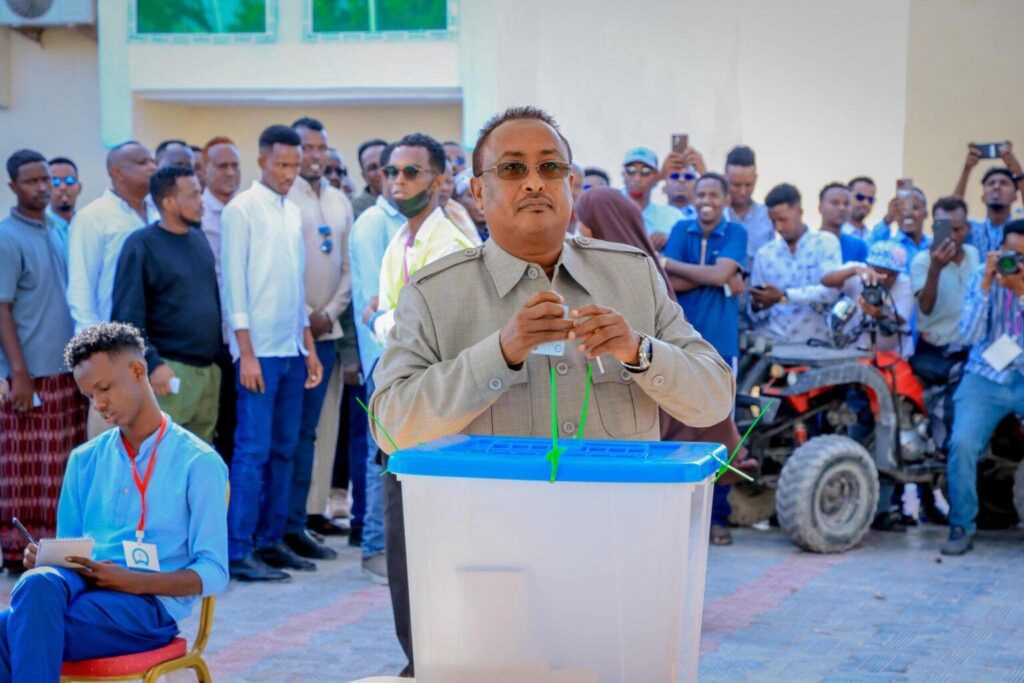
Elections for the Banadir Regional District Councils were held on December 25, 2025, producing 390 members representing the capital’s 16 districts.
The councillors were sworn in in Mogadishu on April 2, 2026, with expectations that they would participate in establishing district administrations, including selecting commissioners and their deputies.
According to information presented during the swearing-in ceremony, the elected councils were expected to choose district commissioners as part of the new local government framework.
The arrangement had raised expectations that Mogadishu residents would gain a more direct role in determining who leads their respective districts.
However, several months after the councillors took their oaths, the anticipated process of electing district commissioners has yet to be fully implemented. Instead, the regional administration has continued appointing officials to head district administrations.
In May 2026, Federal Minister of Interior, Federal Affairs and Reconciliation Ali Yusuf Ali, known as Xoosh, announced that elections for district commissioners would begin after the Eid holiday.
He said elected local councillors would select both commissioners and their deputies, describing the process as an important stage in establishing local government institutions.
The councillors had also been provided with training covering their responsibilities, district administration, public services and the legal procedures governing local councils.
Despite these preparations and the minister’s announcement, the elections have been delayed, with no publicly confirmed timetable explaining when individual districts will hold their votes.
The central disagreement concerns whether district commissioners should be appointed by the Banadir regional governor or elected by members of the local councils.
On April 30, 2026, the National Independent Electoral and Boundaries Commission challenged appointments made by Banadir Governor and Mogadishu Mayor Hassan Mohamed Hussein Muungaab.
The commission argued that the elected district councils were the legally recognised bodies responsible for local administration and that commissioners and their deputies should be selected from among council members.
It also maintained that decisions contradicting this arrangement lacked a legal basis.
The Banadir administration, however, has continued making appointments and removing district commissioners, leaving the disagreement unresolved and creating uncertainty over how the new local government structure is supposed to operate.
The latest development came when Governor Muungaab appointed Mohamed Abdullahi Omar, widely known as Deeyow, as the new commissioner of Bondhere District. He replaced the outgoing commissioner, Abdullahi Hassan Sheikh Abdi.
Following the appointment, Muungaab reportedly urged the new commissioner to prioritise development, improve the district’s appearance and expand access to essential public services.
The decision was announced without a clear indication of when Bondhere’s elected councillors would meet to select their district commissioner, bringing renewed attention to the apparent gap between the local council system and the appointment process being followed by the regional administration.
There has been no comprehensive official explanation for why the district leadership elections have not been completed despite the existence of elected and sworn-in councillors.
Available information, however, points to several issues requiring clarification.
These include the division of authority between the Banadir governor and local councils, the implementation of the electoral framework and the role of the Ministry of Interior in ensuring that the new local government system becomes operational.
The Electoral Commission has maintained that district councils should elect their commissioners, while the regional administration’s continued appointments reflect a different approach. The Interior Minister’s earlier promise to hold elections after Eid has also left questions about why the announced timetable was not implemented.
The Ministry of Interior is expected to play a central role in clarifying the legal and administrative arrangements governing local councils.
Residents and elected representatives need clear information about the election schedule, the procedures to be followed and the institution responsible for overseeing the process.
The continued appointments have placed the regional administration under pressure to explain why it is selecting district commissioners while elected councils remain in place.
Key questions include whether there is a legal provision permitting the governor to continue making appointments, what has prevented the promised council elections from taking place and when elected representatives will be allowed to exercise the responsibilities assigned to them.
The administration also needs to clarify how its appointment decisions fit within the local government framework established following the December 2025 elections.
The issue goes beyond the selection of individual district officials. It concerns the legal structure of local administration, the distribution of authority and whether the elected councils will be able to exercise the powers they were established to hold.
The December 25, 2025, elections raised expectations among Mogadishu residents that their votes would give them a greater influence over the administration of their districts.
The 390 elected councillors were expected to represent local interests and contribute to improving sanitation, public services, district development and accountability within local administrations.
If those representatives are unable to exercise the responsibilities envisaged for them, questions will inevitably arise about the purpose and practical impact of the new local government system.
It is also important to establish a clear distinction between the responsibilities of elected councils and those of executive district administrations. Clearly defined roles would help prevent overlapping authority, institutional disputes and disruptions to local services.
The current situation presents a contrast between the existence of elected and sworn-in local councils and the continued use of appointments to fill district leadership positions.
The selection of a new commissioner for Bondhere has once again highlighted the absence of a clear explanation for why the promised elections have not taken place.
The relevant authorities now face growing pressure to clarify the status of the process, explain the reasons for the delays and provide a timetable for allowing the councils to fulfil their expected responsibilities.
At the heart of the debate is a fundamental question: what was the purpose of electing 390 members to the Banadir district councils if district commissioners are still being appointed through official decrees rather than selected by the elected representatives?