




Somalia and Somaliland have long held differing positions on issues of governance, security, and statehood. One of the most frequently debated distinctions between the two is how they manage security and the role foreign military forces play in their respective territories.
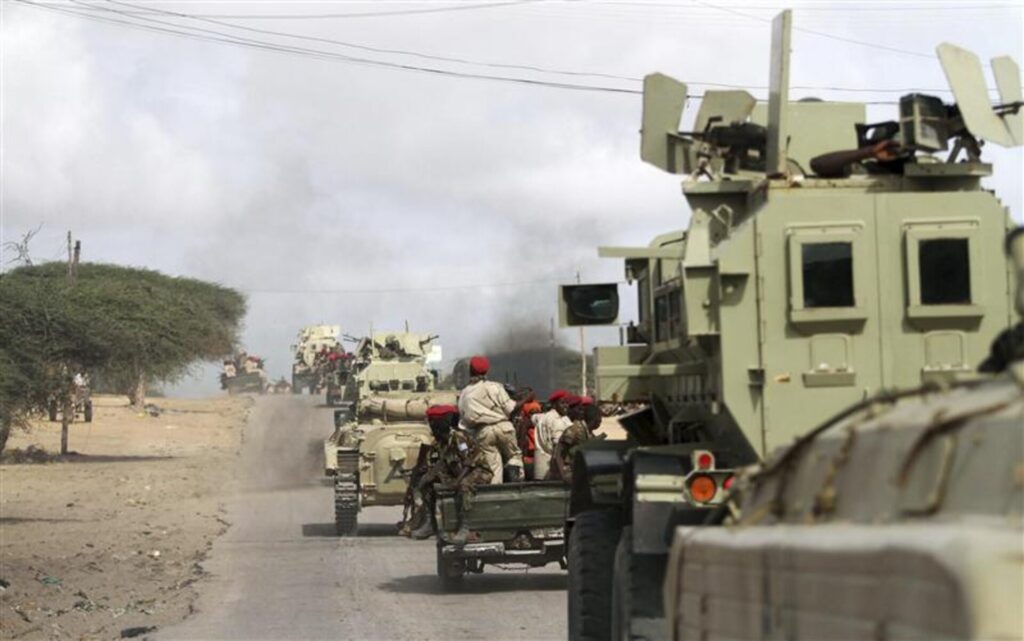
For decades, Somalia has relied on international security assistance, with African Union forces supporting the federal government in its fight against Al-Shabaab and efforts to strengthen national security institutions.
Somaliland, which has operated as a self-governing administration since 1991, does not host a foreign peacekeeping mission comparable to that in Somalia and largely depends on its own security forces and institutions.
This contrast has fueled debate over whether the presence of foreign troops is a sign of state weakness or a temporary measure designed to help stabilize a country facing significant security challenges.
Somalia currently hosts the African Union Support and Stabilization Mission in Somalia (AUSSOM). In December 2025, the United Nations Security Council extended the mission’s mandate until December 31, 2026.
AUSSOM’s mandate includes supporting Somalia’s fight against Al-Shabaab, protecting civilians, and helping strengthen Somali security institutions.
The foreign troops deployed under AUSSOM do not operate as an independent governing force. Rather, they function under an internationally approved framework involving both the African Union and the Federal Government of Somalia.
The African Union has stated that AUSSOM works closely with Somali authorities and security forces, with the long-term goal of gradually transferring full security responsibilities to Somali institutions.
The mission is therefore intended as part of a transition process aimed at enabling Somalia to eventually assume complete responsibility for its own security.
Somalia continues to face a prolonged insurgency from Al-Shabaab, which has maintained influence in parts of the country for years.
Building a fully capable national military requires time, resources, training, and equipment, making international support a significant component of Somalia’s current security strategy.
The United Nations and the African Union have repeatedly emphasized that the mission is designed to reduce dependence on international forces over time.
AUSSOM includes transition phases intended to strengthen Somali security forces and prepare them to independently manage national security.
The presence of foreign troops, however, does not automatically determine whether a country is sovereign.
Somalia remains an internationally recognized state, a member of both the United Nations and the African Union, and possesses a federal government, constitution, parliament, military, and state institutions.
While some observers argue that long-term reliance on foreign forces may indicate that domestic security capacity remains incomplete, that political debate is distinct from the legal question of sovereignty.
Under international law, Somalia’s status as a sovereign state remains unchanged by the presence of foreign peace support missions operating with government consent and international authorization.
Somaliland presents a different model. Since declaring that it restored its independence in 1991, it has maintained its own military, police, and security institutions without hosting an international peacekeeping force similar to AUSSOM.
Supporters of Somaliland frequently cite this as evidence of effective local governance and security management. They argue that Hargeisa has maintained internal stability through locally controlled institutions rather than international military support.
The discussion is further complicated by the strategic importance of Berbera. Located near the Gulf of Aden and major Red Sea shipping routes, Berbera’s port and airport have attracted growing international interest.
Various reports have documented economic and security ties between Somaliland and foreign partners, including investment projects and security cooperation.
Analysts have also highlighted Berbera’s strategic military significance, noting its value for logistics and regional maritime security.
Recent international reporting has raised questions about new infrastructure developments in Berbera and the possibility that foreign powers could seek greater access to the area.
Such reports differ fundamentally from a formal peacekeeping mission like AUSSOM and relate instead to strategic partnerships, infrastructure projects, and potential military cooperation.
Supporters of Somaliland often point to the absence of foreign peacekeeping forces as evidence of self-reliance. However, Somaliland also maintains security, economic, and diplomatic relationships with external partners.
Military training programs, port investments, and security cooperation initiatives demonstrate that it is not isolated from international engagement.
The most significant difference between Somalia and Somaliland therefore lies not in whether they have foreign relationships, but in the type of security support they receive.
Somalia hosts an internationally mandated security mission that directly assists national forces in counterinsurgency and stabilization operations.
Somaliland, by contrast, relies primarily on local security institutions while engaging in foreign partnerships focused on training, investment, and cooperation rather than peacekeeping.
This distinction influences perceptions of each side’s ability to manage its own security environment.
Some analysts argue that effective security management can contribute to economic growth, trade, and stronger institutions. However, security alone does not determine overall development.
Economic performance, governance, infrastructure, education, healthcare, investment, and political stability all play major roles in shaping a society’s progress. The presence or absence of foreign troops is only one factor among many.
Somalia continues to face serious security challenges but is also investing in the development of its national armed forces.
The African Union has repeatedly stated that its objective is to enable Somali forces to eventually assume full responsibility for the country’s security.
Somaliland, meanwhile, operates its own security institutions but faces separate political, economic, and territorial challenges, including disputes in contested regions and its ongoing quest for international recognition.
The most significant difference between the two remains their international status. Somalia is internationally recognized as a sovereign state and a member of the United Nations and the African Union.
Somaliland maintains that it restored its independence in 1991 and has spent decades seeking international recognition.
However, the United Nations, the African Union, and most countries continue to recognize Somaliland as part of Somalia and support Somalia’s territorial integrity.
As a result, Somalia and Somaliland occupy very different positions under international law despite their differing approaches to security governance.
Looking ahead, AUSSOM provides Somalia with important security support while also placing pressure on the government to build a self-sustaining national security architecture.
The mission’s future remains the subject of ongoing discussions regarding funding, timelines, and transition arrangements.
For Somaliland, the challenge remains translating its internal governance and security structures into broader international recognition while managing regional and geopolitical dynamics.
Ultimately, the presence of foreign troops alone does not determine whether a state is sovereign.
More important factors include who legally governs the territory, who controls national institutions, who sets security policy, and whether those institutions can ultimately maintain security and authority independently over time.