




Political and security tensions in Somalia’s Southwest State continue to escalate as officials and politicians aligned with rival factions exchange increasingly sharp accusations amid an ongoing power struggle in the region.
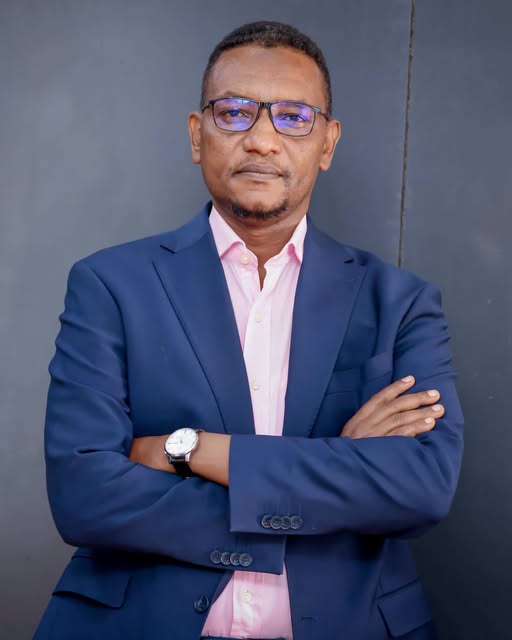
Hassan Abdi Mohamed, a minister aligned with former Southwest President Abdiaziz Hassan Mohamed “Laftagareen,” has accused former President Hassan Sheikh Mohamud of treating Southwest residents differently based on their political loyalties.
According to the minister, individuals who support the federal government are welcomed, while those who hold opposing political views are portrayed as opponents of the state.
The minister also commented on reports of airstrikes in parts of Southwest State, particularly around Baidoa. He claimed that some people celebrate reports that Turkish aircraft have targeted areas where forces loyal to Laftagareen are present.
His remarks amounted to a strong political criticism of Hassan Sheikh and reflected growing tensions between the two sides. He argued that supporters and opponents of the federal government are not treated equally, a claim that has not been independently verified.
The political dispute in Baidoa has increasingly evolved beyond a contest for political leadership and now involves security forces, military deployments, and competing claims of legitimacy.
Laftagareen, who previously served as President of Southwest State, announced his resignation on March 30, 2026, following a prolonged dispute with the Federal Government of Somalia. Since then, the region’s political landscape has become increasingly polarized.
The current administration in Baidoa enjoys the backing of the federal government, while Laftagareen and his supporters continue to maintain that they represent the legitimate political leadership of Southwest State.
The rivalry has also taken on a military dimension, with both sides associated with separate armed forces, raising concerns that the political dispute could develop into a broader armed confrontation.
Laftagareen’s camp has repeatedly accused the federal government of carrying out airstrikes against areas where its forces and supporters are based.
Reports published on September 20 indicated that airstrikes were reported in areas near Baidoa, including Iidow Dhagool, Eeldoon, and Saydheelow. Those locations were said to host, or have previously hosted, forces loyal to Laftagareen.
There have also been claims that aircraft operated by or linked to Somalia’s international partners were involved in the operations.
However, such allegations remain unverified, and no independent evidence has publicly confirmed the specific aircraft or parties responsible.
The issue has attracted particular attention because of Turkey’s extensive military partnership with Somalia.
Ankara has played a major role in training and supporting Somali security forces, but allegations linking Turkey directly to specific airstrikes require independent verification.
The comments by Hassan Abdi Mohamed suggest that Laftagareen’s camp views the conflict as extending far beyond ordinary political competition.
He argued that some individuals express support when reports emerge of strikes against areas held by Laftagareen’s forces and claimed that political opponents are unfairly labeled as enemies.
These assertions represent the position of Laftagareen’s faction, and there is no independent evidence supporting the claim that the federal government intentionally treats Southwest residents differently based on their political affiliations.
The Baidoa dispute now encompasses a range of issues, including political authority, security control, elections, and the broader relationship between Somalia’s federal government and its regional administrations.
Federal authorities and the administration currently operating in Baidoa maintain that national institutions and security agencies must be able to function throughout Southwest State.
Meanwhile, Laftagareen’s supporters insist they have a political right to defend what they consider the legitimate administration of the region.
On September 18, Laftagareen appointed new ministers, a move widely viewed as an effort to preserve his faction’s political structure despite operating outside Baidoa.
Turkey has increasingly become a subject of debate in the conflict. Somalia and Turkey maintain close security ties, with Ankara providing training, military assistance, and support to Somali forces for many years.
However, members of Laftagareen’s camp have accused Turkey of directly or indirectly supporting military actions against their forces.
On September 15, a spokesperson aligned with Laftagareen described Turkey as an “enemy” and accused it of involvement in airstrikes near Baidoa. Those allegations have not been independently confirmed.
The people most likely to be affected by the worsening political and military tensions are civilians living in Baidoa and surrounding areas.
Continued fighting, airstrikes, or military movements could lead to displacement, increased insecurity, and disruptions to trade and public services.
Reports from villages and rural areas around Baidoa have already highlighted concerns over military activity and alleged airstrikes in locations where forces loyal to Laftagareen were reportedly present.
The dispute could also affect transportation and commercial activity, particularly if roads leading into Baidoa become contested by rival forces.
For now, the federal government and the administration in Baidoa appear determined to strengthen the authority of state institutions and security structures under the current regional leadership.
At the same time, allegations that Turkish aircraft conducted strikes in areas around Baidoa remain unverified and require independent confirmation.
What is increasingly clear is that the Southwest crisis continues to deepen. Whether the dispute moves toward political dialogue and compromise or slides further into security confrontation may determine the region’s future stability in the months ahead.