

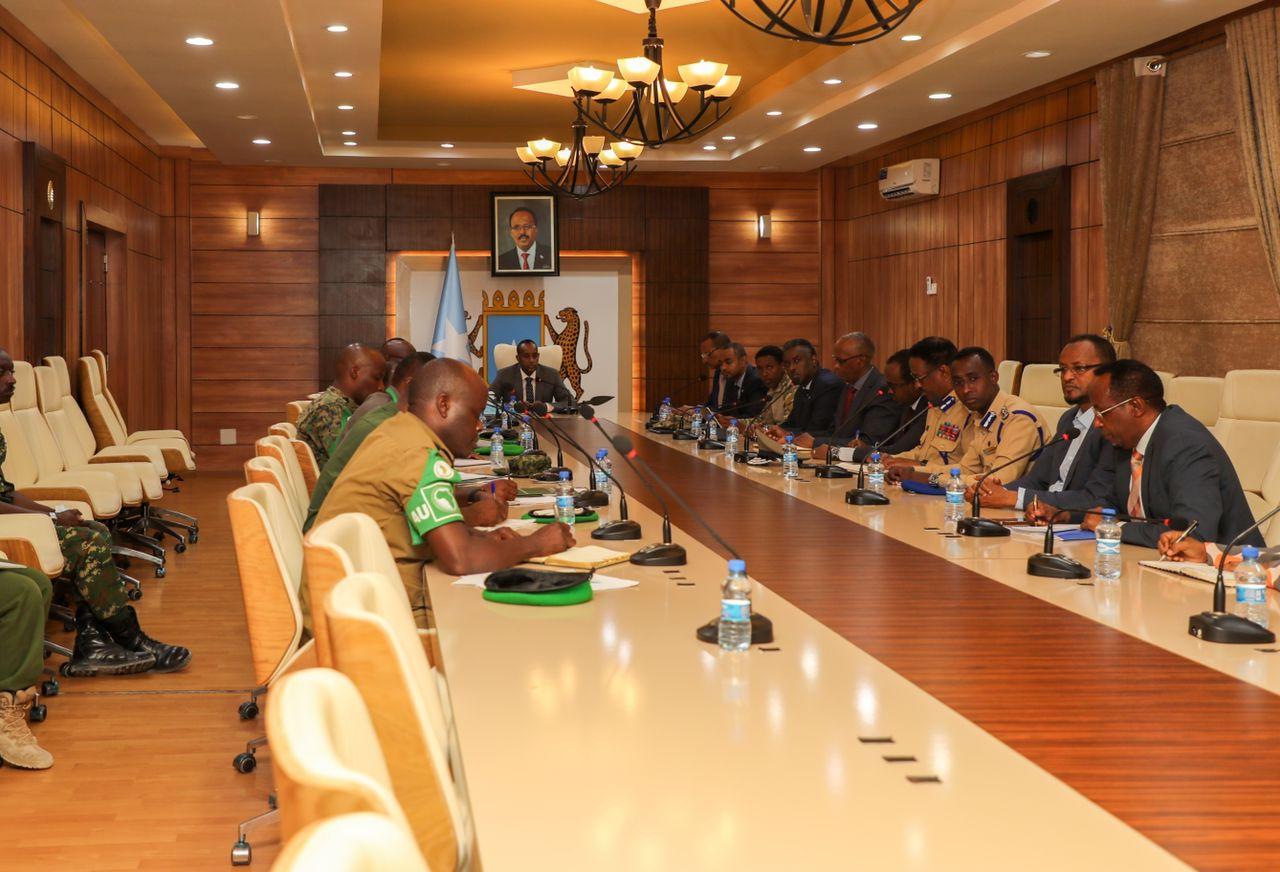

Senior commanders of Somalia’s armed forces held a sensitive meeting with the Somali Future Council at the Mogadishu residence of former Prime Minister Mohamed Hussein Roble, as efforts intensify to defuse the country’s growing political crisis.
The meeting, held on Tuesday night, took place amid escalating tensions between the federal government and opposition groups over the terms of key state institutions, constitutional amendments and the framework for upcoming elections.
According to reports from the meeting, military commanders asked the Somali Future Council to give them a specified period to engage President Hassan Sheikh Mohamud and establish whether he was willing to pursue substantive negotiations aimed at reaching an inclusive political settlement.
The commanders reportedly want the president to demonstrate flexibility and accept a compromise that would allow the dispute to be resolved through an agreement acceptable to the country’s competing political stakeholders, rather than allowing tensions to escalate further.
Both sides also discussed the need to work towards an inclusive electoral process involving the country’s various political actors.
They reportedly stressed that unilateral decisions should be avoided because they could deepen divisions and make a negotiated settlement more difficult.
Security was another major issue on the agenda. The military commanders asked the Future Council to cooperate in safeguarding national security, warning that political disagreements should not undermine operations against Al-Shabaab or disrupt ongoing security efforts.
They reportedly urged political leaders to demonstrate national responsibility and maintain cooperation in defending the country, arguing that militant groups could exploit divisions among political leaders to expand their activities.
For its part, the Somali Future Council reaffirmed its commitment to a peaceful Somalia free from extremist groups, saying the country’s affairs should be managed through consensus, consultation and political equality.
The opposition coalition also stressed that any settlement must respect the law and ensure the participation of different political stakeholders.
The meeting is politically significant because it suggests that senior military commanders are becoming involved in efforts to ease tensions between the government and opposition.
Their reported initiative comes at a time when disagreements over the legitimacy and tenure of federal institutions have raised concerns about the country’s political and security stability.
The dispute centres on the interpretation of constitutional changes, the terms of the president and parliament, and the arrangements for the next elections.
The Supreme Court has also weighed in on aspects of the constitutional and institutional dispute, adding another dimension to the political confrontation.
The military leadership’s reported request for time to approach President Hassan Sheikh appears intended to establish whether a direct political dialogue remains possible.
However, it remains unclear whether the president will accept the proposed approach or what specific concessions either side might be prepared to make.
A clear response from the president could help open the way for renewed negotiations, but any progress would depend on mutual confidence, political compromise and an agreed framework for addressing the constitutional and electoral questions.
The commanders are also expected to report back on their efforts after the period requested by the Future Council. The outcome could influence whether the political rivals move towards formal negotiations or remain locked in their current confrontation.
For Somalia, the stakes extend beyond the political dispute. A breakdown in relations between the government and opposition could weaken state institutions, create uncertainty within the security forces and undermine the campaign against Al-Shabaab.
Maintaining a professional national military that remains outside political rivalries will therefore be essential to protecting the country’s security and stability.