

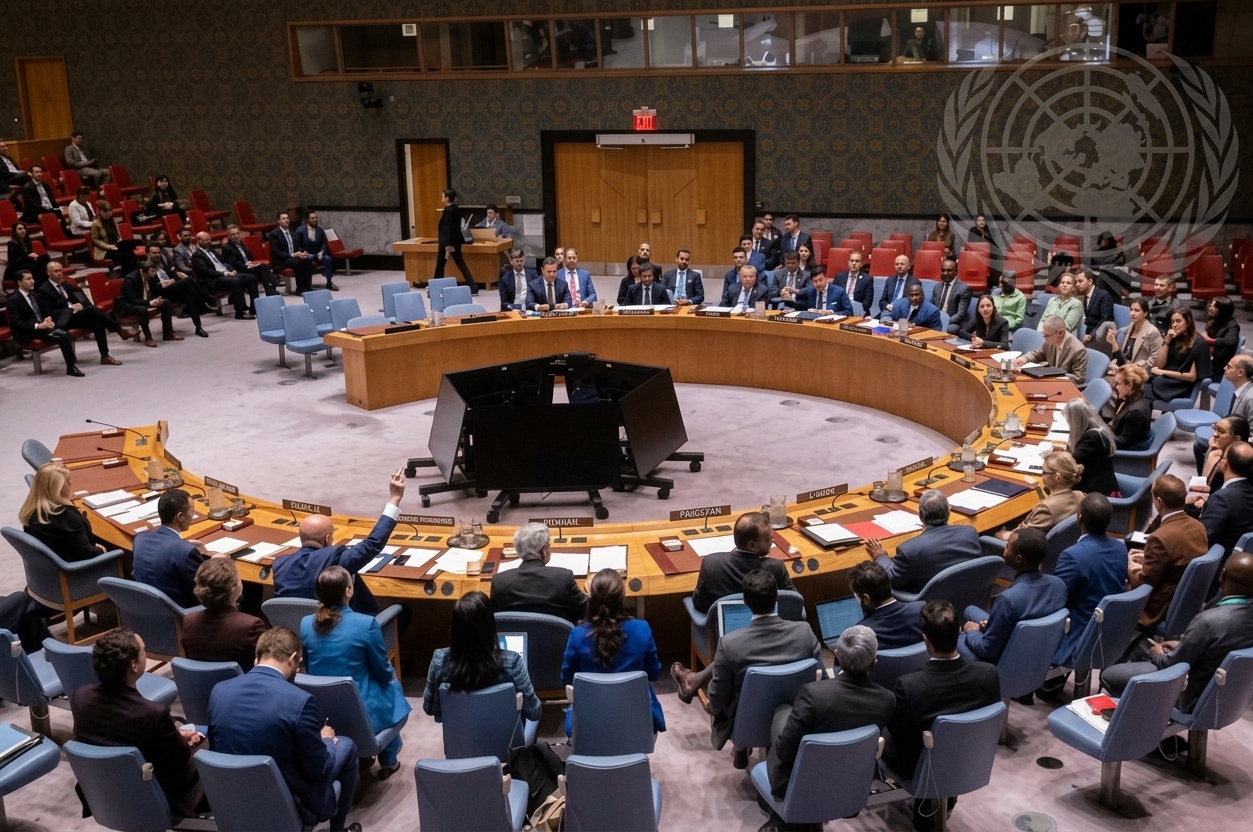

The Russian government exercised its veto power to block a resolution submitted by the United States to the United Nations Security Council concerning the mandate extension of the UN mission in Western Sahara, MINURSO.
The vote, which took place on Friday, October 30, 2026, was supported by 11 countries, while Russia voted against it, and three nations—China, Pakistan, and Somalia—abstained.
Although the majority of Security Council members supported the resolution, it failed to pass due to the Russian veto.
The U.S.-drafted resolution sought to extend the MINURSO mission mandate for an additional year while altering the mission’s operational framework and military role.
Key provisions of the draft included establishing Morocco’s autonomy plan as the sole basis for negotiations to resolve the long-standing dispute over Western Sahara—a proposal Morocco has consistently promoted to settle the territorial conflict with the people of Western Sahara.
Furthermore, the U.S. initiative proposed reducing the military troop component of the mission and removing the term referencing a referendum from the mission’s title, despite the referendum being a core objective when MINURSO was originally established.
A UN report indicates that the mission currently consists of 155 military personnel, with its operating budget for this fiscal year estimated at $62 million.
Russia’s veto occurred as MINURSO’s official mandate was set to expire on October 31, 2026, creating acute uncertainty regarding the continuation of the mission since the Security Council failed to approve the proposed extension.
Western Sahara has been embroiled in political and territorial disputes for nearly half a century between Morocco and the Polisario Front movement, which advocates for the local population’s right to self-determination.
The MINURSO mission was established by the UN in 1991, with the initial mandate of monitoring the cease-fire and organizing a referendum to determine the political future of Western Sahara.
The Security Council vote underscores persistent geopolitical rifts among major powers regarding a political resolution to the Western Sahara dispute, leaving the future of the UN mission in an uncertain status.