


Uganda has reportedly begun withdrawing its troops from Somalia after nearly two decades of involvement in the country’s security operations, raising concerns about the possible impact on the fight against Al-Shabaab and the future of security arrangements in southern Somalia.
Kenya’s People Daily and Uganda’s Daily Monitor reported on October 30, 2026, that Ugandan forces had started the withdrawal process.
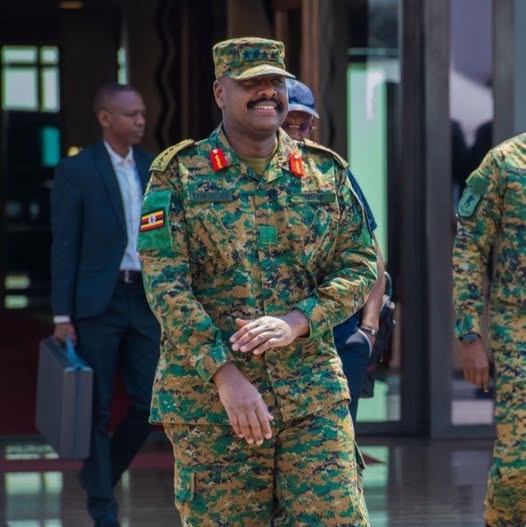
The reports followed remarks by Uganda’s military chief, General Muhoozi Kainerugaba, son of President Yoweri Museveni, who said on October 29 that Ugandan troops had begun handing over security responsibilities to Somali forces.
The development has prompted questions about whether Somali security forces are adequately prepared to take over the positions and responsibilities held by Ugandan troops, particularly in areas where the African Union mission has played a central role in containing Al-Shabaab.
According to People Daily, Somali President Hassan Sheikh Mohamud visited Uganda on October 27 and held talks with Museveni.
The newspaper reported that Hassan Sheikh asked the Ugandan leader to postpone the withdrawal, citing concerns about the potential security consequences for Somalia.
A statement from Uganda’s presidency said the two leaders discussed bilateral security cooperation, regional stability and the situation in Somalia.
It also said Hassan Sheikh expressed appreciation for Uganda’s military contribution and hoped Ugandan forces would remain in the country to support ongoing security efforts.
There have also been claims of political disagreements between the two leaders and speculation that issues involving Türkiye may have influenced Kampala’s decision.
However, these accounts have not been independently verified, and no confirmed evidence has established that either factor was responsible for the reported withdrawal.
Uganda was among the first countries to deploy troops to Somalia in 2007, when the African Union Mission in Somalia (AMISOM) was established.
Its forces participated in major operations against Al-Shabaab, including campaigns that helped government and allied forces regain control of parts of Mogadishu and areas across the Lower and Middle Shabelle regions.
For much of the mission, Uganda remained one of the largest troop contributors.
Its soldiers were involved not only in offensive operations but also in securing strategic installations, supporting Somali government forces and protecting key facilities in the capital and southern regions.
One of the areas potentially most affected by the withdrawal is Lower Shabelle, a strategically important region linking Mogadishu with coastal settlements and other parts of southern Somalia.
According to People Daily, Ugandan positions in Barawe, Bulo Mareer, Qoryoley and Janaale could be affected by the withdrawal plan. However, the full timetable and arrangements for handing over these locations have not yet been publicly detailed.
A poorly coordinated departure could create security gaps that Al-Shabaab may attempt to exploit.
If Somali forces are not ready to occupy the positions, maintain supply routes and defend the surrounding communities, the group could seek to re-establish a presence in areas from which it was previously pushed out.
The threat extends beyond the possibility of territorial advances. Al-Shabaab could increase attacks on roads connecting Mogadishu to Lower Shabelle, targeting military movements, civilian transport and supply convoys.
Such attacks could disrupt government operations and make it harder for security forces to maintain control of key locations.
Nevertheless, Uganda’s departure would not automatically mean that Al-Shabaab could take control of Mogadishu. The capital has Somali security forces, established state institutions and continued international security support.
The extent of any deterioration would depend largely on how the transition is organised and whether the government can maintain a sufficient presence at strategic installations.
Ugandan troops have also been involved in protecting important facilities in Mogadishu, including locations used by government institutions and international organisations.
Their departure would therefore require the Somali government to identify and deploy replacement forces before existing positions are vacated.
The transition could also affect military operations in southern Somalia, where Ugandan forces have been part of wider African Union efforts supporting Somali troops.
Replacing their contribution will require more than assigning personnel to abandoned bases. The incoming forces must have adequate training, equipment, ammunition, logistics, intelligence and command arrangements to sustain operations.
Türkiye is among the partners that could contribute to Somalia’s efforts to strengthen its national forces.
Ankara has developed extensive military cooperation with Mogadishu, including training programmes for Somali troops and support for selected units of the Somali National Army.
However, Türkiye’s assistance and military presence cannot automatically replace every responsibility previously carried out by Ugandan forces.
Other countries contributing troops to the African Union Support and Stabilization Mission in Somalia (AUSSOM), including Ethiopia, Djibouti, Kenya and Egypt, could also influence the future security arrangements.
Their involvement, however, will depend on the mission’s operational plans, available resources and the willingness of contributing countries to maintain or adjust their deployments.
The reported withdrawal also comes amid wider financial and logistical challenges facing the African Union mission.
During a July 2026 meeting of AUSSOM troop-contributing countries in Kampala, Muhoozi Kainerugaba reportedly said that support from the United Nations Support Office in Somalia (UNSOS) had declined by 25%, affecting the mission’s operational capacity.
The funding and logistical challenges are significant because African Union forces depend on sustained international support for equipment, transport, medical services, supplies and other operational requirements.
Without predictable financing, troop-contributing countries may find it increasingly difficult to maintain their deployments at previous levels.
Uganda’s reported decision therefore raises broader questions about the long-term sustainability of the international military presence in Somalia and the country’s ability to assume greater responsibility for its own security.
For the federal government, the immediate challenge is to establish a clear transition plan identifying which Somali units will take over Ugandan positions, when the handovers will occur and what resources will be available to sustain them.
The process will also require close coordination between Somali authorities, the African Union and the remaining troop-contributing countries.
Ultimately, the security consequences will depend less on the announcement of a withdrawal than on how effectively the transition is implemented.
If Somali forces can take over the positions without creating operational gaps, the change could become part of a gradual transfer of responsibility.
If the handover takes place without adequate preparation, however, it could weaken security arrangements in parts of southern Somalia and give Al-Shabaab opportunities to intensify its operations.