

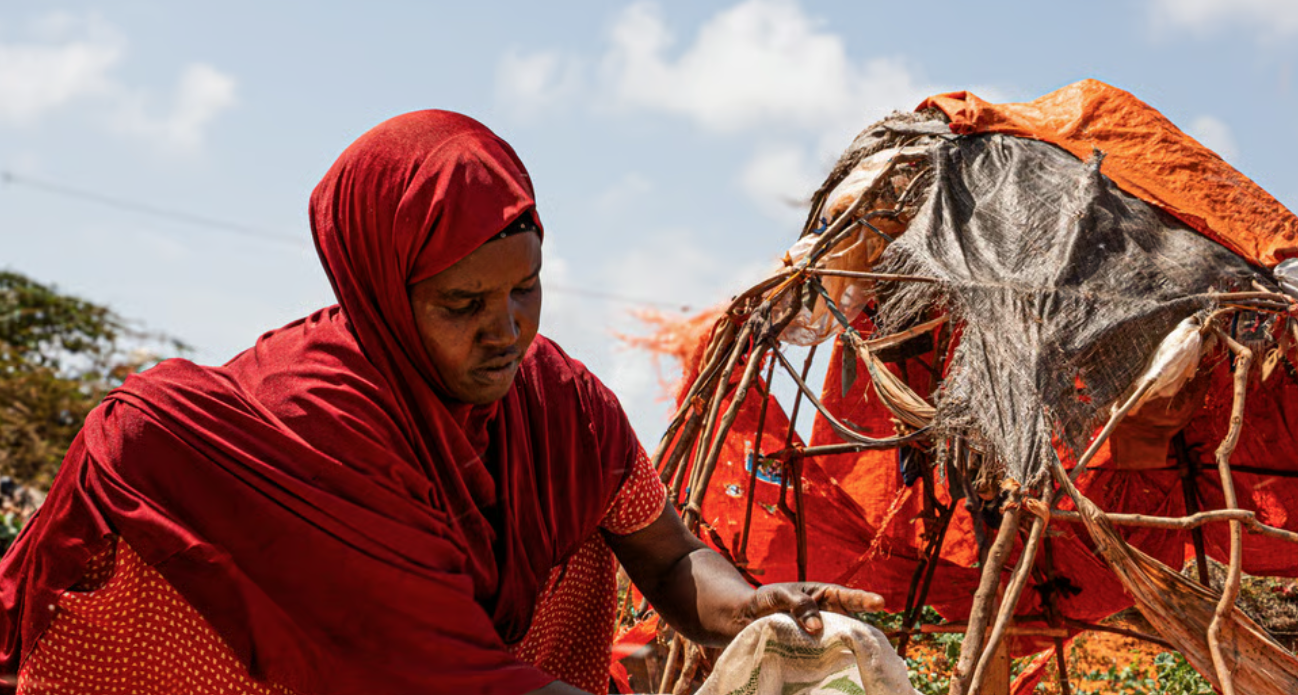

Somalia is facing a worsening humanitarian emergency as millions of people struggle with severe hunger caused by prolonged drought, while aid agencies warn that heavy floods expected later this year could deepen the crisis and push even more families into desperation.
During a visit to displacement camps in the southern city of Kismayo, Norwegian Refugee Council (NRC) Secretary General Jan Egeland described the situation as reaching a critical point. He said many communities have gone months without receiving assistance despite enduring repeated climate shocks, food shortages, and displacement.
“Entire communities have been waiting months without any help,” Egeland said. “I have met families, women, children and farmers who have lost everything to cycles of drought and hunger. Families are sharing one plate a day of food. Newborns are in danger of dying from malnutrition. Now they are about to be hit by floods, threatening to wipe them out.”
Somalia is currently grappling with one of its most severe humanitarian crises in recent years.
According to humanitarian agencies, nearly six million people—roughly one-third of the country’s population—are experiencing crisis levels of hunger or worse after consecutive failed rainy seasons and prolonged drought conditions. More than 700,000 people have been displaced in 2026 alone, with over 500,000 forced from their homes by drought.
Medical charity Médecins Sans Frontières (MSF) has also raised alarm over rising malnutrition levels, warning that in some parts of southern Somalia one in every two children is suffering from malnutrition.
Humanitarian organizations say the crisis has been compounded by significant reductions in international aid funding, leaving many vulnerable communities without food, healthcare, water, or shelter assistance.
Despite the scale of the emergency, Somalia’s humanitarian response remains approximately 70 percent underfunded, forcing aid agencies to scale back operations at a time when needs continue to rise.
Adding to concerns is the approaching Deyr rainy season, expected to begin in October. Weather forecasters warn that the season could be intensified by El Niño, raising the risk of severe flooding across large parts of the country.
Humanitarian experts fear the floods could rival or even exceed those experienced in 2023, when flooding displaced more than 1.2 million people, killed thousands of livestock, destroyed crops, and devastated communities already weakened by drought.
The floods also damaged critical infrastructure and submerged large areas of farmland, worsening food insecurity nationwide.
“Somalis pay the toll of brutal climate shocks that were in no way of their doing,” Egeland said. “We know that the next shock is coming and we know how hunger turned to famine in the past when Somalia was abandoned. What we don’t have is the funding to act on it.”
The NRC warned that without urgent action, Somalia risks facing a compounded crisis where drought-induced hunger is followed by large-scale flooding, creating conditions that could overwhelm already stretched humanitarian services.
To avert a deeper catastrophe, the organization called for a significant increase in humanitarian funding, particularly for food assistance, nutrition programs, water and sanitation services, emergency shelter, and protection programs in the worst-affected regions.
The agency also urged immediate investment in flood preparedness measures, including strengthening early warning systems, developing evacuation plans, protecting critical infrastructure, and expanding cash assistance programs to help vulnerable families cope with rising food insecurity.
In the longer term, NRC emphasized the need for sustained investment in resilience programs aimed at helping Somali communities adapt to recurring climate shocks.
Aid agencies argue that without such measures, millions of Somalis will remain trapped in a cycle of drought, displacement, flooding, and hunger that continues to threaten lives and livelihoods across the country.
During a visit to displacement camps in the southern city of Kismayo, Norwegian Refugee Council (NRC) Secretary General Jan Egeland described the situation as reaching a critical point.
He said many communities have gone months without receiving assistance despite enduring repeated climate shocks, food shortages, and displacement.
“Entire communities have been waiting months without any help,” Egeland said. “I have met families, women, children and farmers who have lost everything to cycles of drought and hunger.
Families are sharing one plate a day of food. Newborns are in danger of dying from malnutrition. Now they are about to be hit by floods, threatening to wipe them out.”
Somalia is currently grappling with one of its most severe humanitarian crises in recent years.
According to humanitarian agencies, nearly six million people—roughly one-third of the country’s population—are experiencing crisis levels of hunger or worse after consecutive failed rainy seasons and prolonged drought conditions.
More than 700,000 people have been displaced in 2026 alone, with over 500,000 forced from their homes by drought.
Medical charity Médecins Sans Frontières (MSF) has also raised alarm over rising malnutrition levels, warning that in some parts of southern Somalia one in every two children is suffering from malnutrition.
Humanitarian organizations say the crisis has been compounded by significant reductions in international aid funding, leaving many vulnerable communities without food, healthcare, water, or shelter assistance.
Despite the scale of the emergency, Somalia’s humanitarian response remains approximately 70 percent underfunded, forcing aid agencies to scale back operations at a time when needs continue to rise.
Adding to concerns is the approaching Deyr rainy season, expected to begin in October. Weather forecasters warn that the season could be intensified by El Niño, raising the risk of severe flooding across large parts of the country.
Humanitarian experts fear the floods could rival or even exceed those experienced in 2023, when flooding displaced more than 1.2 million people, killed thousands of livestock, destroyed crops, and devastated communities already weakened by drought.
The floods also damaged critical infrastructure and submerged large areas of farmland, worsening food insecurity nationwide.
“Somalis pay the toll of brutal climate shocks that were in no way of their doing,” Egeland said. “We know that the next shock is coming and we know how hunger turned to famine in the past when Somalia was abandoned. What we don’t have is the funding to act on it.”
The NRC warned that without urgent action, Somalia risks facing a compounded crisis where drought-induced hunger is followed by large-scale flooding, creating conditions that could overwhelm already stretched humanitarian services.
To avert a deeper catastrophe, the organization called for a significant increase in humanitarian funding, particularly for food assistance, nutrition programs, water and sanitation services, emergency shelter, and protection programs in the worst-affected regions.
The agency also urged immediate investment in flood preparedness measures, including strengthening early warning systems, developing evacuation plans, protecting critical infrastructure, and expanding cash assistance programs to help vulnerable families cope with rising food insecurity.
In the longer term, NRC emphasized the need for sustained investment in resilience programs aimed at helping Somali communities adapt to recurring climate shocks.
Aid agencies argue that without such measures, millions of Somalis will remain trapped in a cycle of drought, displacement, flooding, and hunger that continues to threaten lives and livelihoods across the country.
During a visit to displacement camps in the southern city of Kismayo, Norwegian Refugee Council (NRC) Secretary General Jan Egeland described the situation as reaching a critical point.
He said many communities have gone months without receiving assistance despite enduring repeated climate shocks, food shortages, and displacement.
“Entire communities have been waiting months without any help,” Egeland said. “I have met families, women, children and farmers who have lost everything to cycles of drought and hunger.
Families are sharing one plate a day of food. Newborns are in danger of dying from malnutrition. Now they are about to be hit by floods, threatening to wipe them out.”
Somalia is currently grappling with one of its most severe humanitarian crises in recent years.
According to humanitarian agencies, nearly six million people—roughly one-third of the country’s population—are experiencing crisis levels of hunger or worse after consecutive failed rainy seasons and prolonged drought conditions.
More than 700,000 people have been displaced in 2026 alone, with over 500,000 forced from their homes by drought.
Medical charity Médecins Sans Frontières (MSF) has also raised alarm over rising malnutrition levels, warning that in some parts of southern Somalia one in every two children is suffering from malnutrition.
Humanitarian organizations say the crisis has been compounded by significant reductions in international aid funding, leaving many vulnerable communities without food, healthcare, water, or shelter assistance.
Despite the scale of the emergency, Somalia’s humanitarian response remains approximately 70 percent underfunded, forcing aid agencies to scale back operations at a time when needs continue to rise.
Adding to concerns is the approaching Deyr rainy season, expected to begin in October. Weather forecasters warn that the season could be intensified by El Niño, raising the risk of severe flooding across large parts of the country.
Humanitarian experts fear the floods could rival or even exceed those experienced in 2023, when flooding displaced more than 1.2 million people, killed thousands of livestock, destroyed crops, and devastated communities already weakened by drought. The floods also damaged critical infrastructure and submerged large areas of farmland, worsening food insecurity nationwide.
“Somalis pay the toll of brutal climate shocks that were in no way of their doing,” Egeland said. “We know that the next shock is coming and we know how hunger turned to famine in the past when Somalia was abandoned. What we don’t have is the funding to act on it.”
The NRC warned that without urgent action, Somalia risks facing a compounded crisis where drought-induced hunger is followed by large-scale flooding, creating conditions that could overwhelm already stretched humanitarian services.
To avert a deeper catastrophe, the organization called for a significant increase in humanitarian funding, particularly for food assistance, nutrition programs, water and sanitation services, emergency shelter, and protection programs in the worst-affected regions.
The agency also urged immediate investment in flood preparedness measures, including strengthening early warning systems, developing evacuation plans, protecting critical infrastructure, and expanding cash assistance programs to help vulnerable families cope with rising food insecurity.
In the longer term, NRC emphasized the need for sustained investment in resilience programs aimed at helping Somali communities adapt to recurring climate shocks.
Aid agencies argue that without such measures, millions of Somalis will remain trapped in a cycle of drought, displacement, flooding, and hunger that continues to threaten lives and livelihoods across the country.