

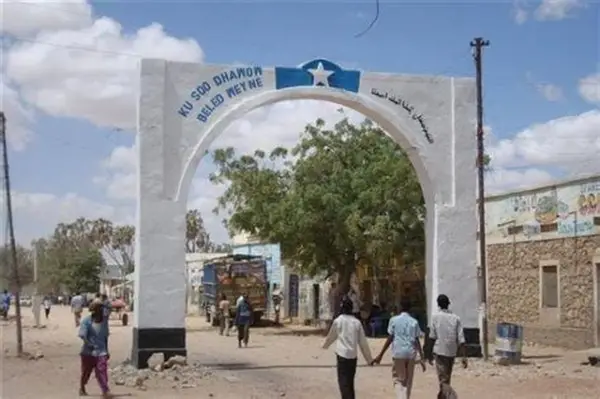

Beledweyne, the capital of Somalia’s Hiiraan region, is facing heightened political and security tensions following reports of armed deployments across the city, including the positioning of heavy weapons on rooftops overlooking strategic locations.
Reports from the city indicate that anti-aircraft weapons have been moved to areas around Ugaas Khaliif Airport, while armed forces and Ma’awisley militia members have been seen moving in groups through residential neighbourhoods and areas surrounding Beledweyne.
The developments have raised fears that the political dispute over Hirshabelle’s new leadership could escalate into armed confrontation.
The military movements come amid growing opposition to the recent leadership election in Hirshabelle, particularly the selection of Abdifatah Hassan Afrah as the administration’s new vice-president.
Political figures and traditional elders in Hiiraan have challenged the election process, arguing that a new leadership should not be chosen without an inclusive political agreement addressing the region’s representation and the distribution of power within the federal member state.
The reported deployment of troops to residential areas, locations near the airport and buildings overlooking key parts of the city has added to concerns about the security situation.
Some heavy weapons have reportedly been positioned on rooftops, while anti-aircraft equipment has been moved near the airport. Armed groups, including Ma’awisley fighters, have also been reported in neighbourhoods and on the outskirts of Beledweyne.
The dispute has extended beyond the political process, with reports that the Hiiraan regional administration has warned airlines operating in the area against transporting a Hirshabelle official whose proposed visit to Beledweyne is opposed by some local actors.
According to information emerging from the region, the regional governor warned that action could be taken against any airline that defied the directive.
However, the official written order, the precise authority behind it and its legal basis have not been made publicly available.
Any restrictions on flights would raise questions about the respective responsibilities of airport authorities and the Somali Civil Aviation Authority, since aviation safety and flight permissions are governed by national regulations.
If such warnings remain in place, travel by Hirshabelle officials to Hiiraan could become more difficult, further complicating relations between the regional administration and the state leadership.
The presence of Ma’awisley fighters has added another dimension to the security concerns. These community-based forces have played a significant role in operations against Al-Shabaab in Hiiraan.
Their reported movements amid the current political dispute, however, have raised concerns about the potential involvement of armed local groups in the region’s internal political disagreements.
A confrontation between forces deployed in the city could put residents, businesses, transport services and public infrastructure at risk.
The reported concentration of heavy weapons in populated areas is particularly concerning because fighting within the city could cause civilian casualties and widespread disruption.
The developments form part of a wider dispute over the governance of Hirshabelle, the political representation of Hiiraan and relations between the federal government and local political actors.
Opponents of the election process have insisted that an inclusive agreement must be reached before a new leadership is established. Hirshabelle’s administration, meanwhile, proceeded with the election in Jowhar, where the new leadership was selected.
The disagreement has also involved former Hirshabelle Vice-President Yusuf Ahmed Hagar Dabageed, who has said he will not hand over his position until a comprehensive political agreement is reached on the administration’s future.
A report published on October 29 by the Critical Threats Project also said Hawadle militia members were reportedly beginning to mobilise around Beledweyne, highlighting the growing security dimension of the political crisis.
The situation in Beledweyne remains closely tied to the decisions of political leaders, regional authorities and armed actors. Without dialogue and steps to reduce the presence of armed groups in sensitive locations, the risk of clashes could increase.
The federal government, Hirshabelle administration, traditional elders and political leaders from Hiiraan face mounting pressure to address the underlying disagreements through negotiations.
Reaching an arrangement on regional representation and power-sharing will be central to efforts to ease tensions and prevent the political dispute from developing into a wider security crisis.