

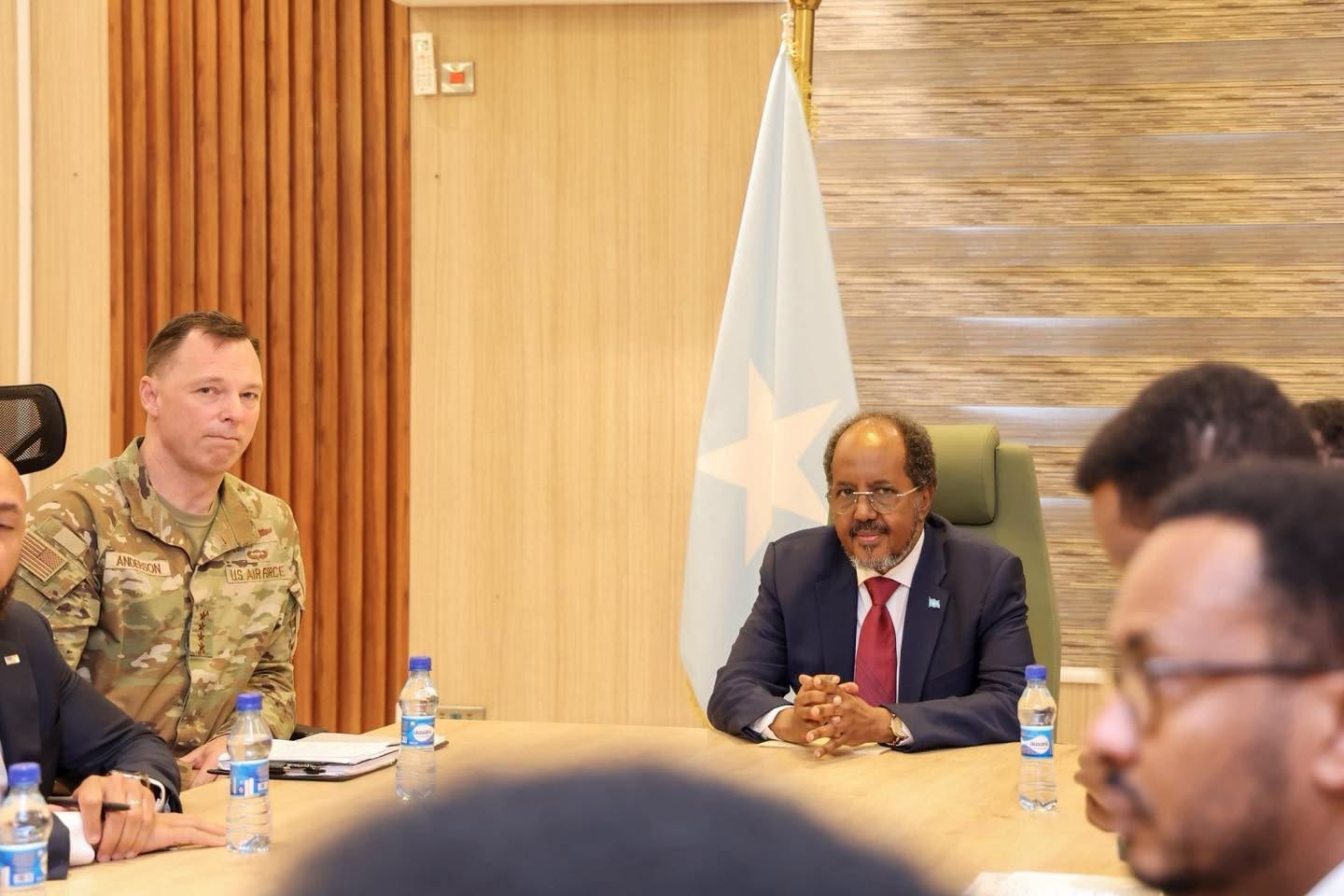

By any official measure, the United States has not abandoned Somalia’s Federal Government. American diplomats continue to affirm support for the country’s sovereignty, territorial integrity, and internationally recognized federal institutions.
Publicly, Washington remains committed to the “One Somalia” policy that has underpinned its diplomacy for more than three decades.
Yet diplomacy is often defined less by declarations than by patterns of behavior.
Across Somalia, a quieter but strategically significant transformation is unfolding. The shift is subtle but increasingly discernible.
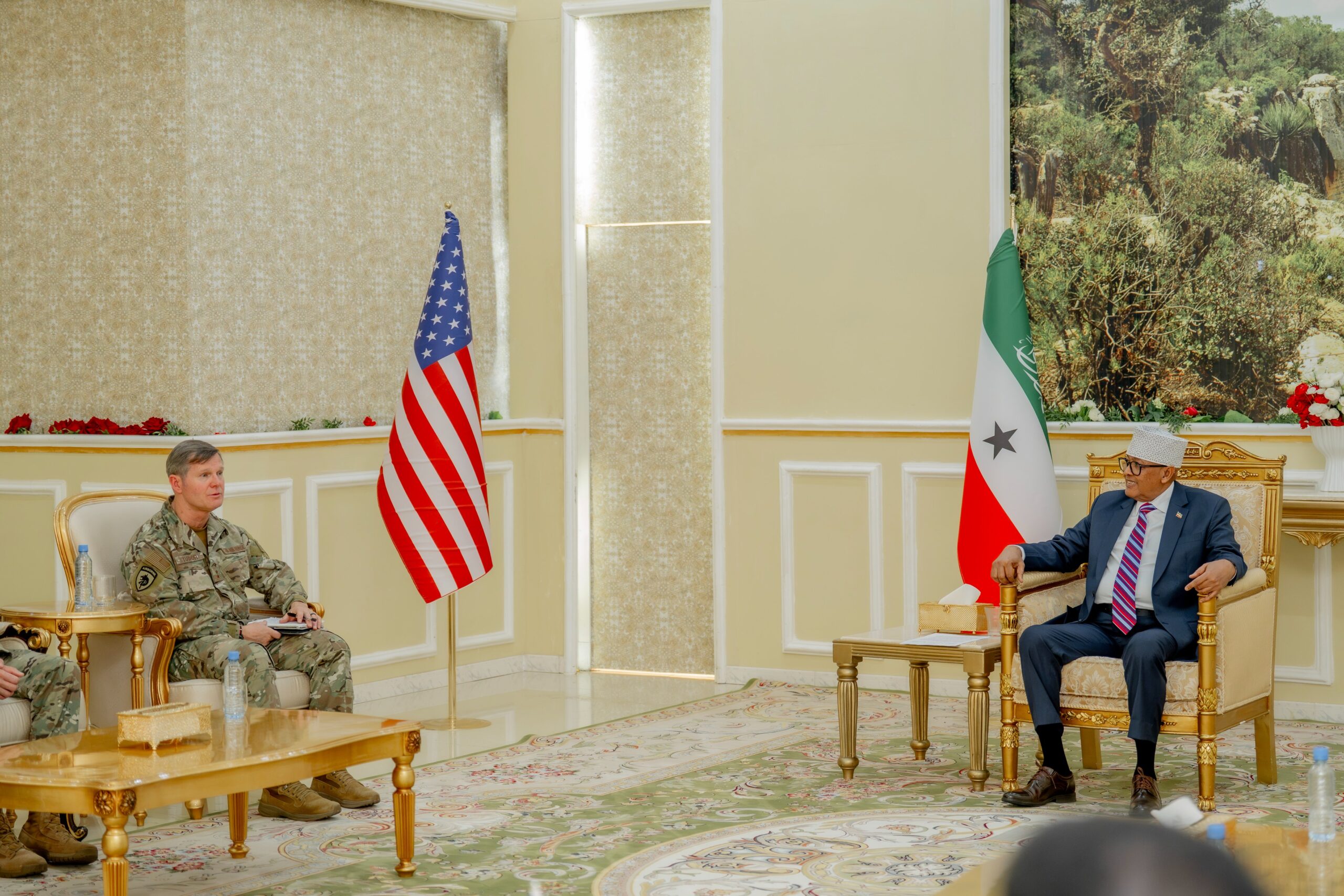
American military officers are spending more time in Garowe and Kismayo, where regional authorities have become indispensable security partners.
Congressional engagement with Somaliland has steadily grown, economic diplomacy is extending beyond the federal capital, and counterterrorism planning is becoming progressively more responsive to local centers of power than to the formal architecture of Somalia’s federal system alone.
Taken individually, none of these developments amounts to a dramatic policy reversal. Together, however, they suggest that Washington is gradually recalibrating how it pursues its interests in Somalia, accepting that influence may have to flow through multiple political centers rather than exclusively through the federal capital.
It reflects neither a departure from Somalia’s territorial integrity nor an embrace of fragmentation, but an adaptation to realities on the ground.
For much of the past decade, American policy was guided by a central premise: that strengthening federal institutions in Mogadishu would gradually produce a more cohesive Somali state, one capable of containing al-Shabaab, managing relations with its regions and projecting authority across its territory and coastline.
Increasingly, that premise has come under strain.
Political disputes between the federal govenment and several Federal Member States have evolved from temporary disagreements into structural competition over constitutional authority, resource distribution, elections, and security control.
Puntland no longer recognizes key federal constitutional changes. Relations with Jubaland remain deeply strained. Political opposition has increasingly framed constitutional reforms as unilateral rather than consensual.
Meanwhile, Somalia’s security landscape has become considerably more complex.
Al-Shabaab, despite sustained military pressure over nearly two decades, has demonstrated a persistent capacity to adapt, regroup and retain influence across large parts of rural Somalia.
ISIS-Somalia, while considerably smaller in size, has steadily expanded its operational footprint in Puntland’s mountainous interior, attracting growing attention from American intelligence and special operations planners.
At the same time, northern Somalia’s strategic relevance has been reshaped by a broader geopolitical contest unfolding across the Gulf of Aden and the Red Sea, where maritime security, commercial corridors and great-power competition are increasingly intertwined.
For Washington, this creates a complex policy challenge: its security objectives increasingly intersect with regions that operate through their own political structures, sources of legitimacy and security institutions rather than solely through the federal framework in Mogadishu.
American policymakers therefore face a difficult balancing act.
Counterterrorism imperatives cannot simply be deferred until Somalia’s unresolved constitutional and political disputes are settled, yet security cooperation in contested political environments carries its own diplomatic risks.
If regional authorities possess the intelligence networks, terrain familiarity, and security partnerships necessary to disrupt militant organizations, military planners are unlikely to sacrifice operational effectiveness for diplomatic symmetry.
From an international security perspective, Security institutions naturally gravitate toward whoever can produce results. That logic increasingly explains American engagement.
The Dual Track Legacy
The current evolution of U.S. engagement with Somalia’s subnational actors has deeper roots than recent geopolitical shifts might suggest.
American security cooperation with regional authorities dates back to the early post-transition period, including the development of specialized security capabilities in Puntland beginning in the early 2000=2022 and subsequent engagement with regional security structures in Jubaland following the formation of the state in 2014,
For more than two decades, U.S. policymakers have sought to navigate a delicate balance: leveraging the effectiveness of regional security actors in counterterrorism and stabilization efforts while maintaining political support for a strong central government in Mogadishu.
This balancing approach became more visible during the “Dual Track” period, when Washington expanded direct engagement beyond the federal center while continuing to publicly emphasize Somalia’s national institutions.
The emergence and consolidation of Somalia’s Federal Member States further institutionalized this multi-layered engagement model.
While public U.S. policy messaging has consistently prioritized support for the Federal Government and the principle of a unified Somali state, operational realities have often required engagement with regional actors possessing territorial control, security capacity, and local legitimacy.
What appears different in the current period is not the existence of these relationships, which have longstanding origins, but the degree to which regional partnerships are becoming more strategically prominent within a changing security environment.
The New Geography of Counterterrorism
The shift is perhaps best understood not as decentralization by design but decentralization by necessity.
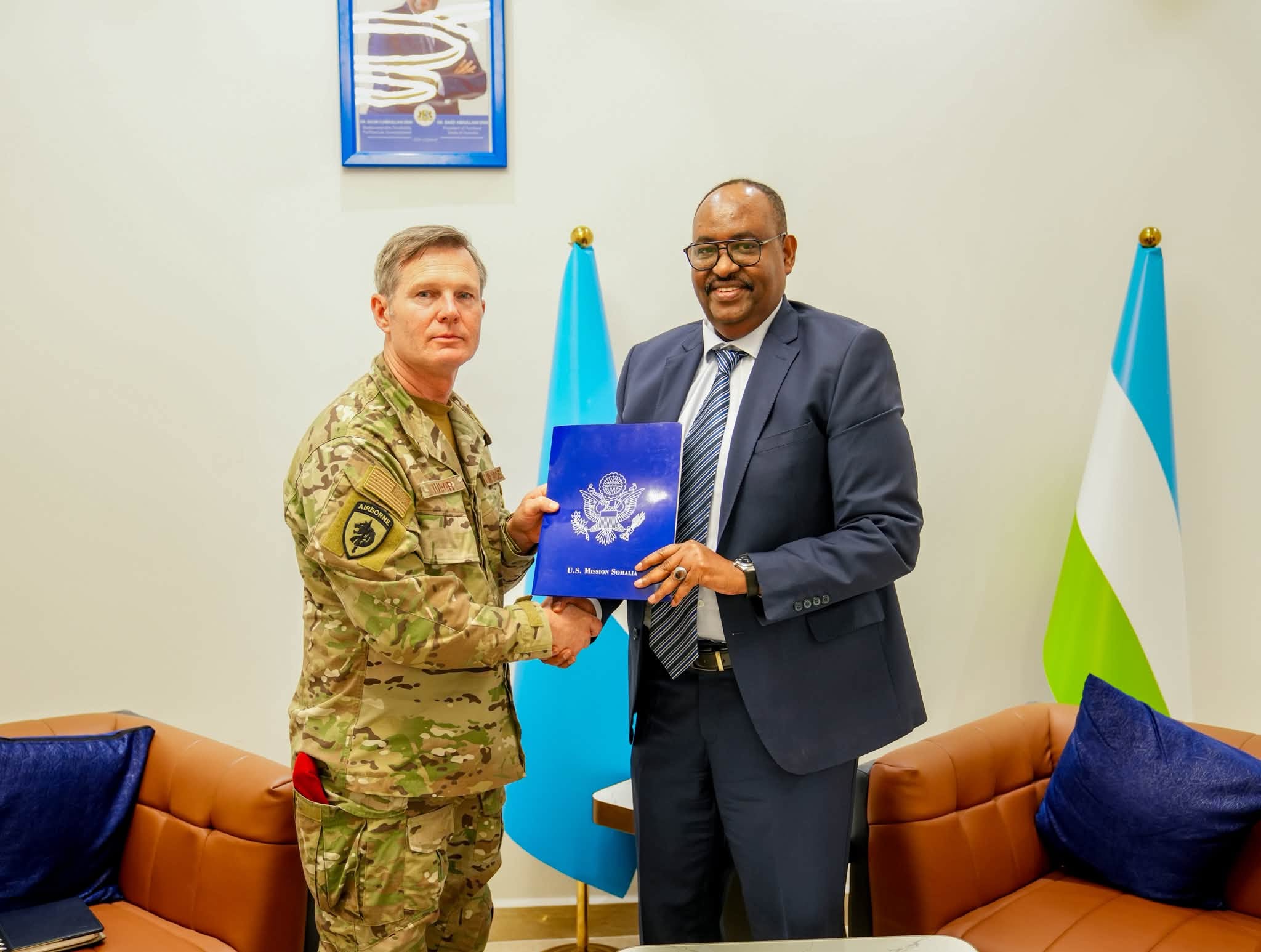
Moving beyond the traditional framework centered on Mogadishu, the U.S military in Africa known as AFRICOM’s operational requirements increasingly call for engagement with a wider range of actors across Somalia’s security landscape.
Intelligence gathering, strike coordination, logistical support, maritime monitoring and force protection often depend on cooperation with authorities that exercise practical control and operational influence on the ground, even when their political status does not fully align with Somalia’s constitutional arrangements.
In practice, this creates what officials rarely describe publicly: a dual-track policy.
Diplomatically, Washington continues recognizing the Federal Government. Operationally, it increasingly works directly with regional administrations whenever strategic objectives require it.
The distinction matters. Recognition determines legal policy. Engagement determines actual influence.
Recent American outreach illustrates this evolution.
High-level engagements involving congressional staff, diplomats, and military officials have increasingly included Garowe and Kismayo alongside Mogadishu rather than treating them merely as subordinate administrative stops. Such visits send important political signals irrespective of official messaging.
Regional leaders interpret them as acknowledgment of their growing strategic importance. Officials in Mogadishu often interpret them as diplomatic bypass.
Both interpretations contain elements of truth.
The broader geopolitical environment further reinforces this recalibration.
The Red Sea has emerged as one of the world’s most strategically contested waterways. Maritime disruptions, great-power competition, commercial shipping vulnerabilities, and, according to a former AU diplomat based in Nairobi, the expanding Chinese military influence have fundamentally altered how Washington views the Horn of Africa.
In this environment, Berbera assumes significance extending well beyond Somaliland’s political status.
Its deep-water port, expanding infrastructure, and location along critical maritime corridors make it attractive to policymakers thinking less about Somali constitutional arrangements than about Indo-Pacific logistics, Middle Eastern deterrence, and maritime resilience.
For American strategists, geography often remains a decisive factor in shaping policy choices, sometimes moving faster than diplomatic frameworks can adapt. Strategic infrastructure is rarely viewed as merely physical space; it becomes part of a broader calculus of access, influence and resilience.
Ports can provide maritime reach and logistical leverage, while airfields can preserve operational flexibility in regions where political conditions remain fluid.
None of this necessarily implies imminent American recognition of Somaliland.
Recognition carries legal, diplomatic, and regional consequences extending far beyond bilateral relations.
Yet Washington no longer appears willing to allow unresolved sovereignty questions to prevent practical cooperation where mutual interests converge.
The Kampala summit at the end of July offered another illustration of this changing dynamic.
During discussions surrounding the future of the African Union Support and Stabilization Mission in Somalia (AUSSOM), regional leaders reportedly sought language encouraging an inclusive Somali political conference involving Federal Member States and opposition actors.
Somali President Hassan Sheikh Mohamud forcefully rejected the proposal, arguing that Somalia’s internal political affairs should not be internationalized. The disputed language was ultimately removed from the final communiqué.
From Mogadishu’s perspective, this represented a defense of national sovereignty. From Washington’s perspective, however, sovereignty alone no longer appears sufficient.
American officials increasingly view Somalia’s political fragmentation not merely as a domestic governance issue but as a direct national security concern affecting military investments, stabilization efforts, and counterterrorism outcomes.
That linkage has become progressively more explicit.
Recent American statements have suggested growing impatience with political deadlock, emphasizing that enduring security gains cannot be separated from political consensus.
Behind closed doors, and increasingly in public, American officials have conveyed that continued international support cannot indefinitely compensate for unresolved constitutional disputes and institutional paralysis.
This represents an important evolution.
For years, counterterrorism cooperation in Somalia largely operated in a separate lane from the country’s internal political disputes, with security priorities often insulated from broader questions of governance and institutional reform.
That separation has become increasingly difficult to maintain.
Military assistance is now shaped not only by operational needs but also by political considerations; financial support is increasingly linked to governance benchmarks and institutional performance; and security partnerships increasingly depend on the ability of Somalia’s political system to function effectively.
The result is a more complex relationship in which security objectives and political realities are no longer parallel tracks, but increasingly interconnected elements of the same strategic equation.
The decision to end U.S. support for the United Nations Support Office in Somalia after 2026 further reinforces that message.
Although primarily framed through broader budgetary and burden-sharing considerations, the move also signals that Washington expects Somali institutions and international partners to assume greater responsibility for sustaining security architecture.
The era of open-ended logistical underwriting appears to be ending.
Whether Somalia is prepared for that transition remains uncertain. The implications extend beyond Somalia itself.
Neighboring states increasingly evaluate Somalia through the lens of regional stability rather than state-building orthodoxy. Uganda, Kenya, Ethiopia, and other troop-contributing countries face immediate security consequences should Somalia’s internal political disputes undermine counterinsurgency operations.
Their growing interest in facilitating political compromise reflects security calculations more than diplomatic activism.
For Washington, the same calculation increasingly applies.
American strategy appears to be moving away from asking whether Somalia should possess a strong federal center and toward a more pragmatic question:
Which institutions, national or regional, are presently capable of advancing shared security interests?
That question does not produce ideologically satisfying answers. But it reflects how foreign policy often evolves.
Governments rarely announce strategic pivots at the moment they occur.
Instead, priorities shift incrementally through funding decisions, military deployments, diplomatic itineraries, congressional attention, and operational partnerships until, eventually, a new policy has emerged without ever being formally declared.
Somalia may now be approaching such a moment. Washington has not abandoned Mogadishu. Nor has it embraced fragmentation.
Rather, it appears to be adapting to a political landscape in which authority is increasingly dispersed, security is locally anchored, and strategic competition leaves little room for waiting until Somalia resolves debates that have persisted for decades.
Whether this recalibration ultimately strengthens Somalia’s federal system or inadvertently accelerates its decentralization will depend less on Washington than on Somali political leaders themselves.
The United States can adjust its partnerships.
Only Somalis can decide whether those partnerships ultimately reinforce one state, or several enduring centers of power operating beneath a single flag.