

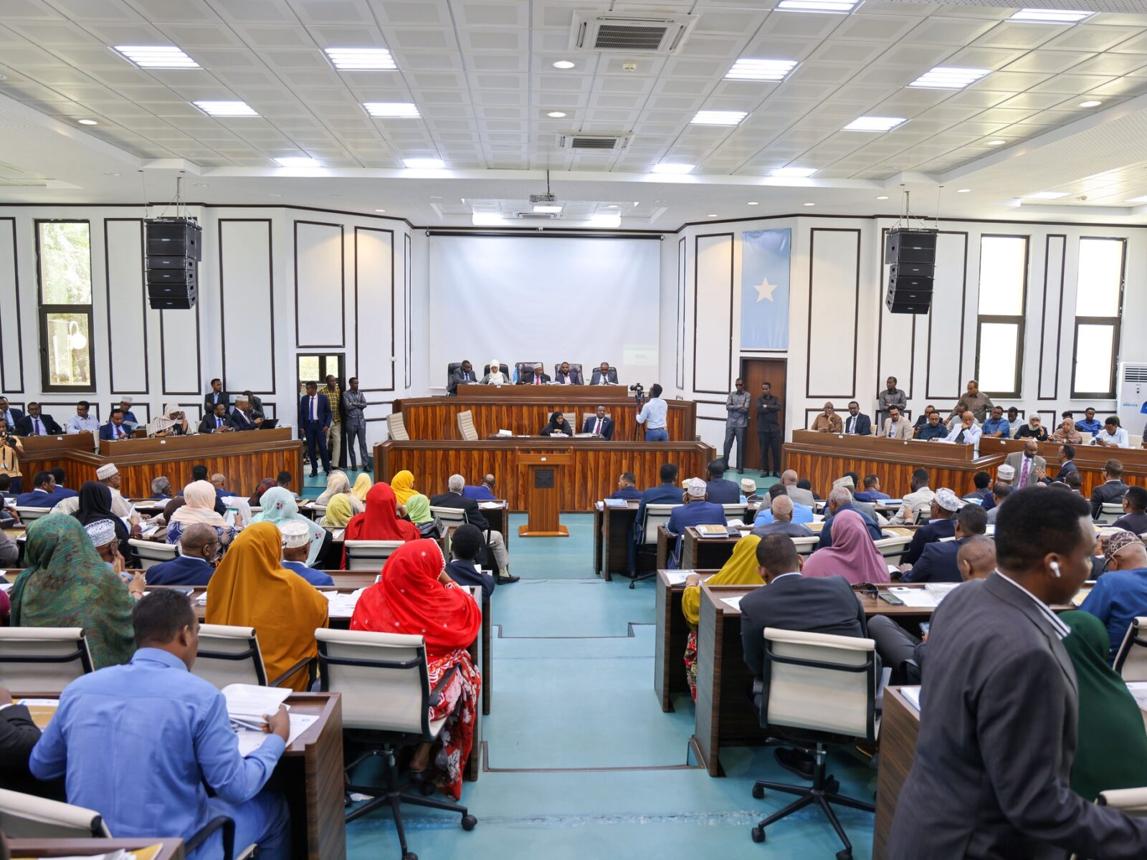

Somalia maintains diplomatic relations and cooperation with numerous nations across the globe; however, domestic security conflicts, political disputes, and clan feuds continue to persist within the country.
This reality raises a fundamental question regarding the status of the national aspiration: “At peace with itself, at peace with the world.”
The situation in Somalia as of November 2026 demonstrates that the nation continues to confront multiple challenges.
The war against Al-Shabaab, operations targeting ISIS, the political standoff between the federal government and the opposition, and friction among regional member states all exert a direct impact on national stability.
The conflict against Al-Shabaab remains active across various regions of the country, particularly in southern and central Somalia.
While government forces and local defense groups conduct operations across diverse areas, Al-Shabaab retains the operational capability to execute attacks within urban centers and along vital transit routes.
Armed skirmishes and military movements have occurred in the Bay and Lower Shabelle regions.
Similarly, active combat and security operations targeting Al-Shabaab are underway in Hiiraan and Galgaduud. These conflicts severely disrupt civilian livelihoods, commerce, and freedom of movement.
Politically, the rift between the federal government and the opposition remains a major impediment.
Disputes concerning the constitution, the tenure of state institutions, and electoral frameworks have generated deep polarization that necessitates genuine dialogue and political compromise.
Furthermore, relations between the federal government and certain regional member states periodically encounter friction over power-sharing, electoral administration, and security governance.
Puntland and Jubaland remain among the key administrations embroiled in political disagreements with the federal center.
In Puntland, military operations targeting ISIS are underway, particularly within the Cal-Miskaad mountains in the Bari region.
These engagements highlight that Somalia is contending not merely with a single armed militant group, but with a multifaceted security landscape.
In the disputed regions of Sool and Sanaag, political disagreements and territorial administrative disputes persist.
Resolving these flashpoints requires inclusive dialogue involving local communities and political stakeholders.
Meanwhile, African Union forces under the AUSSOM mission remain integral to supporting Somali security.
Ongoing transitions in foreign troop deployments and the phased retrograde of Ugandan contingents underscore the imperative for Somali national security forces to progressively assume full responsibility for national defense.
Somalia also maintains robust partnerships with countries including Turkey, the United States, Egypt, Ethiopia, the United Arab Emirates, and European states.
These international partners provide critical assistance across security, economic development, military training, and infrastructural projects.
Nevertheless, external actors pursue distinct national interests, making it vital that foreign cooperation remains strictly anchored in Somali national sovereignty and interests.
This overarching context illustrates that the national motto—”At peace with itself, at peace with the world”—remains an aspiration requiring tangible action.
Internal reconciliation demands genuine, inclusive dialogue among the federal government, the opposition, regional member states, traditional elders, and civil society.
It is equally essential to reinforce the rule of law, unify the armed forces, and establish an inclusive electoral framework accepted by all political stakeholders.
Clan conflicts must be resolved through structured dialogue and justice, while citizens are guaranteed security and fundamental public services.