


Beledweyne is expected to host a significant political meeting today between Hawadle clan leader Ugas Yusuf Ugas Hassan Ugas Khalif and members of both houses of Somalia’s Federal Parliament, who arrived in the city on Sunday amid growing tensions over the political situation in Hiiraan and the leadership of Hirshabelle State.
The meeting comes as disagreements deepen over the formation of Hirshabelle’s new leadership, longstanding grievances among communities in Hiiraan and demands for a more inclusive approach to political representation and power-sharing within the regional administration.
The lawmakers and Ugas Yusuf are expected to discuss the situation in Beledweyne, the Hawadle community’s political position and possible steps to address the standoff between different groups over Hirshabelle’s leadership.
The MPs are also expected to communicate their position after the meeting, including whether they will publicly support the traditional leader’s calls and demands.
The outcome could influence the next phase of the dispute, given the lawmakers’ roles in federal politics and their connections to political developments within Hirshabelle.
Their views on the grievances raised in Hiiraan and the Federal Government’s responsibility for resolving the crisis are also expected to attract attention.
Ugas Yusuf has recently spoken out about the political and security situation in the region, calling on security personnel originating from Hiiraan to assemble in Beledweyne and help protect local communities.
His remarks came amid reports of military movements and concerns that the political dispute could escalate into an armed confrontation.
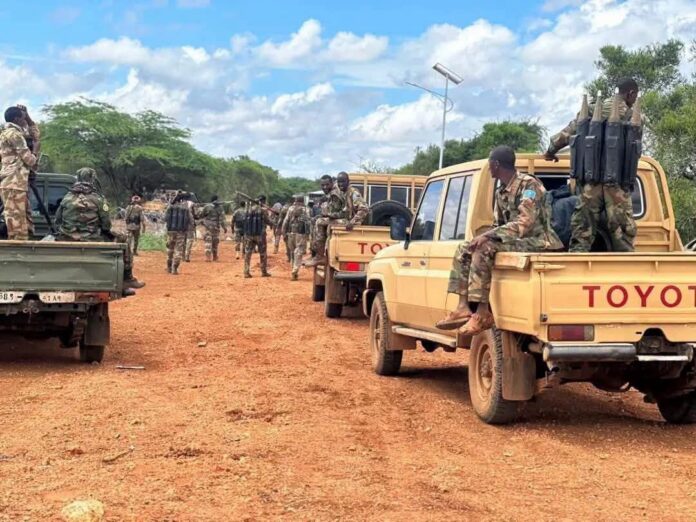
Meanwhile, reports from the city indicate that more than 1,000 security personnel could be presented today after reportedly being assembled in Beledweyne over the past two days.
The force is said to have been prepared to protect Ugas Yusuf and maintain security across the city.
However, the reported number of personnel, their origins and their operational arrangements have not been independently verified. The claims of troop mobilisation should therefore be treated with caution.
Any significant military deployment in Beledweyne could have wider political and security implications, particularly as different groups remain divided over the future of Hirshabelle.
The political position of Hirshabelle Vice President Abdifatah Hassan Afrah has also come under scrutiny.
Reports suggest he is facing pressure over his continued presence in the region, with discussions reportedly involving the possibility of his resignation or departure from Beledweyne.
These claims have not been officially confirmed.
The dispute follows Hirshabelle’s leadership election on October 24, 2026, in which Ali Abdullahi Hussein, widely known as Ali Gudlawe, was re-elected president, while Afrah secured the position of vice president.
Some politicians and traditional elders in Hiiraan have rejected the election process, arguing that it took place without a comprehensive political agreement addressing the region’s grievances and concerns over representation and power-sharing.
Afrah previously said he had travelled to Beledweyne to meet traditional elders and politicians who had raised objections to the election.
He said he wanted to promote understanding through dialogue and provide an opportunity for local communities to present their concerns.
If reports of pressure on the vice president to resign or leave the city prove accurate, they would point to the extent to which the political dispute is affecting the ability of Hirshabelle’s leadership to operate in Hiiraan.
The tensions also reflect a broader disagreement between the Federal Government, Hirshabelle authorities and traditional leaders over the region’s political future.
Ugas Yusuf has described the situation facing Hiiraan residents as one requiring a collective response and urged local security personnel to stand with their communities.
His statements have received support from some politicians and community figures, several of whom have warned Mogadishu against using national security forces to settle political disagreements.
The Federal Government and Hirshabelle administration are meanwhile facing calls to pursue negotiations and address local grievances through political engagement rather than military pressure.
At the heart of the dispute are longstanding questions about Hiiraan’s representation in Hirshabelle, the distribution of political power within the state and the relationship between the Federal Government and communities in the region.
The meeting between Ugas Yusuf and Hawadle lawmakers is therefore being closely watched for indications of their shared political position and the steps they may pursue in response to the crisis.