

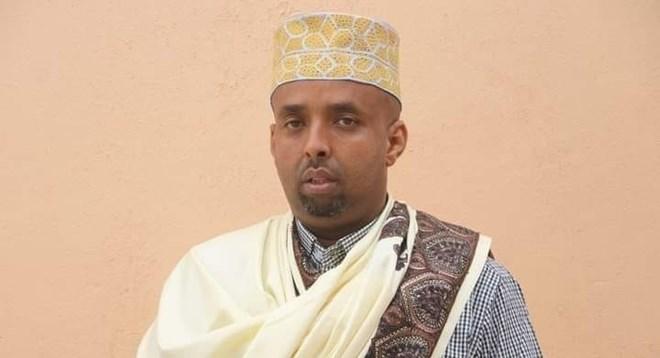

Political tensions are mounting in Beledweyne as disagreements over the leadership of Hirshabelle State continue to deepen. The latest development came after a strong warning from the Hawadle clan’s traditional leader, Ugas Yusuf Ugas Hassan Ugas Khalif, highlighting growing political and community grievances in Hiiraan region.
Speaking at a press conference at his residence in Beledweyne, Ugas Yusuf accused groups operating under clan affiliations and the authority of the government of carrying out what he described as an attack on Hiiraan.
He urged residents to defend their dignity and community interests, while delivering a direct message to security personnel from the Hawadle community serving in government institutions.
His remarks came amid tensions between supporters of the Hirshabelle administration and politicians and elders who have rejected the process through which the regional leadership was elected.
The traditional leader called on security personnel from Hiiraan, particularly members of the Hawadle community, not to participate in operations against people in their home region.
He also urged them to gather in Beledweyne to discuss the situation and respond to what he characterised as a threat to the region.
The statement carried two significant messages: opposition to the political process that produced Hirshabelle’s current leadership and concern that the dispute could spill over into the security forces, potentially affecting stability in the region.
However, the Ugas’s allegations of an attack involving groups acting under government authority remain his own claims. There has been no independent confirmation that such an operation was being planned.
The latest tensions stem from the October 24, 2026, leadership election in Jowhar, where members of the Hirshabelle parliament re-elected Ali Abdullahi Hussein Guudlawe as regional president and chose Abdifitah Hassan Afrah as his deputy.
Guudlawe secured 81 votes, compared with 13 for his rival, Nur Ilmi Khalane. Afrah won the deputy presidency with 79 votes.
The election was rejected by several politicians, traditional elders and sections of the Hiiraan community, who argued that no comprehensive agreement had been reached on regional representation, power-sharing and the political arrangements governing Hirshabelle.
Critics maintained that longstanding grievances in Hiiraan had not been addressed before the new leadership was elected.
Supporters of the administration, however, regard the vote as a legitimate process for establishing the state’s leadership and have called on the new team to prioritise reconciliation and development.
A central point of contention concerns what some Hiiraan politicians describe as the role of the federal government and President Hassan Sheikh Mohamud in shaping Hirshabelle’s leadership.
Some politicians and elders from the region argue that previous understandings on power-sharing arrangements were not respected.
Earlier accounts of the dispute indicated that some Hiiraan figures believed the Hawadle community should hold the state’s top leadership position, although no agreement on the matter was reached.
One of the most sensitive aspects of Ugas Yusuf’s statement was his appeal to government security personnel from Hiiraan, particularly those belonging to the Hawadle community.
He urged them not to allow themselves to be deployed against their own communities and called on them to stand with local residents and traditional leaders.
The appeal has raised concerns about the potential impact of clan-based political disputes on the national security forces.
Government troops are expected to serve the country under the law and established chains of command, rather than become involved in political or clan rivalries.
Several media outlets have reported that armed troops travelling in military vehicles arrived at the Ugas’s residence in Beledweyne after his appeal.
Some of the personnel were reportedly members of government security institutions.
The reported movements have added to questions about how security forces are being managed amid the crisis and whether disagreements or competing orders exist within the security institutions.
Tensions have also been heightened by the arrival of two prominent figures with opposing positions on the Hirshabelle leadership dispute.
Abdifitah Hassan Afrah, the newly elected vice-president of Hirshabelle, travelled to Beledweyne and said he intended to meet traditional elders and politicians who had rejected the election in an effort to reach an understanding.
Former National Intelligence and Security Agency (NISA) director Abdullahi Mohamed Ali Sanbaloolshe also arrived in the city. He has been among the politicians strongly critical of the process that produced Hirshabelle’s new leadership.
Hiiraan Online reported that both men arrived with armed security escorts, raising concerns about the possibility of confrontations between rival groups.
Their presence, alongside reported movements of armed personnel, has turned Beledweyne into a focal point for political disagreements, community grievances and security concerns.
Ugas Yusuf’s remarks have prompted reactions from opposition politicians. Former Prime Minister Hassan Ali Khaire said the warning reflected the seriousness of Somalia’s political and security situation and raised concerns that tensions in Hiiraan could develop into armed confrontation.
Other opposition lawmakers and political figures have also spoken out, urging stakeholders to prevent violence and bloodshed.
The reactions indicate that the dispute in Beledweyne is no longer confined to disagreements between the Hirshabelle administration and politicians from Hiiraan. It has also attracted the attention of opposition figures and national-level political actors.
The Ugas’s statement has fuelled debate over whether the political arrangements underpinning Hirshabelle’s administration are coming under increasing strain.
His remarks suggest that some traditional leaders and politicians in Hiiraan remain dissatisfied with the formation of the new administration and want negotiations on the state’s political future to be reopened.
Nevertheless, it would be premature to conclude that the political framework underpinning Hirshabelle has formally collapsed. Some stakeholders continue to support the administration, while others maintain that the dispute should be resolved through dialogue.
What remains clear is that the political agreement needed to maintain cooperation within the state faces significant challenges unless a process acceptable to both Hiiraan and Middle Shabelle, as well as the competing political groups, can be established.
President Hassan Sheikh Mohamud is facing calls to play a more visible role in defusing the tensions, given the federal government’s influence over relations with Somalia’s regional administrations.
A political solution would need to address grievances in Hiiraan, particularly those involving representation, power-sharing and relations between the region’s communities and the new Hirshabelle leadership.
It is equally important to clarify the role of federal security personnel and prevent government forces from being drawn into political disputes or clan-based confrontations.
For the new Hirshabelle administration, the immediate challenge is to rebuild confidence, engage critics of the election and demonstrate that the regional government is open to all communities across the two constituent regions.
The direction of the crisis will depend in part on whether the federal government facilitates meaningful negotiations, whether the new administration is prepared to address Hiiraan’s grievances and whether armed groups and security personnel avoid actions that could trigger confrontation.