

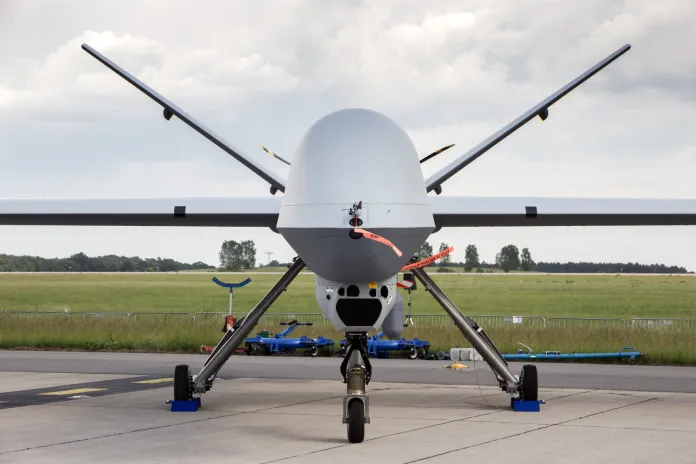

The United States has gone six months without publicly confirming an airstrike against Islamic State (ISIS) militants in Somalia, while its aerial campaign has increasingly focused on Al-Shabaab, according to a new analysis by the research organisation New America.
The last US strike against ISIS-Somalia officially acknowledged by US Africa Command (AFRICOM) took place on May 6, 2026, near the Golis Mountains in Bari Region.
The absence of further publicly confirmed attacks against the group marks a shift in the pattern of US military operations in Puntland, where American forces intensified airstrikes against ISIS positions, caves and fighters from early 2025.
New America’s assessment does not suggest that Washington has ended its military campaign in Somalia.
Instead, the available figures indicate that the focus of publicly acknowledged air operations has moved towards Al-Shabaab, with no new AFRICOM-confirmed strikes against ISIS-Somalia since May.
AFRICOM said the May 6 operation was conducted in coordination with the Federal Government of Somalia and was intended to weaken the capabilities of ISIS militants. The strike took place near the Golis Mountains, approximately 75 kilometres southeast of Bosaso.
The Golis and Cal Miskaad mountain ranges have long served as strongholds for ISIS-Somalia, providing caves and difficult terrain that militants have used as hideouts and operational positions.
US airstrikes in the area have therefore been a central part of efforts to weaken the group’s presence in Puntland.
New America’s figures show a significant decline in the overall frequency of US airstrikes in Somalia compared with the first months of 2026.
Between January and May, the United States conducted an average of 12.6 strikes per month. That figure fell to an average of 5.4 per month between June and October.
From May 6 to November 6, AFRICOM publicly announced 28 airstrikes against Al-Shabaab, while confirming none against ISIS-Somalia.
The figures point to a clear change in the publicly documented targets of American air operations, with Al-Shabaab accounting for the overwhelming majority of acknowledged strikes during that six-month period.
New America also recorded 126 US strikes and related operations in Somalia in 2025, compared with 93 recorded by early November 2026.
These figures reflect the organisation’s tracking of publicly reported operations and should not be treated as a direct measure of the damage inflicted on either militant group.
The decline in strikes against ISIS does not, however, establish that the United States has formally abandoned its campaign against the group. New America has not presented conclusive evidence identifying a specific reason for the absence of publicly confirmed attacks since May.
Several factors could help explain the change. Previous airstrikes may have weakened ISIS positions and reduced the number of identifiable targets in the mountain areas.
Washington may also have shifted operational priorities towards Al-Shabaab, which continues to pose a major security threat in Somalia.
Changes in intelligence assessments, target identification and the risks associated with conducting air operations could also affect the frequency of strikes.
These remain possible explanations rather than established reasons for the pause. New America has not identified any one of them as the confirmed cause.
There have also been reports of an alleged US strike against ISIS fighters on September 3, 2026, in Togga Baalade in the Cal Miskaad mountains.
The US-based outlet Drop Site reported the incident, citing Puntland security officials. AFRICOM, however, denied carrying out the attack.
The conflicting accounts highlight the difference between military operations reported by local sources or media outlets and those officially acknowledged by the US military.
New America has pointed to such discrepancies as a challenge to accurately assessing the full extent of American air operations in Somalia.
The absence of confirmed strikes has also raised questions about the current strength of ISIS-Somalia and the impact of the previous US campaign. Earlier operations may have significantly damaged the group’s infrastructure and operational capabilities, but a reduction in airstrikes does not demonstrate that the organisation has been eliminated.
Militant groups can adapt to military pressure by relocating, reorganising their forces or changing their methods of operation.
Establishing whether ISIS has been substantially weakened would therefore require more information about its current leadership, fighters, movements and remaining positions in Puntland’s mountainous areas.
The decline in attacks against ISIS should also be viewed alongside the continued US campaign against Al-Shabaab.
AFRICOM’s announcement of 28 strikes against the group between May 6 and November 6 indicates that American military operations in Somalia have continued, even as the publicly identified targets have changed.
The dispute surrounding the reported September attack has also renewed questions about transparency in the reporting of US military operations.
New America has stressed the importance of consistent and accessible information for assessing the scale of the campaign, its impact on militant groups and the wider security situation.
AFRICOM has maintained that it publicly announces the airstrikes it conducts and does not have a separate tally of undisclosed strikes outside its public record.
That position is significant in assessing the conflicting accounts surrounding the alleged attack in Togga Baalade.
The six-month absence of publicly confirmed US strikes against ISIS-Somalia leaves important questions about the future of the campaign in the al Miskaad and Golis mountains.
It remains unclear whether the reduced activity reflects the impact of previous operations, a change in American priorities or other operational considerations.
What the available figures establish is that AFRICOM has not publicly confirmed an airstrike against ISIS-Somalia since May 6, 2026, while continuing to announce operations against Al-Shabaab.
The extent to which ISIS has been weakened, and whether it retains the capacity to reorganise, remains uncertain.