

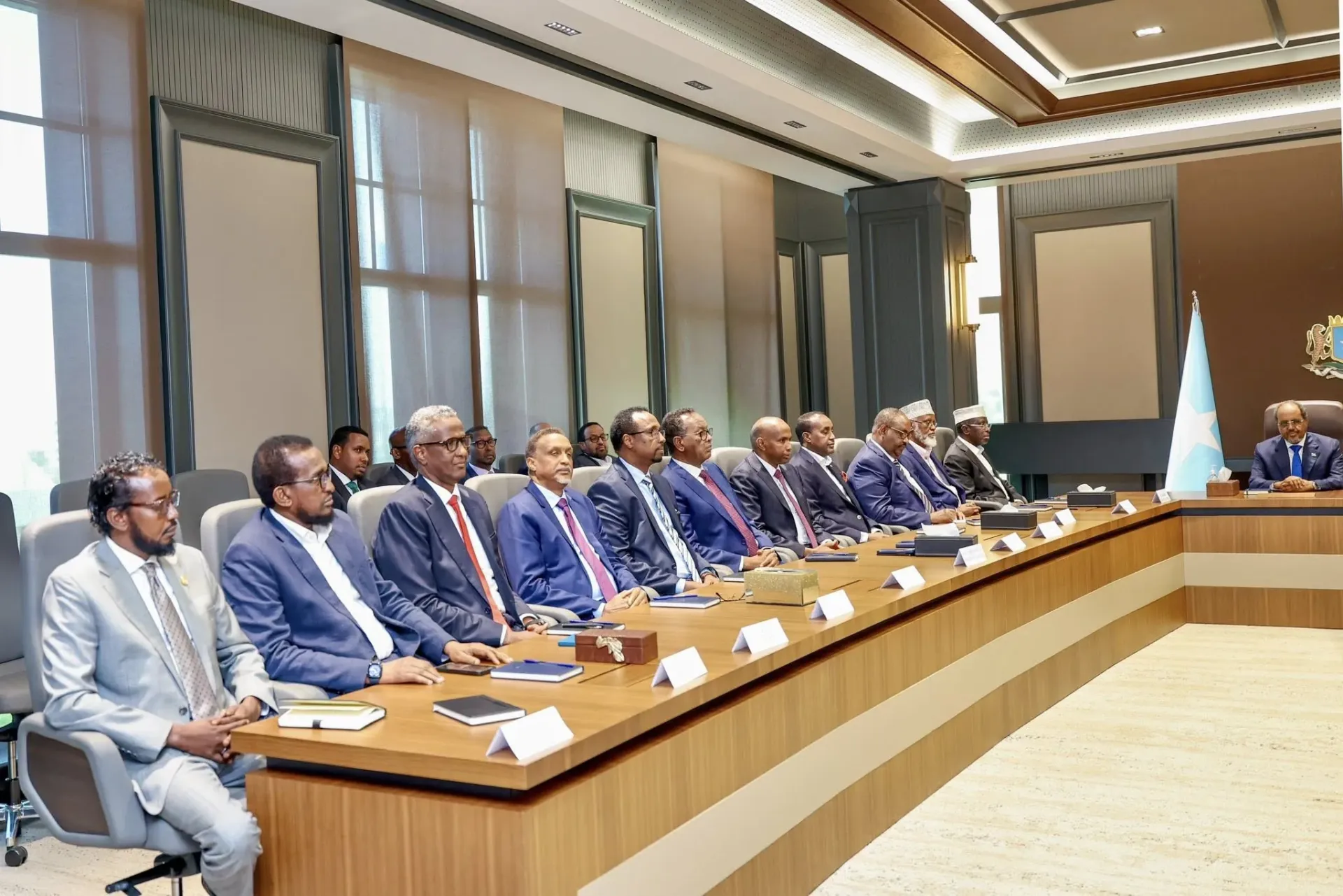

Political talks aimed at resolving Somalia’s election crisis ended in deadlock on Monday, shortly after they resumed inside the secure compound of Aden Adde International Airport in Mogadishu, according to sources familiar with the negotiations who spoke to Kaab TV.
The negotiations, mediated by members of the international community, resumed after weeks of suspension but quickly broke down as the Federal Government and opposition representatives failed to bridge their differences over the country’s electoral roadmap.
The talks are intended to resolve the political crisis triggered by the extension of the mandates of President Hassan Sheikh Mohamud, whose constitutional term expired on June 15, 2026, and the Federal Parliament, whose mandate ended in April 2026.
The extensions have been rejected by opposition groups, which argue they lack constitutional legitimacy and have deepened the country’s political divisions.
The dispute has already led to armed clashes in Mogadishu. In June, fighting erupted between forces aligned with the opposition and troops loyal to the Federal Government in the districts of Hawl-Wadaag, Abdiaziz, and Warta Nabadda (Wardhiigley).
More than 10 people were killed, while hundreds of residents were displaced by the violence, highlighting the security risks posed by the unresolved political standoff.
International mediation expands
The talks were initially facilitated solely by Turkey, which has long maintained close diplomatic and security ties with Somalia. However, opposition leaders questioned Ankara’s neutrality, arguing that it was too closely aligned with the Federal Government.
Following those objections, the mediation team was expanded to include diplomats from the United Kingdom, the United States, the European Union, the United Nations, and the African Union.
The broader mediation effort aims to help the rival sides reach a consensus on an electoral framework and prevent further political instability.
Despite four rounds of negotiations, the discussions have repeatedly stalled over fundamental disagreements on how Somalia’s next elections should be organized.
What are the main sticking points?
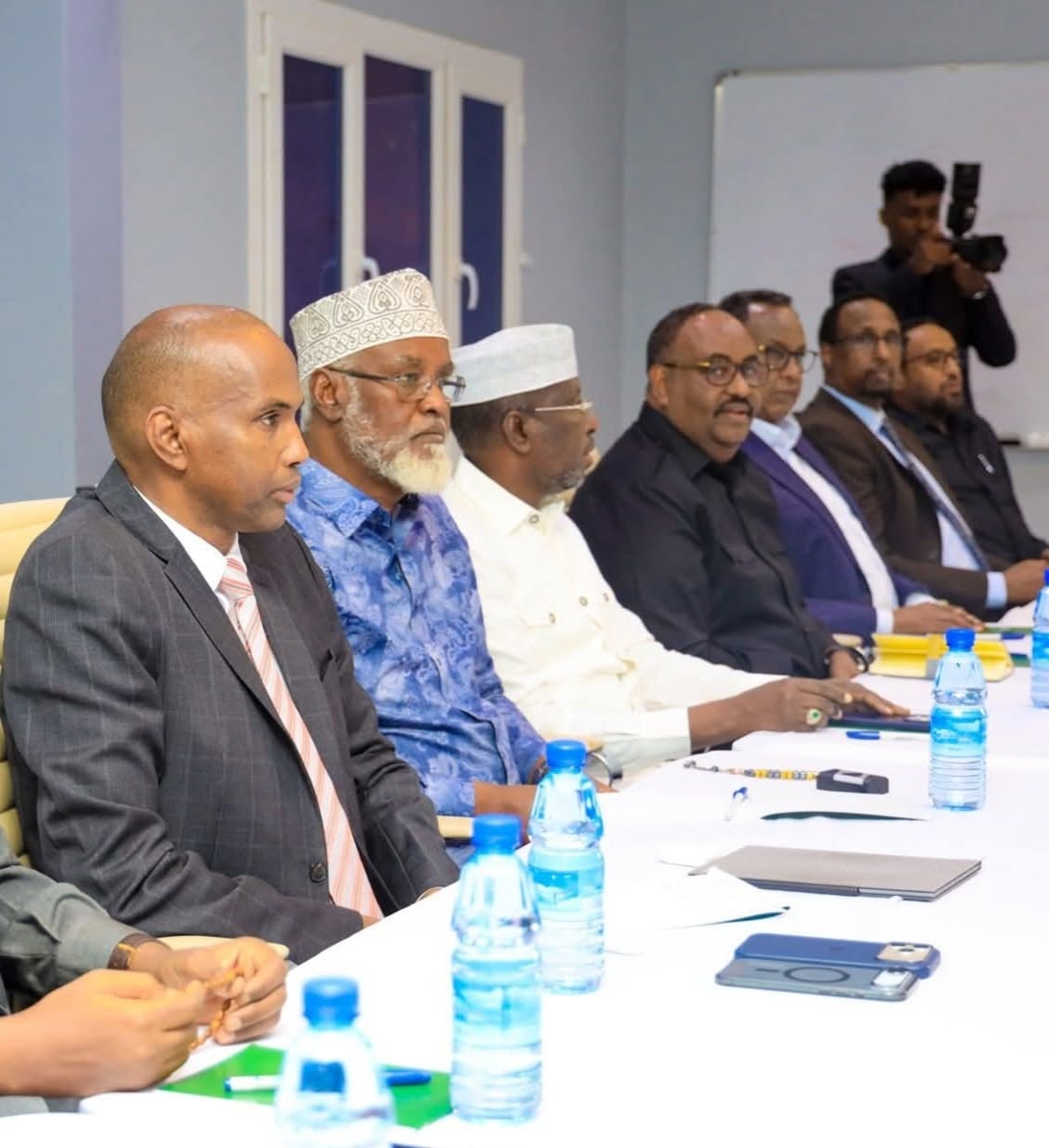
Monday’s meeting brought together representatives of the Federal Government and delegates from the Somali Future Council, the main opposition coalition, alongside other opposition groups.
Discussions focused primarily on the electoral model, the composition of election management bodies, and who should oversee the voting process.
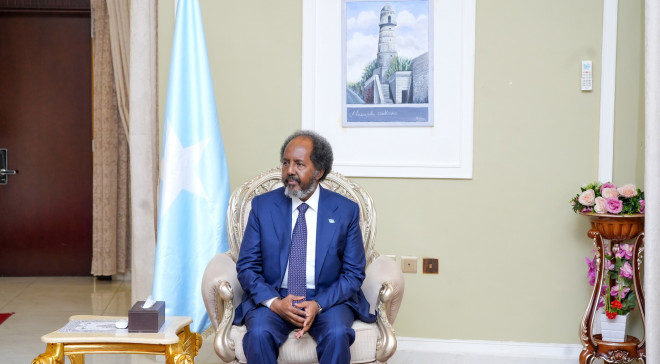
According to sources who spoke to Kaab TV, the opposition is proposing a two-tier electoral commission, consisting of both federal and state-level election bodies, similar to the system used during Somalia’s 2021–2022 electoral process.
The opposition, supported by the regional administrations of Puntland and Jubaland, also wants parliamentary seats to remain allocated under the 4.5 clan-based power-sharing formula during the transitional period.
However, they are proposing a significant expansion of the number of delegates and polling locations to make the process more inclusive while the country prepares for universal suffrage.
Federal Government representatives, however, insisted that the current nine-member National Electoral Commission, appointed in late 2025, should remain responsible for organizing the elections.
The commission has been rejected by Puntland, Jubaland, and other opposition groups, which argue it lacks political neutrality because it was established without broad consultation.
The Federal Government is also reportedly opposed to creating multiple election bodies, preferring a single national commission to oversee the entire process.
Although both sides publicly support Somalia’s long-term transition to one-person, one-vote elections, they remain sharply divided over how that transition should be managed and what political guarantees should be put in place to ensure confidence in the electoral process.
Unresolved regional disputes
Several contentious issues were left off the agenda, including how elections should be conducted in territories controlled by Al-Shabaab, which continues to hold large areas of southern and central Somalia.
The talks also did not address the status of the North East Somalia Administration, headquartered in Las Anod, which was established in August 2025 and later recognized by the Federal Government.
Opposition leaders also objected to what they describe as Federal Government interference in regional state elections.
They point to the June 2026 leadership change in South West State, where a Federal Government-backed election installed Adan Madobe as the new regional leader after former President Abdiaziz Laftagareen was removed from Baidoa by Federal Government forces and allied clan militias.
Since then, recurring clashes have been reported in and around Baidoa between forces loyal to Laftagareen, who continues to claim he is the legitimate president, and those supporting the new administration.
The opposition has also accused Mogadishu of influencing political developments in Galmudug, where former President Ahmed Abdi Kariye (Qoor Qoor) recently announced he would not seek another term following what critics described as sustained political pressure from the Federal Government.
Elections are also expected to begin soon in Hirshabelle, where opposition groups fear a similar pattern of federal intervention.
Sources told Kaab TV that the Federal Government refused to formally include the issue of regional state elections in Monday’s negotiations.
International mediators seek compromise
Diplomatic sources say international mediators are now preparing a new compromise proposal aimed at breaking the deadlock.
According to preliminary information, the proposal could include holding one-person, one-vote elections within a defined timeframe, establishing a unified electoral commission jointly agreed upon by the Federal Government and the opposition, and introducing political safeguards designed to build confidence among all stakeholders while preserving Somalia’s democratic transition.
Although both camps agree in principle that Somalia should eventually adopt universal suffrage, deep disagreements remain over who should administer the elections, how election officials should be appointed, and what mechanisms are needed to ensure the process is viewed as impartial and credible.
Political analysts warn that if the impasse continues, Somalia could face a deeper constitutional legitimacy crisis and renewed instability.
With multiple political actors maintaining armed forces loyal to their respective camps, observers fear the failure of negotiations could increase the risk of further armed confrontations unless a political settlement is reached in the coming weeks.