

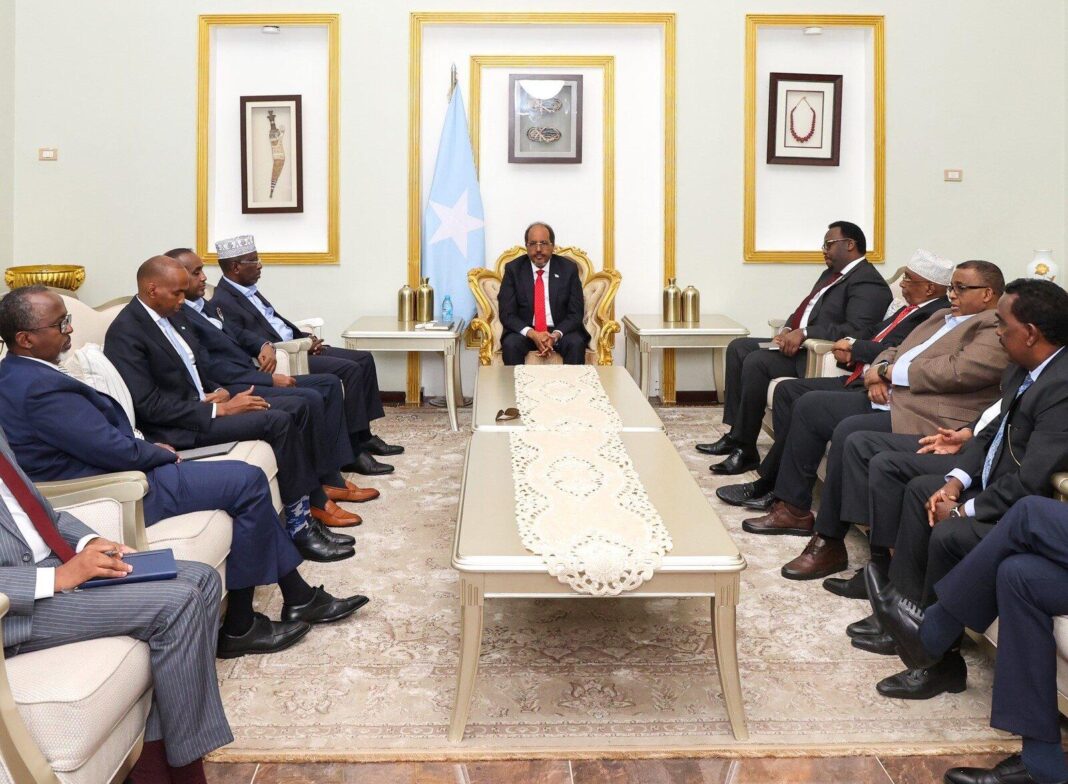

Questions are increasingly mounting regarding the international community’s position on Somalia’s political situation, at a time when the country faces an intense conflict between the federal government, the opposition, and several regional member states—a dispute centered on the constitution, institutional terms of office, and the electoral model.
Many are wondering why Western nations, the United Nations, the African Union, and regional organizations are not currently displaying diplomatic statements and pressure comparable to past instances, especially as the political rift reached a point where the Supreme Court issued a highly controversial ruling.
However, considering past statements and the present situation, it is evident that the international community is not entirely silent on Somalia; rather, shifts have occurred in how it manages the conflict and the degree of its visible involvement in the country’s politics.
At the onset of this year’s political crisis, the international community spoke out clearly regarding the rift between the federal government and the Somali Future Council.
In June 2026, numerous countries—including Britain, the United States, France, Germany, the European Union, and the United Nations—issued a joint appeal urging the parties to resume talks and reach consensus on the electoral model.
That statement also noted that the international community stood ready to support a Somali-led dialogue if requested by the parties.
The UN and the AU also expressed concern at that time regarding rising tensions and violence in Mogadishu, calling for civilian protection and the avoidance of any actions that could escalate the situation further.
However, in recent weeks and months, public statements from the international community appeared out of step with the accelerating pace of the crisis.
What Changed? Closure of the UN Political Mission
One of the most significant shifts that occurred was the conclusion of the UN political mission in Somalia, UNTMIS, which had long played a key role in supporting political processes, dialogue, and institutional capacity-building.
This mission concluded in late October 2026 without an established replacement framework specifically designated to assume its political mediation mandate.
The Associated Press (AP) reported that the UN mission closed while Somalia continued to face disputes over the constitution, elections, and institutional mandates, and without prior agreement on who would succeed the mission’s political role.
This development is significant because UNTMIS was among the primary international bodies continuously monitoring the political situation, stakeholder meetings, and efforts aimed at reaching national consensus.
The closure of that mission may reduce the sustained presence of international political mediation operating directly out of Mogadishu, even as other UN agencies continue their operations in the country.
International Community Prioritizing Somali Ownership
The current visible posture of the international community is largely predicated on resolving Somalia’s political dispute through a Somali-driven consensus.
International actors previously indicated willingness to support dialogue, but reluctance to dictate outcomes or decide who governs the country.
This stance likely stems from lessons learned during past political impasses, particularly the 2021 electoral crisis, when tenure disputes sparked armed clashes and political fragmentation.
However, leaving the solution to Somalis does not mean the international community lacks leverage over the parties. It can utilize diplomatic pressure, financial aid, security partnerships, and political engagement.
Security and the Counter-Al-Shabaab Campaign Shifted Priorities
Another factor influencing the international community’s level of engagement in the political dispute is Somalia’s security landscape.
The campaign against Al-Shabaab, support for Somali armed forces, and the future of the AU mission (AUSSOM) remain paramount priorities for donor and partner nations.
A report released by Security Council Report this November highlighted that Somalia faces political friction regarding constitutional amendments, mandate extensions, and electoral frameworks—disputes that remain unresolved. The report also cited structural hurdles facing the AUSSOM mission.
Concurrently, the AP reported that the departure of Ugandan forces and financial shortfalls facing the AU mission have generated concerns regarding control over key military bases and preventing Al-Shabaab from exploiting security vacuums left by withdrawing troops.
It is likely that security concerns and mission funding now consume a major portion of the diplomatic agenda among Somalia’s international partners.
**Government–Opposition Dispute Enters a New Phase**
Somalia’s political crisis deepened after talks between the government and the Somali Future Council ended without agreement.
The African Union stated on May 16, 2026, that it was concerned over the collapse of Mogadishu talks without consensus, urging parties to return to inclusive dialogue.
The Somali Future Council addressed a formal letter to the UN Security Council in September, requesting close intervention in Somalia’s political and electoral dispute.
On the government side, President Hassan Sheikh Mohamud extended invitations in late October to political stakeholders for a consultative summit scheduled in Mogadishu for November 14–18, 2026, to discuss the electoral process.
This demonstrates that despite the absence of consistent public international pressure, internal efforts to bring parties together have not entirely ceased.
Supreme Court Decision Presents Complex Dilemma for Foreign Partners
The Supreme Court ruling on November 5, 2026, pushed the political situation into a new phase.
The court issued a determination on the constitutional dispute and institutional mandates, while also rejecting the removal of Supreme Court Chief Justice Bashe Yusuf Ahmed.
This event raised critical questions regarding institutional independence, executive authority, and constitutional dispute resolution.
International media outlets reported widely on the event, highlighting that Somalia faces an escalating political and constitutional crisis.
If the international community maintains its apparent public silence, Somali political factions may interpret it as implicit backing for one side or an abdication of its mediation role. However, such interpretations remain unverified until partner nations explicitly state their position.
What Concerns the International Community?
Several operational factors explain the international community’s cautious posture:
– **Maintaining Neutrality:** Partner nations seek to avoid appearing biased toward either the government or the opposition to preserve working relations across all factions.
– **Preventing Violence:** Uncalculated diplomatic pressure or statements could inadvertently trigger conflict, particularly amidst institutional and security friction.
– **Avoiding Imposed Foreign Solutions:** International actors have consistently reiterated that electoral frameworks must remain Somali-led.
– **Preserving Security Priorities:** The fight against Al-Shabaab and the operational continuity of AU forces remain primary concerns for donor nations.
– **Awaiting Outcome of Consultative Talks:** The summit scheduled for mid-November serves as a benchmark to determine whether domestic political actors can reach consensus independently.
These points represent analytical assessments based on current events and released statements, rather than official statements issued by foreign governments.
**Is Somalia Facing a Decline in International Support?**
Addressing this question requires distinguishing between political mediation support, security assistance, and humanitarian relief.
The international community’s reduced public commentary on political friction does not signify a termination of overall support. UN agencies, the AU, and international partners sustain active security, humanitarian, and diplomatic engagements.
However, reports detailing funding shortages for AUSSOM and the drawdown of UNTMIS indicate that the structural model of international support is undergoing transformation.
Consequently, the Somali government faces significant responsibility in strengthening domestic institutions, achieving political consensus, and ensuring disputes are resolved through legal and consultative channels.
The apparent international posture remains centered on resolving political disputes through Somali-led agreements.
International actors have previously demonstrated willingness to facilitate dialogue without attempting to prescribe leadership outcomes or validate specific claims.
This reflects lessons drawn from prior electoral impasses—notably the 2021 crisis—where mandate extensions led to urban combat and severe political fractures.
**Prioritization of Security and Counter-Al-Shabaab Operations**
Somalia’s evolving security posture significantly impacts the volume of international political commentary.
The counter-Al-Shabaab campaign, support to Somali national defense forces, and the operational transition to AUSSOM remain central focus areas for foreign partners.
Financial shortfalls affecting AUSSOM and foreign force drawdowns have heightened international anxiety regarding security sustainability.
Security management and mission financing now dominate the diplomatic agenda of Somalia’s international stakeholders.
**Political Standoff Enters New Stage**
Political friction escalated following the failure of negotiations between the federal government and the Somali Future Council.
The African Union expressed concern on May 16, 2026, over the inconclusive end of Mogadishu talks, urging all sides to re-engage in inclusive consultations.
Taking these developments together, the international community has not abandoned Somalia; rather, its operational approach to managing political friction has shifted.
The conclusion of UNTMIS, the overriding focus on security transitions, and the emphasis on Somali ownership account for the absence of high-visibility diplomatic interventions seen in previous cycles.
Somalia remains in a delicate transition period requiring close international monitoring, particularly as friction touches upon constitutional frameworks, institutional terms of office, and judicial independence.