


Somalia is facing a sensitive political and security period as military confrontations in Bay region, disputes between the Federal Government and federal member states, and armed movements in Hiiraan converge.
These developments have raised concerns about cooperation between national security forces, local militias and regional administrations at a time when Al-Shabaab continues to operate across parts of the country.
The growing tensions are also testing the government’s ability to coordinate military operations while managing disagreements over political authority, constitutional changes and the country’s electoral process.
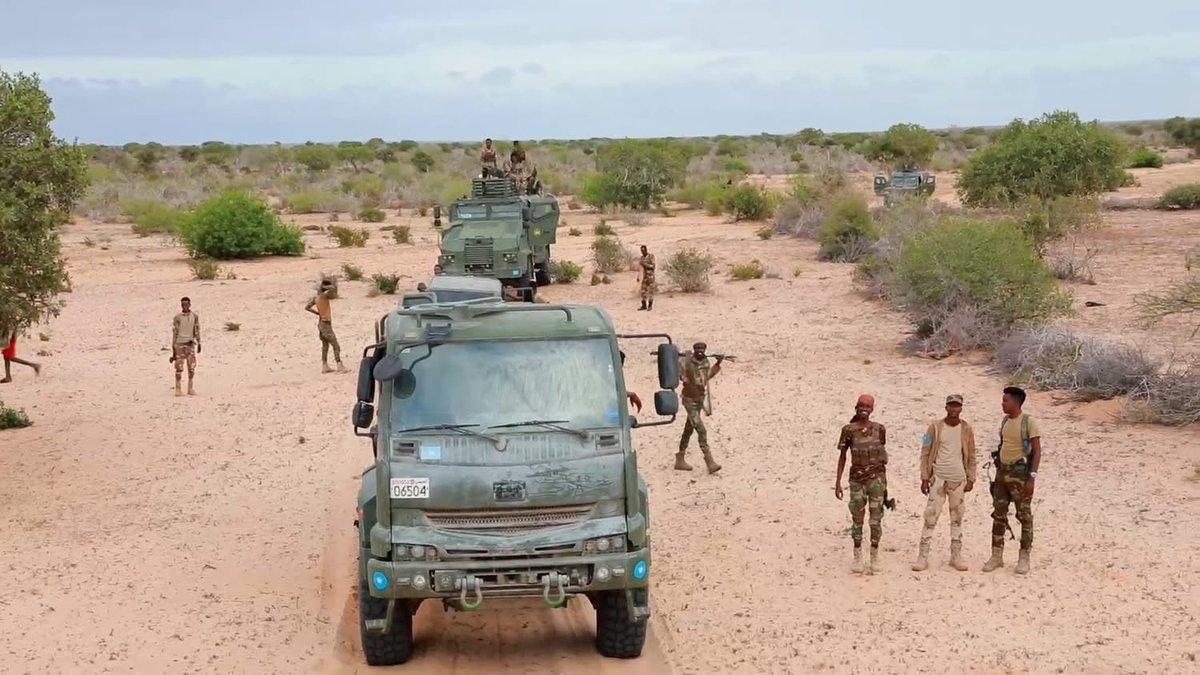
On October 26, 2026, heavy fighting reportedly broke out in Jameeco, Bay region, during a Somali government military operation known as Banooda.
The offensive was part of efforts to extend government forces’ presence into strategic areas along the road linking Leego and Buurhakaba.
The confrontation resulted in reported casualties among government troops and opposing fighters.
However, figures released by the sides have not been independently verified, making it difficult to establish the full extent of the losses or assess the military consequences of the fighting.
The incident took place against the backdrop of escalating tensions between the Federal Government and South West State leadership.
Their disagreement involves competing positions on regional administration, the distribution of political power, elections and the future leadership of the state.
The dispute has broader security implications because military operations in Bay require coordination between federal institutions and regional authorities.
Political disagreements could complicate the deployment of forces, the sharing of intelligence and the management of areas recovered from Al-Shabaab. They also risk diverting attention and resources from the campaign against the militant group.
Beledweyne, the capital of Hiiraan region, has also emerged as a centre of political confrontation and armed mobilisation.
In October, Macawiisley fighters entered parts of the Lamagalaay administrative compound and established positions near government offices, adding to tensions surrounding the regional leadership.
The dispute followed Hirshabelle’s decision to remove the former Hiiraan governor and appoint a replacement. The former governor rejected the decision, while armed groups and political supporters became involved in the unfolding confrontation.
The competing claims over the governorship have complicated efforts to restore stability in the regional capital.
The mobilisation of Macawiisley fighters is particularly significant because community-based forces played a major role in the campaign against Al-Shabaab, especially during the offensives launched in Hiiraan in 2022.
Their participation helped government forces challenge the militant group’s influence in several areas.
However, disagreements between local forces and regional authorities could weaken the cooperation that supported those operations.
If political disputes lead community fighters to withdraw from military positions or disengage from joint operations, government forces could face additional pressure in areas where local knowledge and community mobilisation remain important.
Such developments could create opportunities for Al-Shabaab to exploit divisions, launch attacks or attempt to regain influence.
Nevertheless, the withdrawal of particular militia units from their positions does not, by itself, establish that the militant group has retaken the affected areas.
The security situation depends on the deployment and capacity of government forces and the extent of coordination with local communities.
These regional confrontations are unfolding alongside a wider national political dispute over constitutional amendments, the terms of government institutions and the electoral framework.
The Federal Government maintains that the constitutional changes approved in March 2026 provide the basis for a revised political system.
Opposition groups, however, have challenged both the process through which the amendments were adopted and their implications for the mandates of existing institutions.
The disagreement has strained relations between the government and opposition politicians and affected cooperation with some federal member states.
It has also complicated efforts to reach a shared understanding of the arrangements for the next elections and the distribution of political authority.
The end of the United Nations Transitional Assistance Mission in Somalia (UNTMIS) has added another dimension to the situation.
Although the mission concluded its political mandate, Somalia continues to face disputes requiring dialogue, mediation and cooperation among national and regional stakeholders.
The end of UNTMIS does not mean that all United Nations engagement in Somalia has ceased, as other UN agencies and support arrangements remain active.
President Hassan Sheikh Mohamud has called for political consultations to address the disagreements.
However, questions remain over the participation of key stakeholders, the scope of discussions and whether an agreement can be reached on constitutional and electoral issues.
If the disputes continue, several areas could be affected. Security operations may become harder to coordinate as federal and regional authorities struggle to work together.
Local militias could become increasingly involved in political disputes, weakening their role in the fight against Al-Shabaab. Disagreements over appointments and administrative authority could also deepen instability in areas already facing security challenges.
The wider political dispute could further complicate the transition of security responsibilities from international forces to Somali institutions.
At a time when the country is expected to strengthen its own military and policing capacity, sustained disagreements among political leaders could make it more difficult to agree on priorities, allocate resources and maintain a unified security strategy.
Somalia’s security challenges are therefore closely connected to its political disagreements. Military operations alone cannot guarantee lasting stability if government institutions, regional administrations and local forces remain divided.
Rebuilding trust, clarifying constitutional arrangements and establishing reliable channels for cooperation will be essential to preventing political disputes from undermining the country’s security efforts.