

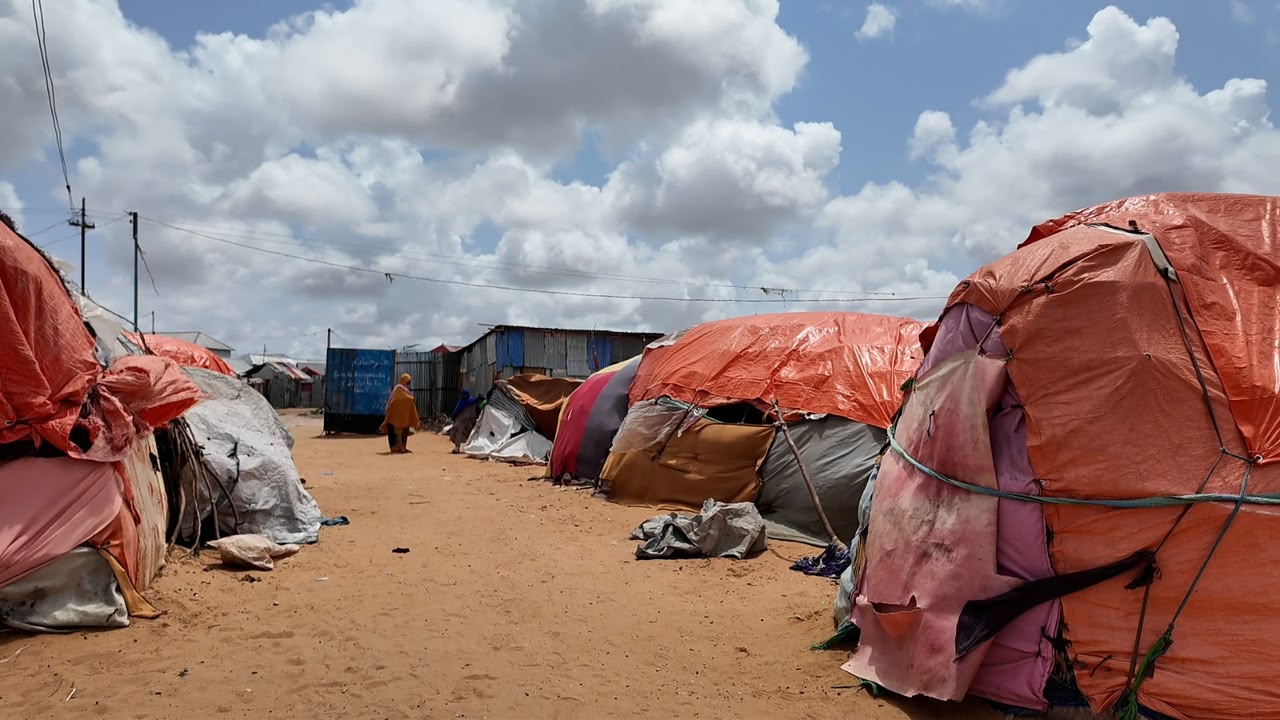

Newly displaced families are arriving in Mogadishu after fleeing fighting and insecurity in Somalia’s Lower Shabelle region, where clashes between Al-Shabaab militants and government forces, as well as rising inter-clan tensions, have disrupted civilian life.
Among those who fled is Fadumo Madey Moalim, 26, who arrived in Mogadishu with her four young children after leaving Jasiira village near Qoryooley last month.
Fadumo said her family fled after Al-Shabaab militants fired mortar rounds at an African Union forces base in the area.
She said the shelling was followed by heavy retaliatory bombardment by Ugandan troops and their Somali counterparts into surrounding farmland, where her family lived.
“There was fighting and we could not stay there. The same day we fled, my home was hit by a mortar round,” Fadumo told Saab TV.
She and her children are now living in Barhad-weyn camp in Kahda district, on the outskirts of Mogadishu.
Fadumo said that after spending about two weeks in the camp, her family had yet to receive humanitarian assistance.
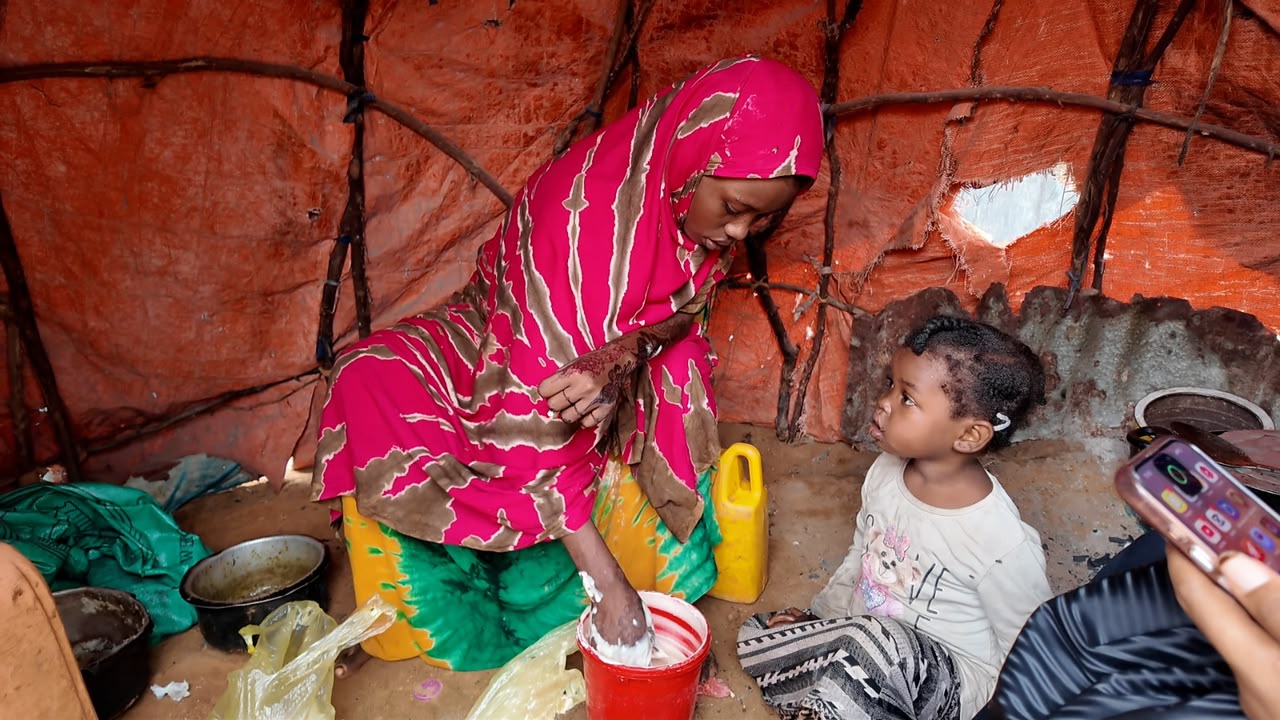
She said local organisations were struggling to provide support because of funding cuts affecting humanitarian operations in Somalia.
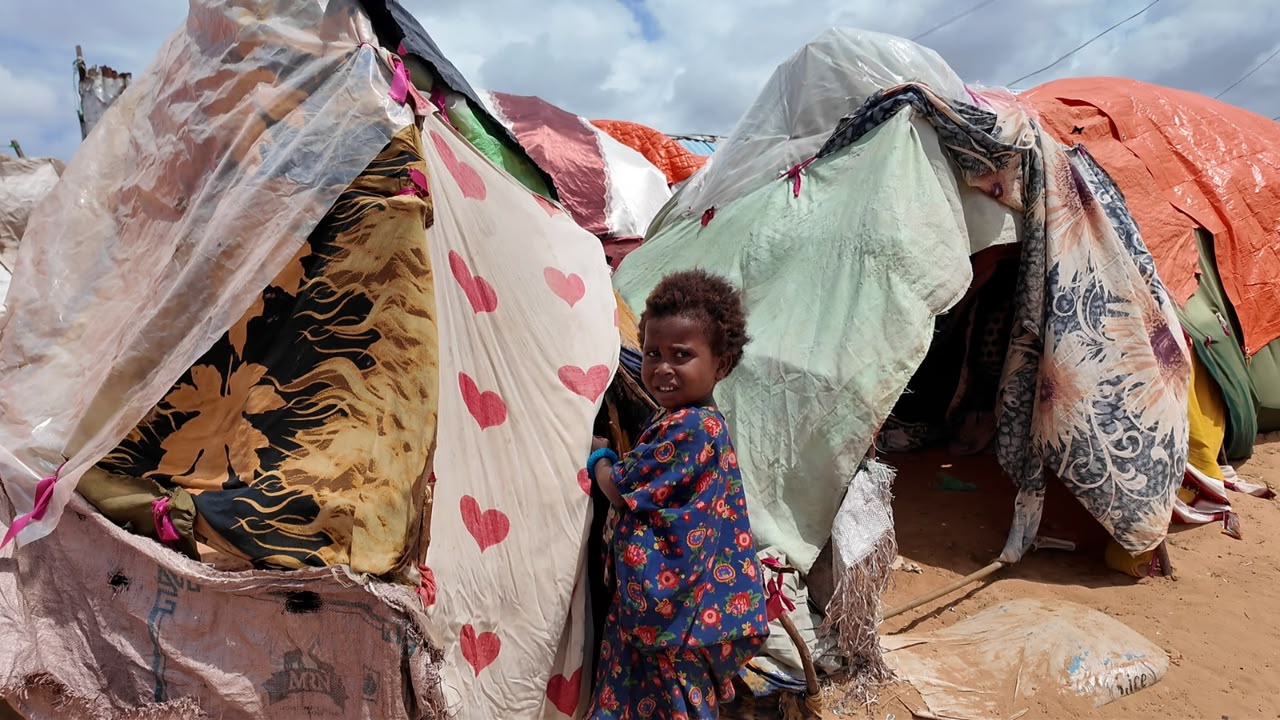
Our visit to Barhad-weyn camp found families living in difficult conditions, with many lacking sufficient food, clean water, adequate shelter and access to essential services.
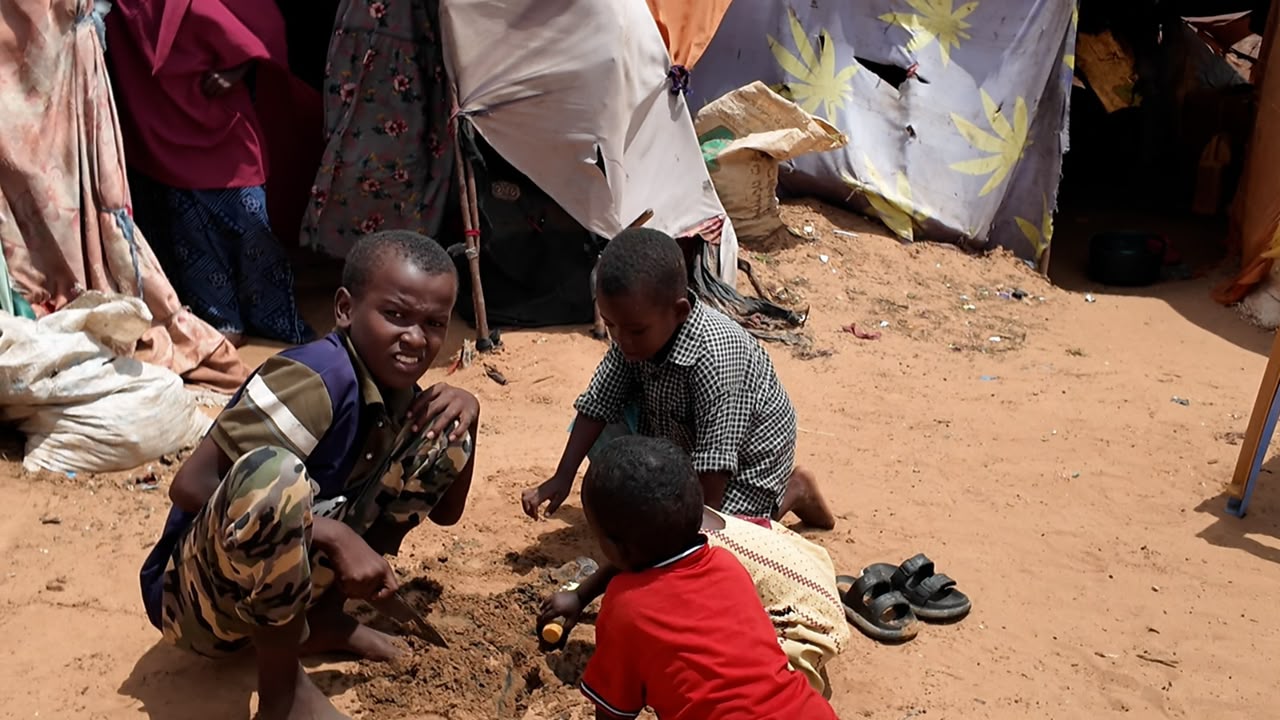
Children appeared particularly vulnerable, with residents reporting cases of malnutrition and limited access to healthcare.
For Fadumo, returning home is not currently an option.
“We are not going back. We shall rather stay here until the situation improves,” she said.
‘We sleep hungry here’
Maryama Mohamed Sheikh Osman, 35, is another recent arrival at the camp.
A mother of seven, Maryama fled Ugunji, near Janale, after Al-Shabaab militants raided a Somali military base in the area and reportedly killed dozens of people.
She said militants also threatened residents in the agricultural village, prompting her to leave with her children.
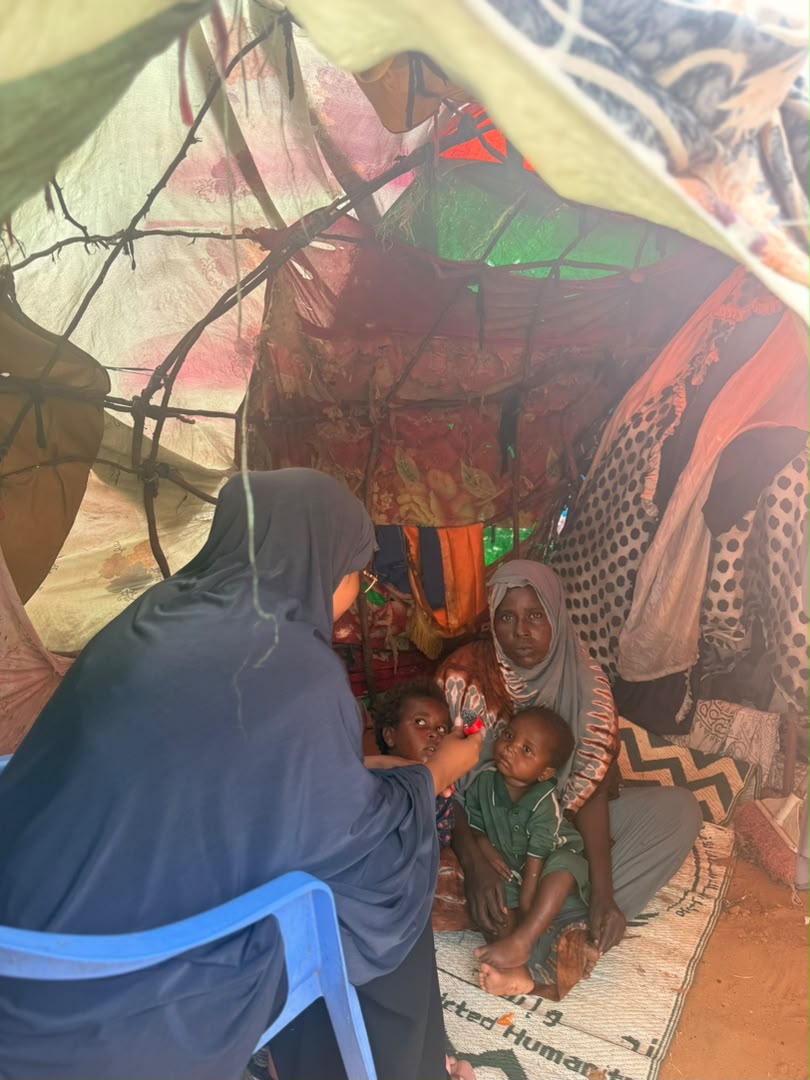
Maryama, who owned a small grocery and meat shop, said she relied on casual labour when her business did not generate enough income. Her former husband died years ago, leaving her responsible for supporting her children.
She arrived in Mogadishu about a week ago.
“We sleep hungry here,” Maryama said through tears.
She said she had never expected to leave her village for Mogadishu, but repeated mortar attacks and insecurity left her with little choice.
“I never thought I would come to Mogadishu, but the mortar shelling forced me and my family to flee,” she told Kaab TV.
Maryama and her children are now living in Barhad-weyn camp without regular food assistance or adequate shelter, sleeping in a makeshift shelter made of plastic sheeting and sticks.
Most of the newly displaced families arriving at the camp are women and children, who face heightened vulnerabilities after being uprooted from their homes and livelihoods.
“We wish our village would be peaceful enough for us to return,” Maryama said.
Multiple threats in Lower Shabelle
The displacement comes amid continuing insecurity in Lower Shabelle, where Al-Shabaab frequently carries out attacks and raids against military and civilian installations.
At the same time, longstanding disputes between local armed clan groups over farmland, land ownership and settlement have added another layer of insecurity.
Tensions involving members of the Biyamaal and Habar Gidir clans have periodically escalated into deadly violence, further affecting civilians and contributing to displacement.
Humanitarian organisations continue to provide assistance to vulnerable communities, but aid workers and displaced residents say the needs are far greater than the assistance currently available.
Residents of Barhad-weyn are calling on humanitarian agencies, the Somali government and the wider community to help provide food, clean water, shelter, healthcare and other essential services.
The Somali government has yet to publicly address the needs of the newly displaced families in the camp. Authorities in South West State also did not immediately comment on the security situation in Lower Shabelle.
For families such as Fadumo’s and Maryama’s, the immediate priority is survival while they wait for the security situation at home to improve.
Until then, Mogadishu remains their only refuge.