


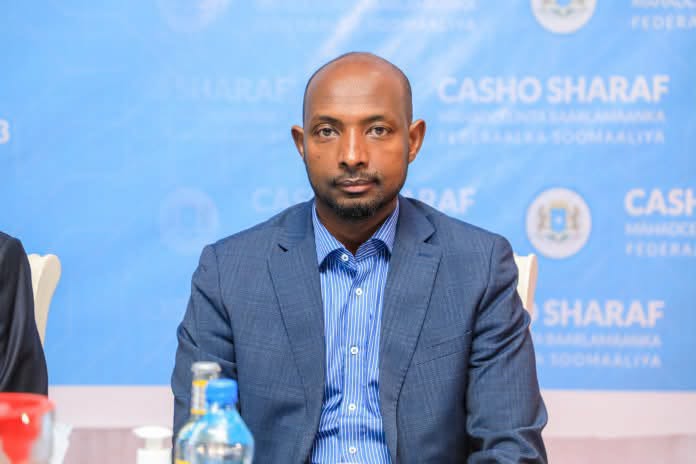


United Nations experts on human rights and judicial independence have strongly criticized the removal of Somalia’s Supreme Court Chief Justice, Dr. Baashe Yuusuf Ahmed, and the appointment of Ibrahim Iidle Suleiman as his replacement, describing the decision as unlawful and warning that it threatens the independence of the judiciary.
In a statement issued on November 12, 2026, the experts condemned President Hassan Sheikh Mohamud’s decision to dismiss Baashe, arguing that the move failed to follow the constitutional procedures required by law and undermined the rule of law and judicial independence.
They urged the Federal Government of Somalia to respect the autonomy of judicial institutions, reinstate Baashe Yuusuf Ahmed and guarantee his security, as well as that of other judges in the country.
The statement comes after President Hassan Sheikh removed Baashe from office on November 4 and appointed Ibrahim Iidle Suleiman to replace him.
At the time, the president said the decision followed complaints about the administration of the judiciary and the need for reforms within Somalia’s justice institutions.
However, the UN experts said the dismissal did not comply with the constitutionally established procedures, which include a recommendation from the Judicial Service Commission and approval by Parliament.
They described the removal as a unilateral decision that violated the legal framework governing the judiciary.
They also questioned the legitimacy of Suleiman’s swearing-in ceremony on November 7, arguing that his appointment had not followed the required procedures.
The experts specifically warned against interference with judges handling sensitive cases involving political disputes and constitutional matters. They also expressed concern over reports of pressure and intimidation directed at members of the judiciary.
They called for the restoration of security protection previously withdrawn from some judges and urged security forces to refrain from interfering in the work of the courts.
The UN experts stressed that judges must be able to perform their duties and make decisions independently, without political pressure, threats or interference from other branches of government.
The dispute has become particularly sensitive because Baashe’s removal took place just one night before the Supreme Court was expected to issue a ruling on a case challenging constitutional amendments and the extension of the terms of federal government institutions.
The case was filed by former Somali President Sheikh Sharif Sheikh Ahmed, who questioned the procedures used to amend the constitution and the legality of decisions concerning extensions of the terms of government institutions.
On November 5, five Supreme Court judges proceeded with hearings in the case and issued a ruling declaring the extensions of the president’s and parliament’s terms unconstitutional, stating that their respective mandates had expired.
The court also declared Baashe’s removal null and void, arguing that the president’s decision amounted to interference in a constitutional case already before the judiciary.
In their statement, the UN experts highlighted the timing of Baashe’s dismissal in relation to the pending Supreme Court proceedings, describing the circumstances as a serious cause for concern regarding judicial independence.
The experts’ intervention introduces several challenges for the Federal Government, particularly concerning the legality of decisions affecting the judiciary and the constitutional limits of presidential authority.
Their position reinforces questions over the extent of the president’s powers to appoint and dismiss senior judicial officials.
Without a legally recognized process for resolving the dispute, confidence in Somalia’s judicial system and the authority of constitutional institutions could be further undermined.
What initially appeared to be a domestic confrontation between the presidency and the Supreme Court has now attracted formal scrutiny from independent UN human rights experts.
Their intervention places the dispute within a broader framework of Somalia’s international obligations concerning human rights, judicial independence and the rule of law.
A central concern raised by the experts is whether judges can continue deciding politically sensitive cases without fearing retaliation or pressure from the government and other state institutions.
An independent judiciary is a fundamental component of democratic governance because it provides a legal mechanism for resolving disputes involving government authorities, state institutions and individual citizens.
The controversy surrounding Baashe’s removal has therefore raised wider questions about how the Federal Government handles constitutional disagreements and manages relations among the executive, legislative and judicial branches.
The UN statement could also intensify concerns among international partners supporting Somalia’s state-building efforts, particularly those involved in strengthening justice institutions, protecting human rights and reforming the judiciary.
If the dispute remains unresolved, judicial independence and the safety of judges could receive further attention from international human rights bodies and other multilateral institutions.
However, the statement issued by the UN experts is not a binding court judgment and does not automatically invalidate Baashe’s dismissal or reinstate him.
Rather, it represents a formal legal and human rights position urging the Somali government to comply with established standards and constitutional safeguards.
The Federal Government has previously defended the decision to remove Baashe, citing complaints about judicial administration and the need to establish a more transparent justice system.
The UN experts, however, maintained that even where such complaints exist, the government must follow the legally prescribed procedures designed to protect judicial independence.
Resolving the dispute will require all parties to respect the constitution, observe the procedures governing the appointment and removal of judges, and recognize the authority of institutions legally mandated to adjudicate such matters.
Ensuring the security of judges will also be essential to prevent intimidation or other forms of pressure from compromising their ability to carry out their responsibilities.
The UN experts’ statement adds a new international dimension to the dispute, which is increasingly intertwined with the broader constitutional controversy over the terms of the president and parliament, as well as amendments to Somalia’s constitution.

