


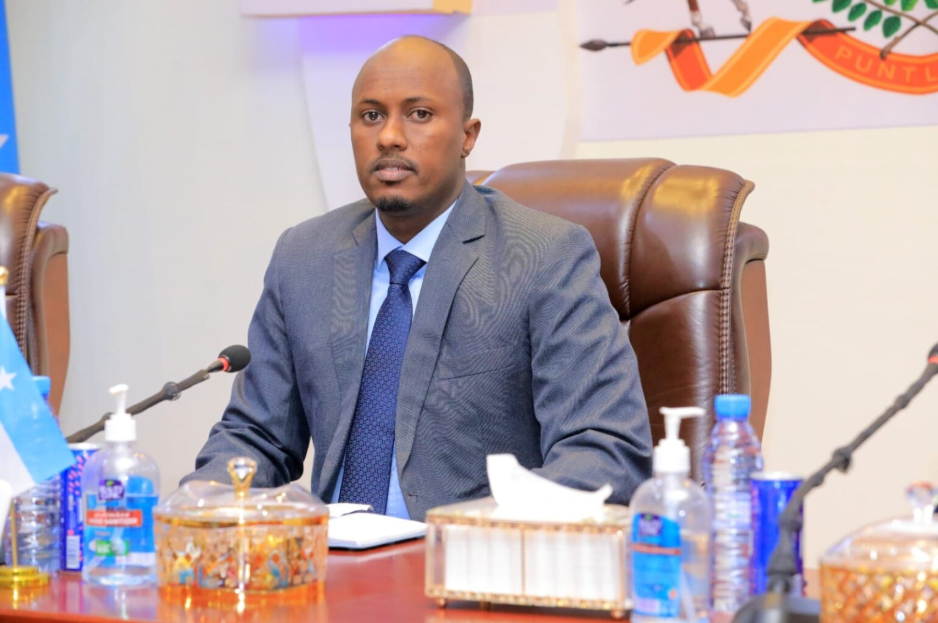


Puntland House of Representatives Speaker Abdirizak Ahmed Said has warned that Somalia is facing serious threats to its statehood, criticizing political leaders and security officials for repeatedly raising alarm over national security without presenting effective solutions.
He argued that officials who warn of threats to the country’s security should take concrete measures to address them rather than repeatedly issuing statements that leave the public concerned without offering a clear response.
He also called on the country’s leadership to take responsibility for governing instead of distracting citizens with warnings and political rhetoric.
“I have seen officials going from one person to another, saying the country is in danger and that someone is coming to attack us. If there is a threat, protect the country from it and deal with the person sending you from one place to another. Otherwise, admit that you cannot govern effectively and step aside. That is what is missing from our leadership,” said Abdirizak.
The Puntland parliamentary speaker also questioned the foundations of Somali politics, arguing that political disagreements across the country are increasingly driven by competing narratives and assumptions rather than an acceptance of the realities on the ground.
He cited the ongoing conflict in parts of southern Somalia, Somaliland’s pursuit of independence, the fighting in Las Anod and continuing political disagreements across the country as examples of the divisions undermining national unity.
“If we are supposed to be one, why are we constantly fighting? Why is there conflict in South West State? Why is Beledweyne divided and its movement restricted? What is happening in the north and in Somaliland? Somali politics is being built on things that do not reflect reality.
Politics must be based on the actual situation, and the different identities and political interests of communities must be accommodated within a state framework,” he said.
Abdirizak also criticized the federal political system, arguing that Somalia’s unresolved disagreements over governance and power-sharing have created an environment in which political actors can pursue their own interests without sufficient agreement among the country’s stakeholders.
He questioned how individuals could travel to Mogadishu, make decisions on behalf of the country and secure financial and military resources without broader political consensus.
His remarks come amid persistent tensions between the Federal Government and federal member states over constitutional amendments, the distribution of political authority, electoral arrangements and the future structure of the Somali state.
Puntland has been among the strongest critics of the federal government’s approach to constitutional changes and political decision-making, arguing that major national arrangements require consultation and agreement among the country’s constituent political authorities.
The broader dispute reflects longstanding challenges in Somalia’s state-building process, particularly disagreements over federalism, power-sharing and the relationship between Mogadishu and regional administrations.
The fighting in Las Anod and Somaliland’s continued pursuit of international recognition have further complicated efforts to establish a broadly accepted political settlement, while conflicts in South West State and other regions demonstrate how political disagreements can develop into security confrontations.
Abdirizak’s comments add to growing criticism from Puntland officials over the direction of Somalia’s political system and the government’s handling of national security and state-building.