

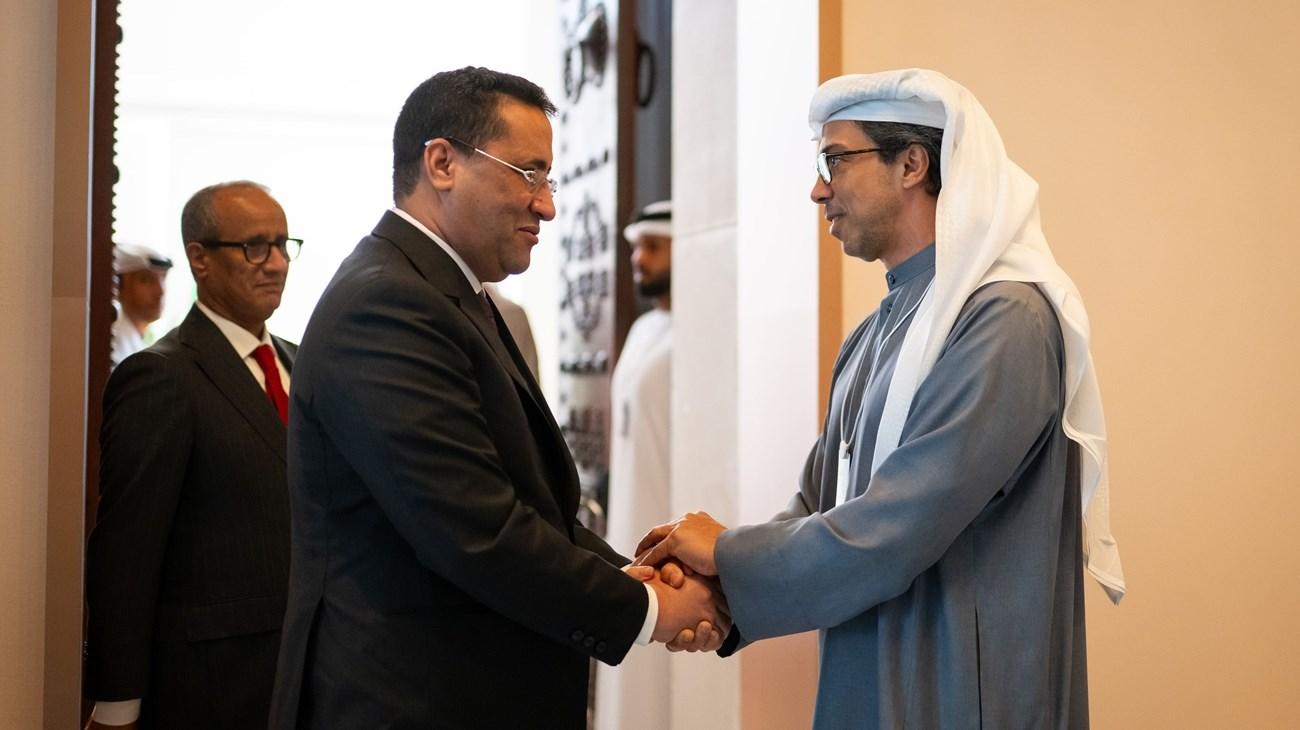

Turkish intelligence chief Ibrahim Kalin has met UAE Vice President Sheikh Mansour bin Zayed Al Nahyan in Abu Dhabi for discussions on bilateral relations, security cooperation and political developments across the region.
The meeting comes as Türkiye and the United Arab Emirates pursue strategic interests in several countries across the Horn of Africa and North Africa, regions affected by armed conflicts, political disputes and competition for regional influence.
Somalia, Sudan, Ethiopia and Libya are among the countries where the interests of Ankara and Abu Dhabi intersect. However, neither government has confirmed that these four countries were specifically discussed during the talks.
The UAE’s state news agency, WAM, reported that the two officials discussed strengthening relations between their countries, expanding cooperation across various sectors and addressing regional and international developments.
The meeting was also attended by Sheikh Tahnoun bin Zayed Al Nahyan, the UAE’s National Security Adviser, and Ali bin Hammad Al Shamsi, Secretary-General of the Supreme Council for National Security.

Their presence underlined the importance both governments attach to security coordination and their broader strategic relationship.
According to Türkiye’s Anadolu Agency, Kalin’s visit was part of wider efforts to strengthen cooperation between Ankara and Abu Dhabi on regional security matters.
Nevertheless, no specific agreement concerning Somalia, Sudan, Ethiopia or Libya was announced, and there is no official indication that the two sides reached a common position on developments in those countries.
Somalia remains one of the most significant areas where Turkish and Emirati interests intersect.

Türkiye has built a close relationship with the Federal Government, supporting military training, security institution-building, infrastructure development and defence cooperation.
Its military training facilities in Mogadishu and wider security partnership have given Ankara an important role in Somalia’s efforts to strengthen its national institutions.
Türkiye also has strategic interests in the Indian Ocean and the Gulf of Aden, which are important maritime routes for international trade and regional security.
The UAE, meanwhile, has maintained economic and security interests in Somalia, particularly in the port sector, trade and relations with different regional administrations.
However, relations between Mogadishu and Abu Dhabi have experienced serious tensions over security and port agreements, as well as political disagreements concerning Somalia’s sovereignty and territorial unity.
These differences have increased the strategic significance of Türkiye’s relationship with the Federal Government, which regards Ankara as an important partner.
Competition between the two countries in Somalia therefore extends beyond diplomatic relations to include defence, investment, ports, maritime security and engagement with federal and regional authorities.

Sudan is another major arena where regional interests overlap. The war between the Sudanese Armed Forces and the Rapid Support Forces (RSF), which began in April 2023, has plunged the country into a prolonged security and humanitarian crisis.
Türkiye and the UAE are associated with different interests in the conflict. The UAE has faced allegations of providing military support to the RSF, accusations it has repeatedly denied.
Türkiye, on the other hand, has maintained defence and political relations with Sudan’s military authorities.
These competing relationships have made Sudan an important part of the wider regional contest for influence.
The conflict also has implications beyond its borders, affecting neighbouring countries, trade routes across the Red Sea and security throughout the Horn of Africa.
Ethiopia is equally important because of its military capabilities, economic weight and strategic location.

The UAE maintains close economic and security ties with Addis Ababa, including cooperation in investment, trade and regional security. Türkiye also has significant diplomatic, commercial and defence relations with Ethiopia.
Both countries have an interest in developments affecting the Horn of Africa, including regional stability, access to maritime routes and the movement of goods across the region.
Ethiopia’s relations with Somalia are particularly significant because disagreements over maritime access and Somalia’s territorial sovereignty have raised wider security concerns.

Libya provides a historical example of how Turkish and Emirati interests have sometimes supported opposing sides in regional conflicts.
During the country’s civil war, Türkiye backed the internationally recognised authorities based in Tripoli, while the UAE was accused of supporting forces led by Khalifa Haftar.
Their differing positions influenced the political and military landscape in Libya for years. However, relations between Ankara and Abu Dhabi have improved in more recent years, with both governments expanding diplomatic engagement, trade and investment.
The rapprochement has reduced tensions between the two countries but has not necessarily eliminated differences over every regional issue.
The broader relationship between Türkiye and the UAE has undergone a significant transformation. After years of political and strategic disagreements, the two governments have taken steps to strengthen economic, diplomatic and defence cooperation.
Their improved ties demonstrate that competition and cooperation can exist simultaneously. The two countries may work together on certain regional challenges while maintaining different interests and relationships elsewhere.
The Abu Dhabi meeting therefore signals continued diplomatic engagement, but does not necessarily mean that their wider competition for influence has ended.

For Somalia, the relationship between Ankara and Abu Dhabi carries particular significance because of the country’s strategic position linking the Red Sea, the Gulf of Aden and the Indian Ocean.
Its coastline, ports and maritime routes make it an important partner for countries seeking stronger commercial, military and diplomatic access to the region.
The meeting between Kalin and Mansour bin Zayed is therefore relevant to Somalia’s wider diplomatic environment, given the roles both countries play in the Horn of Africa.
However, the absence of an announced agreement on Somalia means its direct implications remain uncertain.
Mogadishu faces the challenge of maintaining constructive relations with international partners while ensuring that foreign cooperation serves clearly defined national interests.
This includes protecting the country’s sovereignty, strengthening its institutions and ensuring that agreements involving security, ports and strategic infrastructure are transparent and consistent with national priorities.
Ultimately, Somalia’s position in the region gives it opportunities to benefit from international partnerships, but also exposes it to competing external interests.
Its ability to manage those relationships while safeguarding its independence will be central to how it navigates the changing political and security landscape of the Horn of Africa.