

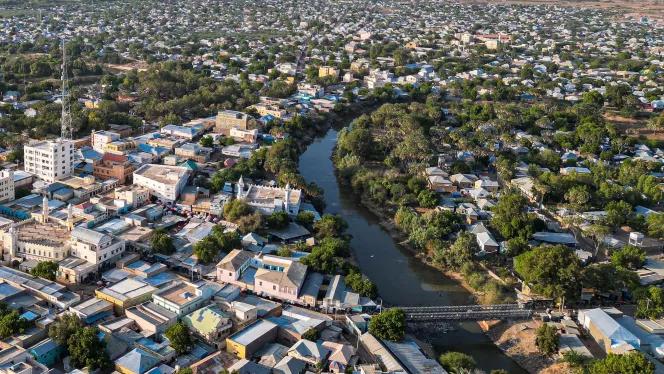

Clan-based armed groups in Beledweyne have become an increasingly important part of the security and political landscape in Hiiraan region.
Some of these forces, particularly the Macawiisley, have played a significant role in operations against Al-Shabaab and the defence of local communities.
However, their continued presence has raised questions about their long-term future, command structures and relationship with Somalia’s national security institutions.
The central concern is what could happen if these forces remain active in the city for an extended period without a unified command structure or a clear plan for their integration into the national security system.
While local fighters can provide valuable protection, maintaining armed groups outside a coordinated state structure may create challenges for governance, public security and political stability.
The Macawiisley have played a prominent role in the fight against Al-Shabaab in Hiiraan.
They have received support from sections of the local population and participated in military operations aimed at protecting communities and recovering territory from the militant group.
Their contribution has demonstrated the importance of community involvement in local security.
However, when armed groups operate without being fully accountable to a single command, coordinating security operations and enforcing government decisions can become more difficult.
Without a clear framework governing their activities, security arrangements may increasingly depend on agreements between individual groups and their leaders rather than established state institutions.
This could complicate efforts to build a consistent and accountable security system in Beledweyne.
One of the most significant risks is the possibility that political disagreements could develop into armed confrontations.
If politicians and rival groups competing for control of regional institutions seek the backing of armed forces, resolving disputes through dialogue may become increasingly difficult.
Under such circumstances, military strength could become a means of exerting political pressure, weakening administrative institutions and undermining public confidence.
Beledweyne therefore needs an inclusive political process capable of addressing disputes without allowing the city to become an arena for competition between rival armed groups.
The continued presence of forces organised along clan lines also raises concerns about social divisions and public trust.
If such groups are not managed carefully, some communities may feel that security arrangements favour particular interests, while others may question whether their rights and safety are being adequately protected.
Over time, these perceptions could weaken cooperation between communities, which is essential for maintaining peace and supporting development.
Building security institutions that are representative, professional and trusted by all sections of society would help address these concerns.
The economic consequences of prolonged insecurity could also be significant. Beledweyne is an important commercial centre and a key point for the movement of people and goods across Hiiraan.
Armed confrontations, insecurity and the proliferation of illegal checkpoints could disrupt trade and discourage investment.
Business owners may become reluctant to expand their operations, while transporters bringing goods into the city could face additional security risks and costs.
Uncertainty could also encourage some traders to move their businesses and capital elsewhere, affecting employment, household incomes and the wider local economy.
Civilians would face the greatest risks if tensions between armed groups escalated into fighting.
Residents in affected neighbourhoods could experience displacement, property damage and prolonged insecurity. Children might miss school, while vulnerable families could struggle to access healthcare and other essential services.
These risks are particularly concerning because Beledweyne is also vulnerable to flooding from the Shabelle River.
Any deterioration in security could make it more difficult for residents and humanitarian organisations to respond effectively to flood emergencies and other humanitarian needs.
Al-Shabaab could also benefit from divisions among local forces. The group has repeatedly exploited political disagreements and community tensions in Somalia.
If local fighters become preoccupied with internal disputes, their ability to coordinate operations against the militant group could weaken.
Fragmentation could create opportunities for Al-Shabaab to expand its activities, particularly in areas where government forces and community fighters struggle to cooperate.
Maintaining coordination between local forces and national security institutions is therefore important to protecting the gains made in the campaign against the group.
Several possible developments could shape Beledweyne’s longer-term security environment. Some armed groups could acquire greater political influence as their military capabilities grow.
Disagreements over leadership and political interests could also divide existing forces into competing factions, increasing the risk of confrontation.
Continued insecurity could undermine commercial activity and investment. Conversely, an inclusive political agreement and the establishment of a unified security structure could create conditions for greater stability and cooperation.
Addressing the situation will require political dialogue involving the Federal Government, Hirshabelle administration, Hiiraan politicians, traditional elders and representatives of the wider community.
Such discussions would need to address disagreements over regional leadership and establish a shared understanding of how local security forces should operate.
A practical security framework should provide a clear process for integrating eligible local fighters into recognised security institutions under accountable command structures.
This should be accompanied by stronger police services, functioning justice institutions and measures to prevent illegal checkpoints and the unauthorised possession or use of weapons.
Equally important is ensuring fair community representation and building public confidence in security institutions.
Employment opportunities, vocational training and economic development programmes could also help provide young people with alternatives to prolonged involvement in armed groups.
The future of Beledweyne will depend partly on how local forces are managed and how effectively they are brought into a wider national security framework.
Their contribution to defending communities should not be overlooked, but their activities need to be governed by clear legal arrangements and coordinated command structures.
Without a sustainable plan, forces that initially emerged to protect local communities could become a source of political tension and an obstacle to the development of effective state institutions.
With political dialogue, security-sector reform and greater public trust, however, their experience and local knowledge could contribute to a more sustainable security system.
Ultimately, residents of Beledweyne need security arrangements that protect all communities, allow businesses to operate without fear and ensure that children can attend school and build a future in a peaceful city.