

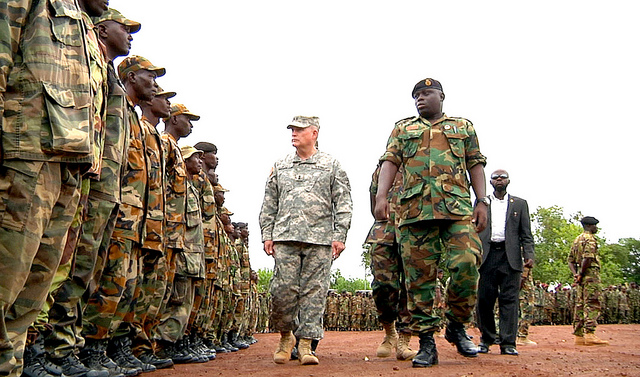

For nearly two decades, the architecture of international security in Somalia rested on an assumption so deeply embedded that it rarely required articulation: whatever political disagreements emerged among international partners, the United States would remain the indispensable financial anchor of the mission.
That assumption is beginning to unravel.
The diplomatic note Washington delivered to the African Union on July 1, announcing its intention to terminate support for the United Nations Support Office in Somalia (UNSOS) by the end of 2026, is more than another dispute over U.N. budgets.
It signals one of the most consequential shifts in the international approach to Somalia since African Union peacekeepers first arrived in Mogadishu in 2007.
Its significance extends well beyond accounting.
Behind the language of fiscal responsibility lies a broader reassessment of how the United States views protracted stabilization missions, the limits of externally financed state-building and the changing priorities of American foreign policy in an increasingly competitive geopolitical environment.
The message is unmistakable.
Washington no longer appears willing to underwrite an open-ended multilateral security architecture whose costs have continued to grow while Somalia’s political institutions remain fragile and its security gains uneven.
Instead, experts say, U.S. policymakers appear to be testing a different proposition: that financial pressure could achieve what years of diplomatic engagement have struggled to deliver by encouraging Somali political actors to compromise, prompting regional partners to assume greater responsibility and accelerating a transition from externally supported security arrangements toward greater Somali ownership.
Whether those objectives prove compatible is another matter. The American argument is, on its own terms, difficult to dismiss.
Since 2007, the United States has invested billions of dollarsin Somalia through assessed United Nations contributions, bilateral military assistance, humanitarian relief and sustained counterterrorism operations.
American support has enabled African peacekeepers to remain deployed, strengthened elite Somali security units and helped prevent the federal government from suffering military collapse during periods of acute instability.
Yet the underlying strategic picture has changed remarkably little.
The al-Qaeda-linked al-Shabab group continues to demonstrate operational resilience,mounting major offensives and recovering previously lost territory.
Somali security institutions remain dependent on foreign logistics and external financing. Political disputes between Mogadishu and the Federal Member States repeatedly disrupt efforts to build unified national institutions. Tactical victories have accumulated, but they have not yet produced an enduring political settlement.
From Washington’s perspective, Somalia increasingly resembles a challenge that has confronted the United States elsewhere – from Afghanistan to parts of the Sahel, where years of substantial financial investment yielded measurable security improvements without resolving the political conditions that sustained conflict.
At a moment when American policymakers are balancing rising fiscal pressures with strategic competition against major powers, expensive stabilization missions have become increasingly difficult to defend.
This shift is reflected in broader policy changes under the U.S. National Security Strategy and budget recalibrations prioritizing direct, interest-driven engagements.
That does not necessarily imply disengagement.
The July 1 communication makes clear that Washington intends to preserve bilateral security cooperation even as it withdraws support for UNSOS.
The distinction is revealing.
Rather than financing the broad logistical infrastructure that sustains multinational peace operations, the United States appears to favor a narrower model built around direct partnerships with capable Somali units, intelligence cooperation, precision counterterrorism operations and targeted military assistance.
Washington’s Calculus vs Mogadishu’s Reality
Rather than signaling a retreat from Somalia, the move appears to reflect a recalibration of how Washington seeks to exercise its influence.
The challenge, however, is that strategies designed in Washington rarely unfold according to the political logic of Mogadishu.
American officials have long identified Somalia’s internal fragmentation as the central obstacle to durable security.
Constitutional disputes remain unresolved. Relations between the federal government and several Federal Member States continue to oscillate between uneasy cooperation and open confrontation. Questions surrounding elections, revenue-sharing and authority over security institutions remain politically explosive.
Washington’s apparent calculation is that reducing external financial guarantees will increase the incentives for compromise.
Somalia’s political history offers little assurance that such pressure will produce the intended outcome.
Security sector reform is rarely a purely administrative exercise. It redistributes authority among clans, reshapes local balances of power and alters long-standing calculations about communal protection. Decisions concerning force integration, command structures or military deployments inevitably carry political consequences that extend well beyond military effectiveness.
What international policy papers often describe as institutional reform is frequently understood within Somalia as a negotiation over political survival.
Compressed timelines and shrinking financial support could therefore encourage agreements that appear functional on paper while remaining contested in practice. Rather than reinforcing national cohesion, hurried political settlements risk deepening mistrust between federal authorities and regional administrations precisely when military coordination against al-Shabaab remains essential.
The operational consequences would extend beyond Somalia’s borders.
The African Union Support and Stabilization Mission in Somalia (AUSSOM) depends fundamentally on the logistical backbone provided through UNSOS.
Fuel, engineering support, transportation, medical evacuation and supply chains are not secondary administrative functions; they are the critical infrastructure that enables thousands of regional troops to remain operational across some of the country’s most contested territory.
For troop-contributing countries including Kenya, Uganda, and Ethiopia, replacing those capabilities independently would be extraordinarily difficult.
Each faces mounting fiscal constraints at home, competing domestic security priorities, and increasing political scrutiny over prolonged overseas deployments. Should international financing diminish substantially, mounting deficits may force troop-contributing countries to withdraw forces or scale back operations unilaterally.
The greater danger is unlikely to be an abrupt collective withdrawal. History suggests a more gradual and potentially more destabilizing scenario.
Individual governments may begin adjusting deployments according to domestic political and financial calculations rather than a coordinated regional strategy.
Such staggered reductions could create uneven security vacuums across central and southern Somalia, presenting al-Shabaab with opportunities to exploit gaps created not by battlefield defeat but by shifting political priorities among its opponents.
A Shifting Regional Balance
Beyond the immediate military implications lies an equally significant geopolitical transition.
Strategic vacuums seldom remain empty.
As the United States narrows its commitment to financing multilateral stabilization, other regional powers are likely to assume greater prominence.
Saudi Arabia’s approach to the Horn is increasingly shaped by Red Sea security considerations. The United Arab Emirates has expanded its regional footprint through ports, logistics infrastructure, and security partnerships. Turkey, meanwhile, has deepened its engagement through military training, defense cooperation, and longer-term institutional ties with Somali security forces.
Their approaches differ, but each possesses both the resources and the strategic incentive to expand influence should Western financing contract.
For Somalia, this evolution presents both opportunity and risk.
Alternative partnerships may ease immediate funding pressures, yet external assistance rarely arrives detached from wider strategic interests.
Security cooperation increasingly intersects with maritime infrastructure, commercial investment, defense agreements and diplomatic alignment across the Red Sea basin.
The Horn of Africa is becoming part of a wider geopolitical theater that stretches from the Gulf to the eastern Mediterranean, where competition is shaped as much by trade routes and maritime access as by counterterrorism.
Washington’s decision may accelerate that transition rather than slow it.
Seen in that context, the American demarche represents more than a budgetary adjustment.
It reflects a deeper evolution in American strategic thinking about the nature of long-term interventions. The era in which the United States routinely served as the unquestioned financial guarantor of expansive multilateral stabilization missions appears to be giving way to a more selective model centered on bilateral partnerships, fiscal restraint and narrowly defined security objectives.
Whether that shift ultimately encourages greater Somali self-reliance or instead contributes to renewed fragmentation will depend less on the scale of the funding reduction than on the political choices made in Mogadishu, the cohesion of African partners and the willingness of emerging regional powers to shape the security order that follows.
The larger question is therefore not whether the United States is leaving Somalia.
It is whether the rules governing international engagement in Somalia are being rewritten.
If they are, the coming years may be remembered not as the moment international attention receded from the Horn of Africa, but as the point at which competition over its future entered an entirely new phase, one in which influence is measured less by who finances peacekeeping than by who defines the region’s strategic architecture after it.
Abdi Guled is a Horn of Africa analyst and journalist focusing on political risk, armed groups and geostrategic competition in the region.