

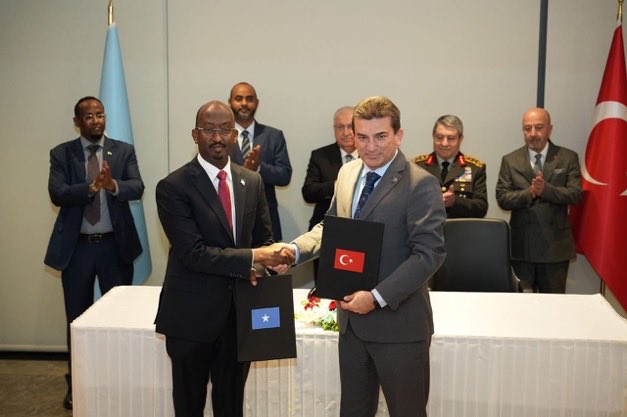

For more than a decade, Somalia’s federal system has rested on a fragile political compromise: that disputes over sovereignty could be postponed while the state itself was rebuilt.
That assumption is now under unprecedented strain, not over elections or constitutional amendments alone, but over tuna, territorial waters and who has the authority to monetize one of East Africa’s richest maritime frontiers.
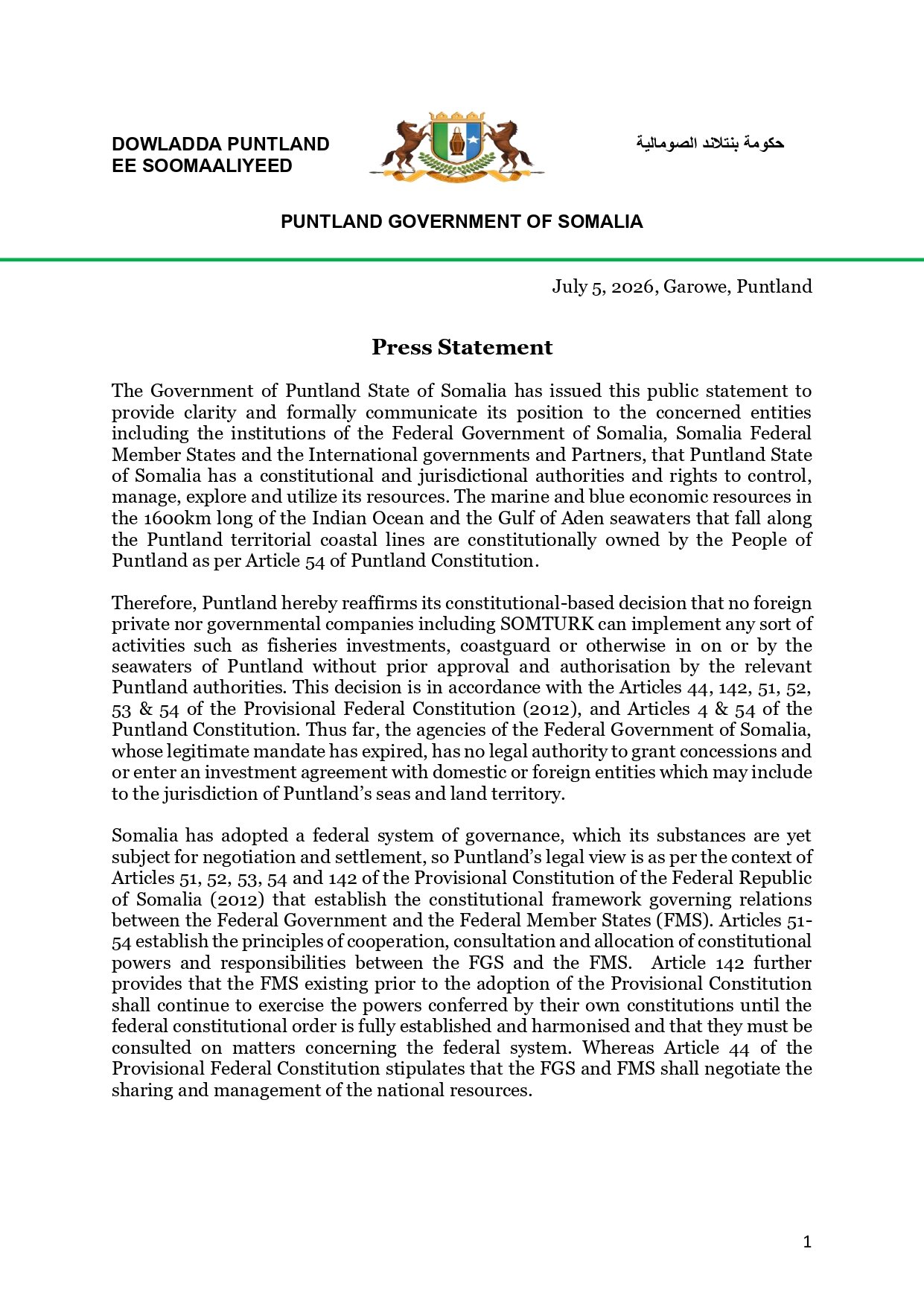
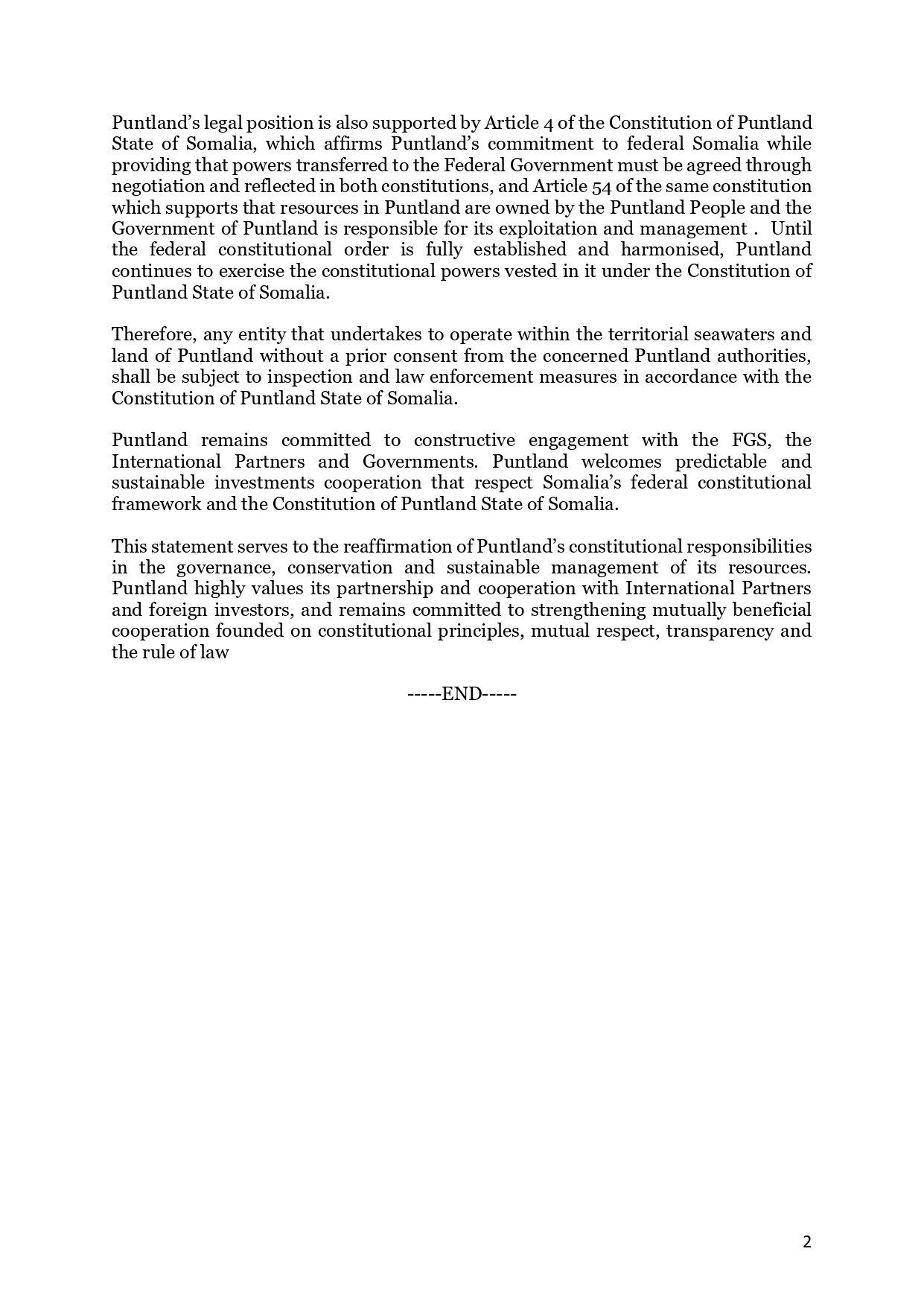
A sharply worded declaration issued by Puntland on July 5 banning the Turkish-backed fishing company SOMTURK from operating along its coastline may appear, at first glance, to concern fisheries management. In reality, it reflects a much deeper struggle over the distribution of political authority inside Somalia and the future architecture of the federal state.
The dispute illustrates how the country’s blue economy has become the latest arena in which unresolved constitutional questions are colliding with expanding foreign strategic interests.
More significantly, the declaration represents one of Puntland’s clearest assertions yet of its interpretation of federalism. While the move is consequential, it is not entirely surprising given the steady deteriorationin relations between Garowe and Mogadishu.
By explicitly rejecting federal mandates and ‘unilateral’ agreements such as SOMTURK, Puntland is drawing a clear constitutional line in the sand, signaling that it will not allow decisions affecting its maritime domain and natural resources to be imposed without its consent. In doing so,
Garowe is reaffirming what it considers its constitutional authority over maritime governance and resource management within its jurisdiction.
SOMTURK, established in late 2025 as part of the broader defense and economic partnershipbetween Mogadishu and Ankara, was designed to serve as both a commercial enterprise and a regulatory mechanism.
Operating through a partnership involving Turkey’s military-affiliated pension fund, OYAK, and Somalia’s Ministry of Fisheries and Blue Economy, the company represents far more than a fishing venture. It embodies Mogadishu’s effort to centralize authority over the country’s Exclusive Economic Zone, regulate foreign fishing licenses, combat illegal fishing and channel maritime revenues toward rebuilding national naval capabilities.
From the perspective of the Federal Government, such centralization is an expression of sovereign statehood. A country fragmented by decades of conflict cannot, officials argue, afford competing systems of maritime governance if it hopes to protect one of Africa’s longest coastlines from illegal exploitation.
The Competing Visions of Sovereignty
Puntland sees an entirely different picture.
To authorities in Garowe, SOMTURK represents the latest attempt by the federal government to absorb powers that remain constitutionally unresolved.
Their argument rests not simply on political disagreement but on their interpretation of Somalia’s 2012 Provisional Federal Constitution, particularly provisions concerning natural resources and the preservation of pre-existing state authorities until a final constitutional settlement is reached.
Because Somalia’s federal constitutional framework remains incomplete, Puntland argues that unilateral agreements involving strategic natural resources require negotiated consent rather than executive decisions from Mogadishu.
The declaration goes further by questioning the legitimacy of the current federal administration’s mandate to conclude long-term international concessions.
That legal disagreement is not merely academic.
It strikes at the central question that has shadowed Somalia’s reconstruction since 2012: where does federal authority end and regional sovereignty begin?
From Legal Dispute to Political Strategy
The fishing dispute also arrives after months of steadily worsening relations between President Hassan Sheikh Mohamud’s administration and Puntland President Said Abdullahi Deni.
Political tensions accelerated earlier this year following disputes surrounding federal consultative meetings, disagreements over aviation access and growing accusations from Puntland that Mogadishu was interferingin regional political affairs.
Subsequent restrictions imposed by Puntland on federal security recruitment, coupled with allegations that the federal government was supporting rival local actors inside the state, deepened mutual distrust.
Against that backdrop, the maritime confrontation appears less like an isolated disagreement than another stage in an increasingly comprehensive political rupture. It also raises broader questions about Puntland’s political trajectory.
The increasingly assertive posture adopted by Garowe may suggest that President Said Abdullahi Deni is prioritizing the consolidation of his domestic political base and institutional authority within Puntland rather than positioning himself for a bid for the federal presidency in the coming electoral cycle.
While such an interpretation remains necessarily speculative, experts say, the timing and substance of Puntland’s latest actions point toward a leadership increasingly focused on strengthening regional autonomy amid an intensifying constitutional confrontation with Mogadishu.
Turkey’s Expanding Maritime Footprint
The timing is equally significant.
Only days before Puntland’s announcement, Mogadishu expanded its maritime cooperation with Turkish institutions through additional legal and educational agreements. Rather than reassuring regional administrations, those agreements reinforced perceptions within Puntland that Turkey’s growing role extends beyond capacity-building into the political consolidation of federal authority.
That perception matters because foreign partnerships inside Somalia rarely remain purely technical. Infrastructure projects, military training missions and economic investments often acquire symbolic significance within domestic political competition.
For supporters of the federal government, Turkish involvement represents one of the few consistent international partnerships that has strengthened Somali institutions after years of state collapse.

For many critics including some based in Puntland, however, Ankara increasingly appears less as a neutral development partner than as a strategic enabler of centralized authority in Mogadishu.
Whether that perception accurately reflects Turkish policy is almost secondary to its political consequences.
Perhaps the most consequential aspect of Puntland’s declaration lies in its language regarding enforcement.
By warning that unauthorized vessels operating under federal licenses could face inspection and law enforcement measures, Puntland signaled its willingness to move beyond constitutional objections toward operational implementation.
That introduces an entirely new layer of risk.
Unlike many regional administrations elsewhere, Puntland possesses a relatively established maritime security capability through the Puntland Maritime Police Force, originally developed with substantial international support to combat piracy.
If regional authorities attempt to enforce their own interpretation of maritime jurisdiction against vessels operating under federal authorization, experts warn that competing claims of legal authority could quickly escalate from a constitutional dispute into a potential confrontation at sea.
Such a scenario would place external partners, including Turkey, in an exceptionally delicate position, potentially forcing them to navigate conflicting assertions of authority between Somalia’s internationally recognized federal government and one of its most institutionally capable federal member states.
A Test for Somalia’s Federal Future
More broadly, the dispute underscores a recurring lesson in Somali politics: institutional ambiguity rarely remains confined to legal debate.
Over time, unresolved constitutional questions tend to migrate into disputes over territory, security and economic resources.
The country’s offshore fisheries, estimated to be among the most valuable in the western Indian Ocean, have therefore become more than an economic asset. They are now a test of whether Somalia’s federal system can accommodate competing centers of political authority without descending into parallel governance.
The immediate implications extend well beyond the fisheries sector.
International investors may increasingly find themselves navigating competing licensing frameworks, while economists warn that uncertainty over regulatory authority could complicate commercial decisions. At the same time, security cooperation risks becoming entangled in Somalia’s unresolved constitutional disputes, further blurring the line between institutional partnership and domestic political competition.
Foreign governments operating through agreements with Mogadishu may find those arrangements challenged by regional administrations asserting their own constitutional legitimacy.
For Somalia, the episode reveals that the country’s deepest political contest is no longer confined to electoral timelines or constitutional drafting committees. It has expanded into questions of who governs strategic resources, who speaks for the state internationally and who ultimately exercises authority over one of Africa’s largest maritime domains.
The struggle over Somalia’s blue economy is therefore not simply about fishing rights.
It is about whether the federal project itself can reconcile competing visions of sovereignty before constitutional disagreement hardens into permanent political separation.
If that accommodation fails, the country’s coastline may become not the foundation of national economic renewal but the newest frontier in Somalia’s unfinished state-building project.
Abdi Guled is a Horn of Africa analyst and journalist focusing on political risk, armed groups and geostrategic competition in the region.