

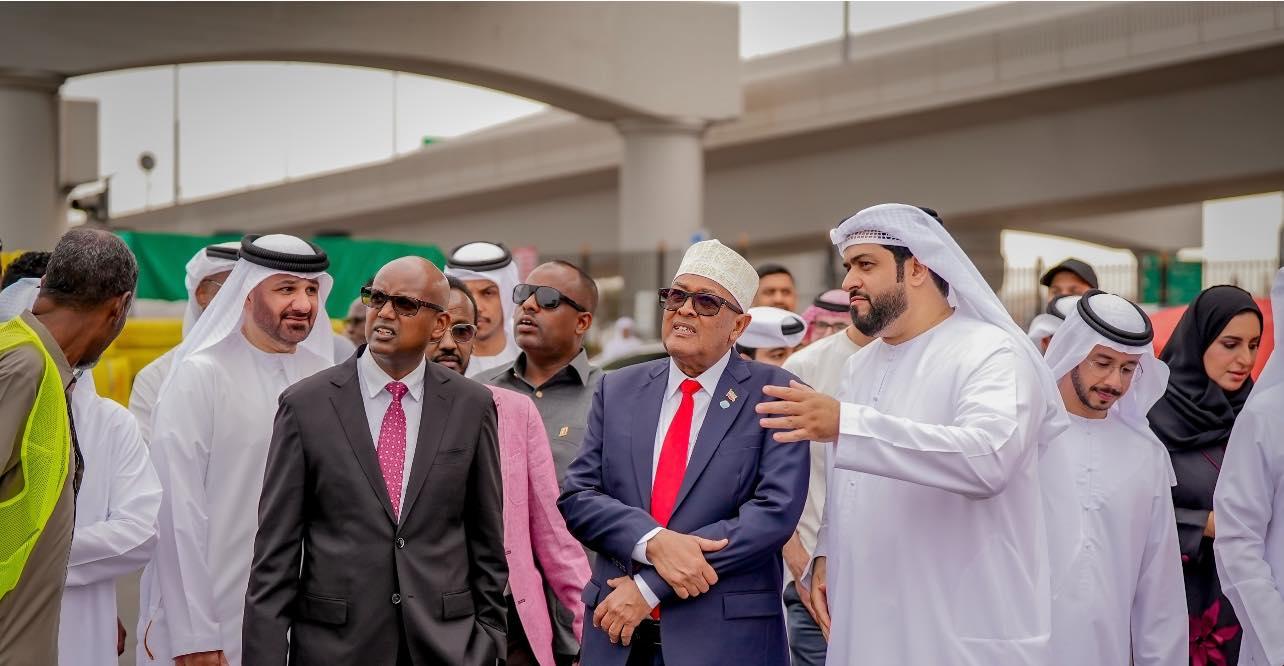

Somaliland has pushed back against criticism from Somalia’s federal government over its close relationship with the United Arab Emirates, defending Abu Dhabi’s role in financing infrastructure and development projects in the territory.
A statement issued in Somaliland’s name highlighted the UAE’s support for the expansion of Berbera Port, road construction, schools and other essential public infrastructure.
It described the assistance as a brotherly partnership and expressed appreciation for the UAE’s contribution to Somaliland’s development.
The response signals that Hargeisa considers its relationship with Abu Dhabi both economically and strategically important and does not want the diplomatic dispute between Mogadishu and the UAE to disrupt projects and cooperation already underway.
Berbera Port remains the centrepiece of the relationship. Dubai-based DP World secured a 30-year concession to manage and expand the facility under an investment agreement valued at approximately $442 million.
The project has increased the port’s capacity and improved container handling, shipping services and its potential role in regional trade.
The port is strategically important not only to Somaliland but also to landlocked Ethiopia, which has been seeking reliable access to maritime trade routes. Berbera could provide an important commercial corridor connecting Ethiopia’s hinterland with the Gulf of Aden.
In January 2026, DP World said its operations at Berbera would not be affected by the Somali federal government’s decision to cancel agreements with the UAE. The company indicated that it would continue operating under the existing arrangements.
The dispute between Mogadishu and Abu Dhabi intensified on January 12, 2026, when Somalia announced the cancellation of agreements with the UAE covering security, defence and economic cooperation.
In his latest speech, President Hassan Sheikh Mohamud accused the UAE of establishing security relationships and port agreements with regional administrations without going through the federal government.
He specifically mentioned the ports of Berbera, Bosaso and Kismayo, describing them as national assets belonging to the Somali people.
He argued that agreements affecting these facilities should comply with Somalia’s Constitution and the authority of the federal government.
Hassan Sheikh also accused the UAE of providing financial and political support to certain regional administrations, which he said contributed to internal divisions in Somalia.
These allegations reflect the federal government’s position, while the parties concerned have different perspectives on the issue.
At the heart of the disagreement is the question of who has the authority to negotiate international agreements involving ports and strategic infrastructure located in Somaliland.
The federal government maintains that Somaliland remains part of the Federal Republic of Somalia and argues that agreements affecting national sovereignty and strategic assets must be handled within the country’s constitutional framework.
Somaliland, which has operated as a self-governing administration since declaring its independence in 1991, maintains that it has the authority to establish its own economic and diplomatic relationships with foreign governments and international companies.
The opposing positions have long complicated negotiations between Mogadishu and Hargeisa. Disagreements over ports, security arrangements and relations with regional powers have further widened the political divide.
The UAE has maintained a significant interest in the Horn of Africa’s coastline, particularly the strategic shipping routes connecting the Gulf of Aden and the Red Sea.
Berbera and Bosaso are important to regional commerce, maritime logistics and the movement of goods.
Its investment in Berbera has given Abu Dhabi a substantial economic relationship with Somaliland, alongside other commercial and security partnerships across Somalia.
However, the UAE’s investment and commercial cooperation with Somaliland do not, by themselves, amount to formal recognition of the territory as an independent state. Diplomatic recognition and economic engagement are separate matters.
In January 2026, the UAE and the African Union Commission also issued a joint statement reaffirming support for Somalia’s sovereignty and territorial integrity.
That position illustrates the distinction between the UAE’s formal diplomatic stance and its commercial agreements with Somaliland.
During his latest remarks, Hassan Sheikh said Somalia remained prepared to restore relations with the UAE, provided that the relationship was based on mutual respect, equality and recognition of Somalia’s sovereignty and territorial unity.
He said his government had attempted to resolve the disagreement through dialogue and diplomacy but eventually decided to cancel the bilateral agreements.
The statement defending the UAE, meanwhile, demonstrates that Somaliland does not accept Mogadishu’s position that the federal government should have the final say over its agreements with Abu Dhabi.
The dispute therefore reflects two fundamentally different positions. Mogadishu insists that strategic agreements involving Somali assets should fall under federal authority, while Hargeisa maintains that it has the right to pursue its own arrangements with the UAE.
Unless the two sides find a way to manage their competing claims, the disagreement could further complicate relations between Mogadishu and Hargeisa.
The dispute is unfolding amid wider regional competition over ports, maritime access, security partnerships and foreign influence across the Horn of Africa.