

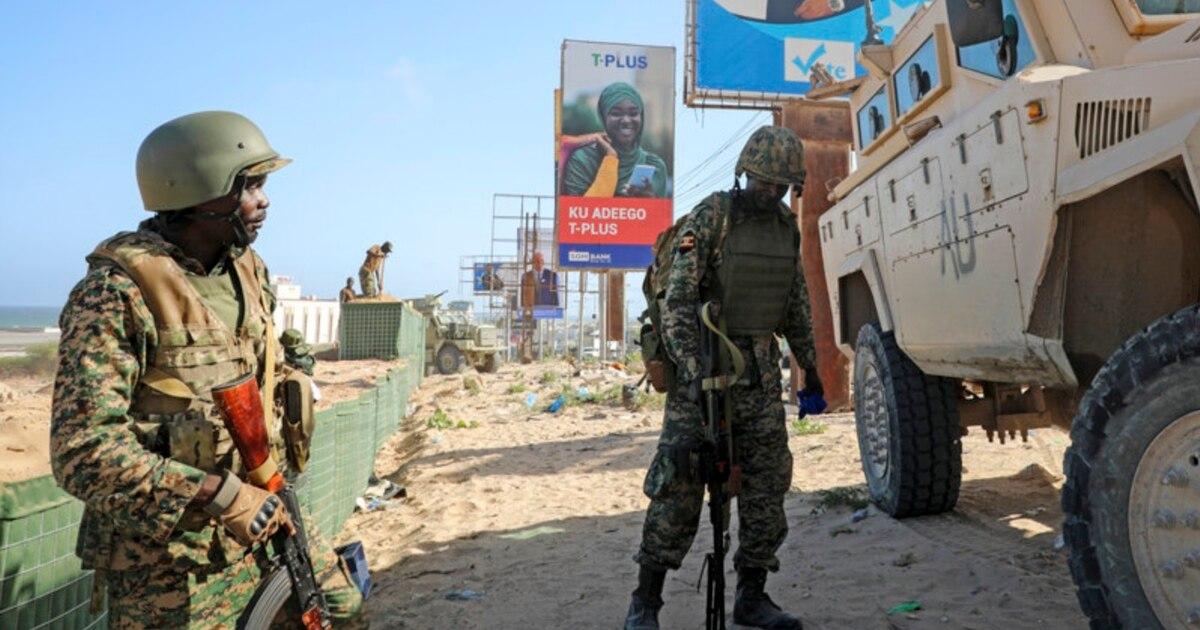

The African Union Support and Stabilization Mission in Somalia (AUSSOM) is heading towards a significant change in its troop composition, with Burundi reportedly preparing to withdraw its forces while Egypt makes arrangements to deploy new troops to the country.
The developments come as the mission faces financial constraints, changes in international support and growing pressure to gradually transfer security responsibilities to Somali forces.
Reports published in November indicate that Burundi is planning to pull its troops out of Somalia, while Egypt is preparing to deploy forces under a bilateral military agreement with the Federal Government before some of its personnel are integrated into AUSSOM.


Burundian troops have been deployed in Somalia since 2007, when they first arrived as part of the African Union Mission in Somalia (AMISOM).
Over the years, they have participated in numerous security operations and maintained a presence in several areas of southern and central Somalia.
Their role has been particularly significant in the Middle Shabelle region, where Burundian forces have operated bases and military positions, supporting security operations and working alongside Somali troops.
Disagreements over the number of Burundian soldiers to be included in AUSSOM emerged during negotiations over the structure of the new mission.
Burundi had sought to retain a larger contingent than the number allocated under the new arrangement, which reportedly fell short of its expectations.

A report published on November 13 said Burundi was making arrangements to withdraw its troops, particularly those stationed in Jowhar and other military positions across Middle Shabelle.
However, the exact number of soldiers expected to leave and the timetable for their withdrawal have not been officially announced.
Egypt, meanwhile, is among the countries designated to contribute troops to AUSSOM, with an initial allocation of approximately 1,091 personnel.
A report published by The EastAfrican on October 25 said Cairo was planning to deploy troops to Somalia under a bilateral military cooperation agreement with the Federal Government before transferring nearly 1,000 personnel into the African Union mission, subject to the necessary approvals and procedures.
The report also indicated that Egyptian troops could be deployed to Middle Shabelle, where Burundian forces are currently stationed.
It further cited plans for Egypt to establish a command centre in the Ceelcade area, near the former Cisiley airstrip. However, the proposed location and details of the deployment arrangements have not been independently confirmed.
Egypt’s arrival could carry wider strategic implications beyond replacing Burundi’s contingent.


Cairo has defence and military cooperation agreements with Somalia, while its long-running rivalry with Ethiopia over the Nile waters and regional influence has added a geopolitical dimension to its growing engagement in the Horn of Africa.
Consequently, Egypt’s military presence in Somalia could reflect broader security and political interests, rather than simply a change in the countries contributing troops to the African Union mission.
One of the key questions surrounding the proposed deployment is how Egyptian forces will coordinate with other AUSSOM contingents.
If Egyptian troops initially enter Somalia under a bilateral agreement, they could operate under a separate command and administrative structure from the African Union mission.
This would require clear arrangements for coordinating military operations, logistics, the management of bases and responsibility for security across their areas of deployment.
The EastAfrican reported that the African Union had yet to provide detailed clarification on how troops deployed under bilateral arrangements would work alongside forces serving under AUSSOM.
A spokesperson for the Burundian military also said its troops operate under the United Nations Support Office in Somalia (UNSOS) arrangements and were prepared to leave once replacement forces were in place.
The anticipated changes involving Burundi and Egypt are not the only developments affecting AUSSOM’s troop composition. Uganda has also announced plans to withdraw its forces from Somalia.
On November 2, 2026, the Uganda People’s Defence Forces (UPDF) announced that they had begun withdrawing troops deployed under a bilateral agreement with the Somali government.
The first group returned to Uganda, with the withdrawal of the remaining personnel under that arrangement expected to be completed within days.
Uganda has also said that its troops serving under AUSSOM will be withdrawn gradually, with the broader process expected to conclude by the end of 2027.
It is important to distinguish between the two Ugandan deployments: troops stationed in Somalia under a direct bilateral agreement and those serving as part of the African Union mission.
The withdrawal of the bilateral contingent has begun, but this does not mean that all Ugandan forces operating under AUSSOM have left the country.
The potential departure of Burundi, the planned arrival of Egyptian forces and Uganda’s gradual withdrawal point to a changing security arrangement in Somalia.
These developments are unfolding as AUSSOM confronts funding difficulties and questions over the long-term sustainability of its operations.
The extent to which incoming forces can fill the gaps left by departing contingents, and how effectively they will coordinate with existing troops and Somali security institutions, will be critical to the mission’s ability to maintain security during this transition.