


The debate over whether Somali media outlets should be allowed to broadcast live meetings, speeches and public events involving government leaders regularly resurfaces, particularly during politically sensitive periods.
At the center of the debate is a fundamental legal question: can a government official or state institution lawfully prevent the media from broadcasting an event live, and when does such a restriction become legitimate regulation rather than censorship?
The issue must be examined through three interconnected principles: freedom of expression, freedom of the media and the government’s authority to restrict those freedoms when there is a lawful and legitimate reason.
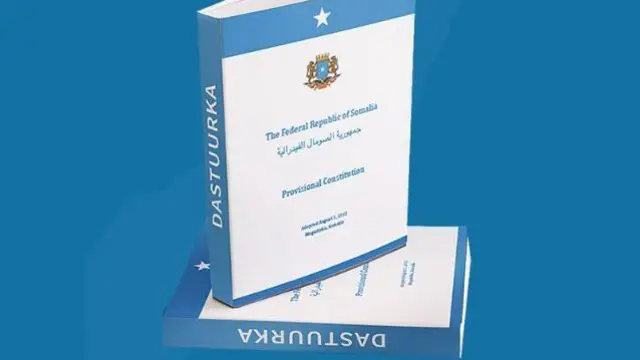
Somalia’s previous Provisional Constitution explicitly protected freedom of expression and freedom of the media, including electronic and web-based media, as well as the right to receive and impart information, opinions and ideas.
However, Somalia adopted a new federal Constitution in March 2026. Both houses of Parliament approved the constitutional text on March 4, and President Hassan Sheikh Mohamud signed it into law on March 8.
The new Constitution replaced the 2012 Provisional Constitution, meaning that legal assessments of media restrictions today should ultimately be based on the current constitutional text and applicable legislation rather than relying solely on the former Article 18.
At the same time, the broad principle that freedom of expression and media freedom are fundamental rights remains central to Somalia’s constitutional and human-rights framework.
International bodies have repeatedly emphasized that restrictions on expression must have a clear legal basis and meet strict requirements of necessity and proportionality.
Live broadcasting is simply a method of communicating information while an event is taking place. Television stations, radio broadcasters and online platforms can all use it to provide immediate coverage.
The legal question, therefore, is not simply whether “live broadcasting” is permitted. The more important question is whether a government institution has a clear legal authority to prevent a media organization from broadcasting a particular event.
If an event is public and there is no lawful restriction concerning the information being disclosed, the media has a strong argument that the public should be able to receive information about what is happening.
This is particularly relevant when the event concerns public officials, government policy or matters of significant public interest.
That does not mean media organizations have an unlimited right to broadcast everything in every circumstance.
Legitimate restrictions may apply where broadcasting could reveal classified state information, compromise an ongoing security operation, expose sensitive military positions or violate other legally protected interests.
The key issue is therefore the legal basis, necessity and scope of the restriction.
When a government official or institution tells a media outlet that it cannot broadcast an event live, the first questions should be: What is the reason? Which institution issued the order? And what law gives it the authority to do so?
Government authority and legal authority are not necessarily the same thing. A public official may have administrative responsibilities, but those powers must be exercised within the limits established by the Constitution and applicable laws.
If the government invokes national security, it should be possible to identify what specific security concern justifies the restriction. If it claims that a law prohibits the broadcast, the media should be able to identify the relevant legal provision.
A restriction should also be narrowly tailored. Preventing the disclosure of a specific piece of sensitive information is legally different from imposing a blanket ban on all media coverage of an entire public event.
International human-rights standards generally require restrictions on freedom of expression to be prescribed by law and justified by a legitimate objective.
They should also be necessary and proportionate rather than broader than required to address the identified risk.
The term “censorship” should be used carefully because not every restriction on media activity automatically constitutes censorship.
For example, preventing the publication of genuinely classified military information may have a legitimate legal basis where the law clearly protects that information and the restriction is necessary to protect national security.
The situation is different if a public event is blocked from live coverage simply because its content could embarrass the government, generate criticism or raise difficult political questions.
Such a restriction could raise serious concerns about interference with media freedom.
Similarly, if some media organizations are allowed to broadcast an event live while others are excluded without transparent and objective criteria, questions may arise about equal treatment, political discrimination and the independence of the media.
Somalia has previously faced international criticism over laws and directives that use broad or unclear concepts to restrict reporting.
A UN report, for example, warned that provisions restricting broadcasts deemed contrary to the “national interest” could create opportunities for censorship when key terms are not clearly defined.
The media has a central role in providing the public with information about matters of public interest. That includes reporting on government decisions, parliamentary proceedings, political developments and the activities of public officials.
Journalists should also be able to question government officials and scrutinize the actions of federal and state authorities.
At the same time, media freedom does not remove professional responsibilities. Live broadcasting does not give journalists permission to circulate unverified allegations, deliberately misleading information or material that unlawfully violates the rights and privacy of others.
The appropriate balance is therefore not between “government control” and “unlimited media freedom.” It is between a free and responsible press and narrowly defined restrictions that have a clear legal justification.
Somalia’s amended media framework previously established a Press Council with responsibilities related to professional and ethical standards and disciplinary matters, while also prohibiting a government monopoly over public broadcasting.
When a Somali media organization is ordered to stop a live broadcast, it should first request the order and its legal justification in clear terms.
If the justification is national security, the relevant authority should identify, as far as legally possible, the specific security concern. If the government says the broadcast is prohibited by law, the media should ask which provision establishes that prohibition.
Media organizations should also distinguish between legitimate editorial decisions and government-imposed restrictions.
A broadcaster may voluntarily delay or stop a live transmission because it believes that doing so is professionally responsible. That is different from being forced to stop by a state institution without a clear legal basis.
Where journalists believe a restriction is unlawful, there should be accessible mechanisms for challenging it, including appropriate administrative, judicial or constitutional procedures.
The debate over live broadcasting takes place against a broader backdrop of continuing concerns over media freedom in Somalia.
Human Rights Watch reported in its 2026 World Report that federal and regional authorities continued to intimidate, detain and charge journalists and media workers and placed significant restrictions on reporting on sensitive issues, particularly security-related matters.
The organization also reported that, in March, the information minister announced a ban on reporting on issues considered capable of posing a “security threat.”
Following a March 18 bombing targeting the presidential convoy, at least 22 journalists and media workers were temporarily detained and a media outlet was shut down over its reporting of the incident, according to the report.
These developments show why the question of live broadcasting is not merely a technical matter. It is part of the wider debate over how Somalia balances national security with freedom of expression and the public’s right to information.
The government has legitimate responsibilities to protect national security, prevent the disclosure of sensitive operational information and safeguard public safety. But those responsibilities do not automatically create an unlimited power to control what the media broadcasts.
The central principle should be straightforward: a restriction on live broadcasting should have a clear legal basis, pursue a legitimate objective and be necessary and proportionate to the specific risk involved.
A blanket prohibition on live coverage of public events, without a clearly established legal basis, would raise substantially different concerns from a narrowly tailored restriction designed to prevent the disclosure of classified or operationally sensitive information.
Likewise, the fact that an official dislikes a report, fears criticism or considers a broadcast politically inconvenient should not, by itself, establish a lawful basis for preventing the media from reporting.
For their part, Somali media organizations should defend their independence while maintaining professional standards.
They should verify information, distinguish allegations from established facts, respect privacy and avoid broadcasts that could unnecessarily endanger individuals or ongoing operations.
Ultimately, the question is bigger than whether “live broadcasting is allowed.” It concerns the fundamental relationship between the state, the media and the public.
A democratic system requires government institutions to operate within the law and media organizations to work independently and responsibly.
When disagreements arise, the answer should not be arbitrary orders, intimidation or retaliation.
The appropriate response is a transparent legal process in which an independent court or competent institution can determine whether a particular restriction is permitted by the Constitution and the law.
For Somalia, establishing that boundary clearly will be essential to protecting both legitimate national-security interests and the public’s right to know.