





Somalia’s decision to expel the UAE ambassador and recall its own envoy marks another escalation in a relationship that effectively collapsed in January. Behind the diplomatic confrontation, however, lies a much bigger struggle involving Hassan Sheikh Mohamud’s contested presidency, Somalia’s deteriorating security environment and growing competition among regional powers across the Horn of Africa and the Red Sea.
The announcement on 19 November 2026 in which Somalia’s Council of Ministers ordered the UAE ambassador, Ahmed Jumaa Mohamed Hathboor Alremeithi, to leave within 72 hours and recalled Somalia’s ambassador in Abu Dhabi for consultations, comes days after President Hassan Sheikh Mohamud accused UAE of dividing Somalia and supporting regional states rival to Mogadishu.
But this raises an important question: what does the expulsion order achieve when the UAE says it had already closed its embassy and withdrawn its diplomatic personnel from Somalia in January?
On 12 January 2026, Somalia cancelled all agreements with the UAE, covering security, defence, economic cooperation and port arrangements. Abu Dhabi subsequently announced the closure of its embassy in Mogadishu and the withdrawal of its diplomatic personnel.
The Somalia decision therefore appears to formalise a diplomatic rupture that had already occurred ten months earlier.
Somalia’s ambassador to the UAE, Hussein Abdi Halane, reportedly left Abu Dhabi in April for health reasons and had not returned by November. His recall is therefore a separate diplomatic measure.
The significance of the announcement lies less in the physical removal of diplomatic personnel than in Mogadishu’s determination to escalate its accusations against Abu Dhabi and mobilise international support.
The UAE has maintained an extensive political, commercial and security presence in Somalia for more than a decade. Its engagement, however, has not been restricted to the Federal Government in Mogadishu.
Abu Dhabi has developed relationships with Puntland, Jubaland and Somaliland, investing in ports, supporting local security forces and establishing strategic partnerships.
Puntland has been among the UAE’s most important partners. Abu Dhabi has supported the Puntland Maritime Police Force (PMPF), providing training, equipment and financial assistance. Originally established to combat piracy and maritime insecurity, the force has also become involved in counterterrorism operations.
Puntland’s forces have recently been engaged in operations against Islamic State in Somalia in the Cal Miskaad mountains. The UAE has provided much needed air support, including drone strikes.
The relationship also has an economic dimension. Bosaso is a major commercial port on the Gulf of Aden, giving the UAE a strategic relationship with a coastal administration situated along one of the world’s busiest maritime corridors.

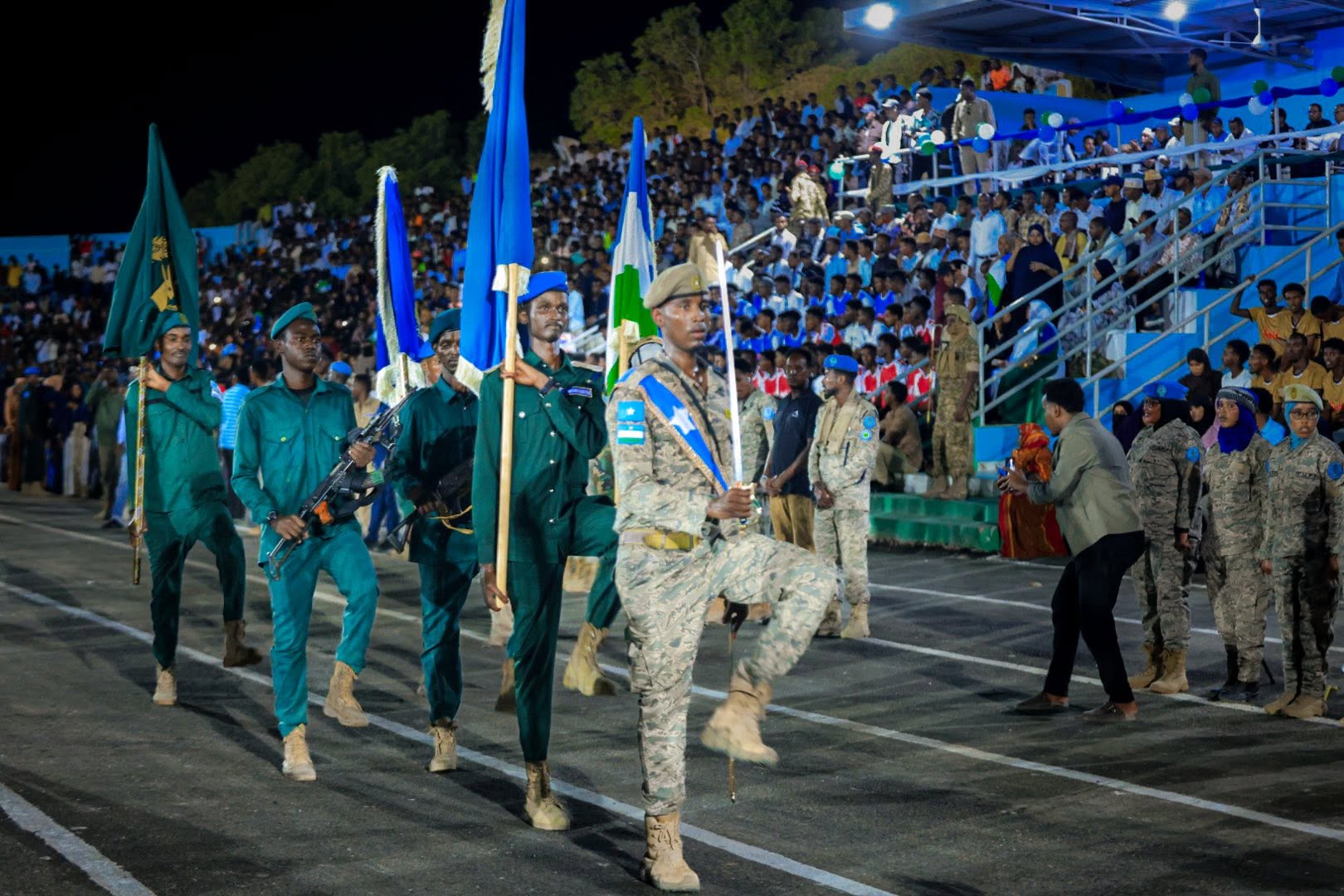
Jubaland has similarly maintained close relations with Abu Dhabi. The UAE has supported the training and development of Jubaland forces and maintained commercial and security interests around Kismayo, one of Somalia’s most important southern ports.
For Abu Dhabi, these partnerships provide strategic continuity regardless of political developments in Mogadishu. For the Federal Government, however, foreign agreements and security arrangements operating outside its authority. It is worth noting that Somalia has lacked a unified national security structure for decades, as clan rivalries and tensions between regional states and Mogadishu have long dominated Somali politics.
Therefore, beyond the Emirati engagement, the disagreement reflects Somalia’s unresolved federal question: how much authority belongs to the central government, and how much can regional administrations exercise independently as well as power-sharing and resources allocation among Somali clans?
Outside Mogadishu, in the regional state of South West, Abdiaziz Hassan Mohamed Laftagareen became a vocal opponent of President Hassan Sheikh Mohamud’s administration amid disputes over constitutional amendments, elections, and regional political authority. Following his removal in March 2026, Laftagareen has been based in Kenya while his forces have continued to wage armed attacks on Baidoa.
There have been allegations that he has received political and financial support from actors connected to the UAE as he challenges the Federal Government and the current Southwest administration. These allegations remain unverified.
Nevertheless, they contribute to Mogadishu’s perception that Abu Dhabi is cultivating relationships with political actors opposed to the Hassan Sheikh’s presidency.
The security situation is particularly sensitive because Southwest State connects Mogadishu with much of southern Somalia. Political instability there directly affects the government’s ability to maintain security operations and contain Al-Shabaab.
Somaliland, Berbera and Israel’s recognition
The UAE’s relationship with Somaliland is perhaps the most strategically sensitive dimension of the dispute.

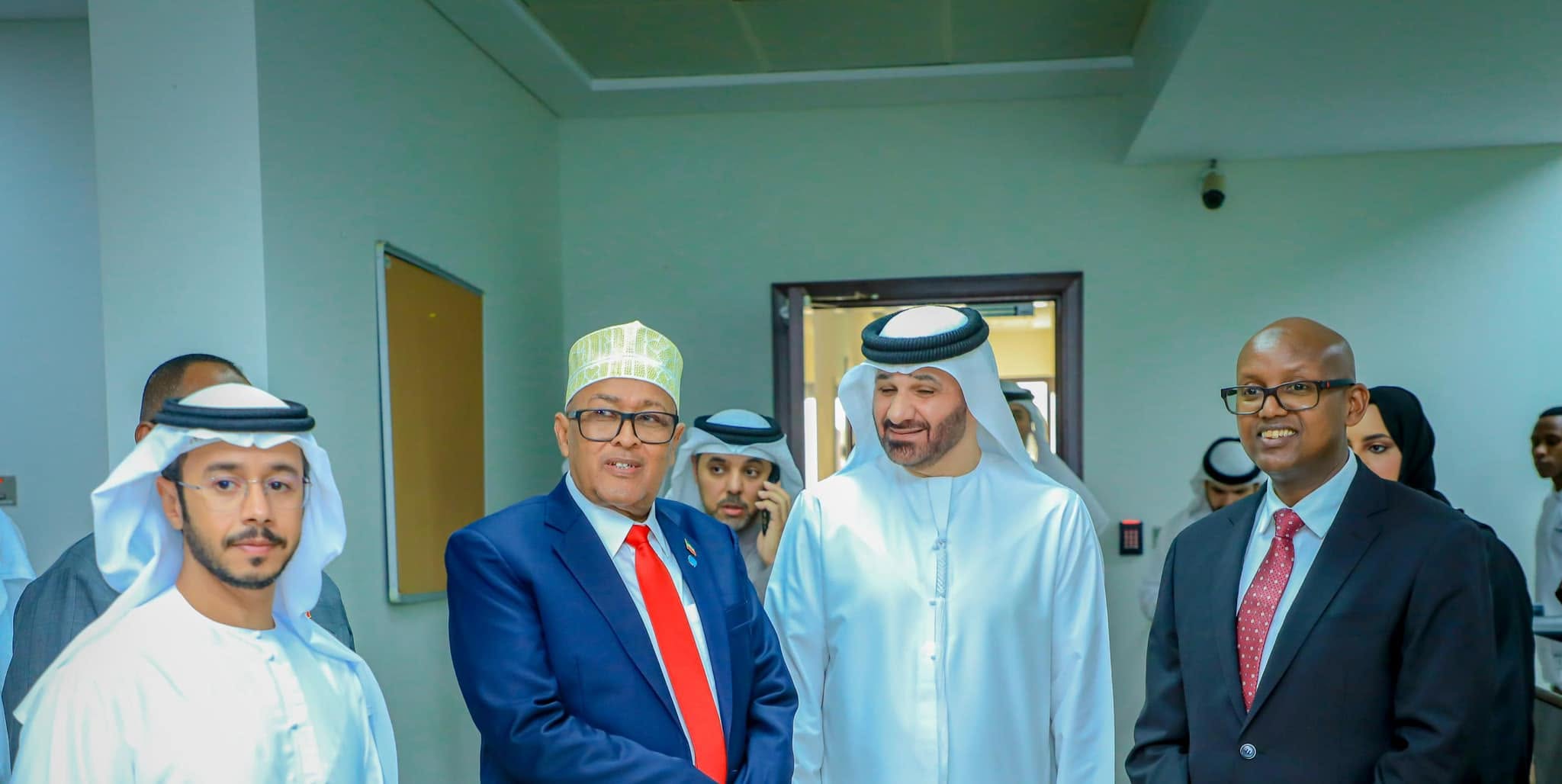
Through DP World, Abu Dhabi has invested heavily in Berbera port, establishing a long-term commercial relationship with Somaliland.
Berbera’s location along the Gulf of Aden, close to the entrance to the Red Sea, gives it considerable strategic importance. Its significance has increased as the Red Sea has become more militarised following the conflict involving Israel and the Houthis.
The relationship became even more sensitive following Israel’s formal recognition of Somaliland on 26 December 2025, making it the first country to recognise the territory as an independent state.
Mogadishu strongly rejected the decision, describing it as a violation of Somalia’s territorial integrity.
Although there is no independently established evidence that the UAE directly secured Israel’s recognition, Abu Dhabi’s longstanding relationship with Somaliland and its strategic partnership with Israel have fuelled suspicions in Mogadishu that it played a facilitating role.
For Israel, Berbera offers potential strategic access to the southern approaches to the Red Sea, particularly as it seeks to counter Houthi threats in Yemen. For the UAE, Somaliland provides a commercially and strategically important partner overlooking one of the world’s principal maritime routes.
For Somalia, however, foreign military and intelligence arrangements in Somaliland without Mogadishu’s consent represent a major sovereignty concern.
The Somaliland issue has consequently transformed the bilateral dispute into a wider regional security confrontation.
Hassan Sheikh’s domestic political crisis
The diplomatic confrontation cannot be separated from the political crisis surrounding President Hassan Sheikh Mohamud.
His presidential mandate ended on 15 May 2026, and in early November, Somalia’s Supreme Court issued its verdict nullifying Hassan Sheikh’s term extension and further ordered a broad-based within ninety days.
The controversy emerged from the administration’s efforts to amend the constitution and introduce a new electoral framework, including provisions that the government argued would facilitate direct elections.
Opposition leaders and several federal member states rejected the process, arguing that the constitutional amendments were introduced without sufficient political consultation or agreement.
The Supreme Court subsequently rejected the government’s argument that the amendments provided a lawful basis for extending the presidential mandate. Its November ruling placed further pressure on the administration, requiring political stakeholders to agree on an electoral framework and establishing a timetable for elections.
Hassan Sheikh now faces opposition leaders challenging his political legitimacy, regional administrations resisting aspects of his constitutional programme and growing uncertainty over the country’s electoral transition.

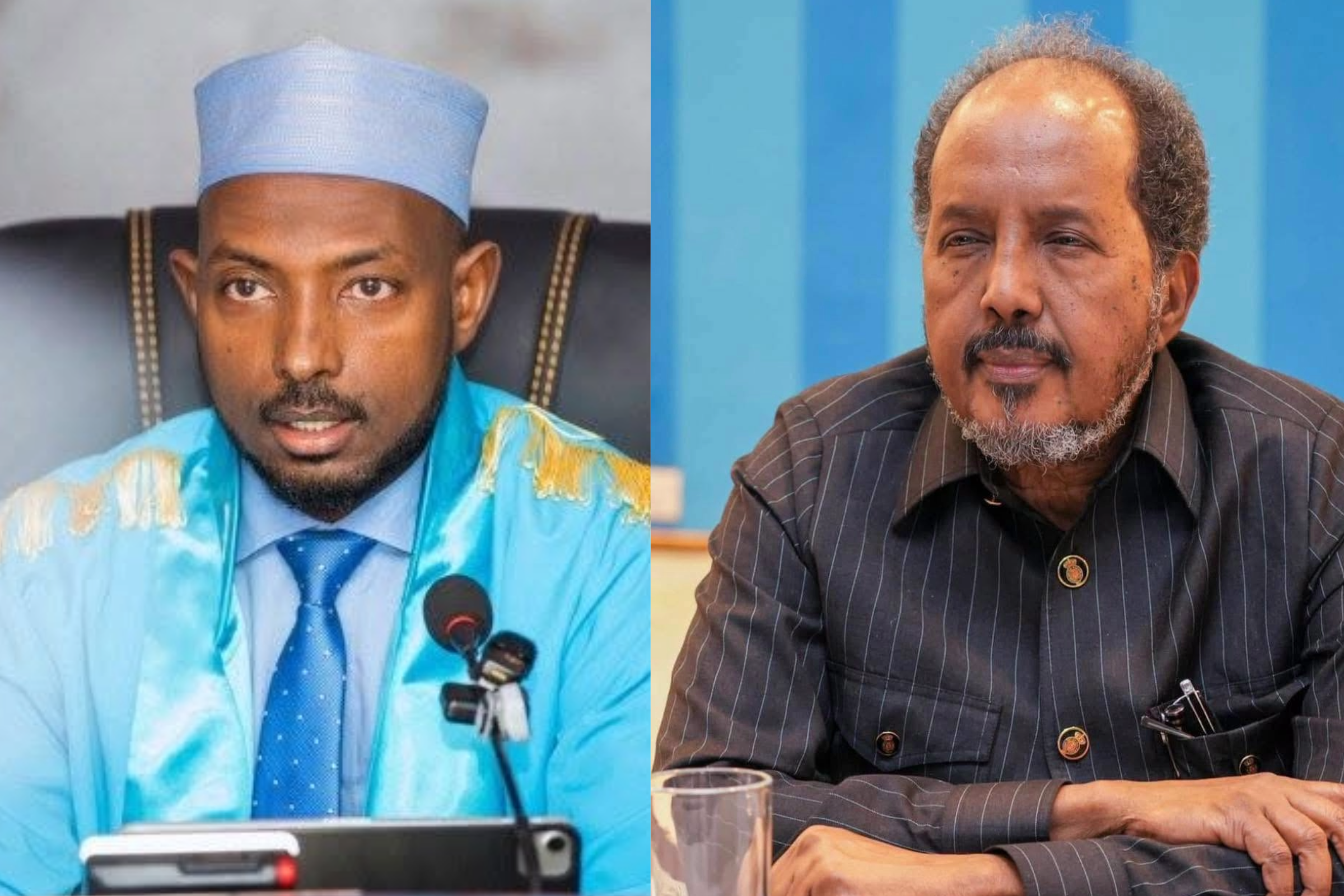
The crisis has affected Southwest State, Hirshabelle and Galmudug, where disagreements over regional elections and political authority have contributed to tensions and armed confrontations.
When constitutional and electoral disagreements turn into armed confrontations, they weaken the state’s ability to coordinate security operations. The danger is that the Federal Government becomes increasingly preoccupied with defending its political authority while Al-Shabaab exploits the divisions.
Al-Shabaab and the vulnerability of Mogadishu
The most immediate threat facing Somalia is the deteriorating security environment.
Al-Shabaab continues to exploit weaknesses in the Somali security architecture, political divisions and uncertainty surrounding international military support.
The situation in Lower Shabelle is particularly concerning. The withdrawal or redeployment of Ugandan forces from parts of the region has raised questions about the ability of Somali forces to maintain positions previously secured by international troops.
Locations including Shalanbood, Qoryooley, KM60 and Jannaale are important to the wider security environment surrounding Mogadishu.
Reports of Al-Shabaab moving into or increasing its presence around vacated positions require independent operational verification. Nevertheless, poorly coordinated withdrawals create opportunities for the insurgency to regain territory.
Al-Shabaab does not necessarily need to capture Mogadishu immediately to achieve a major strategic victory. It can weaken government control over surrounding districts, threaten supply routes and force security forces to defend multiple fronts simultaneously.
The security crisis has been compounded by financial problems affecting the African Union Support and Stabilization Mission in Somalia (AUSSOM).
The mission has faced significant funding difficulties, including reductions in UN logistical support and uncertainty over long-term international financing. Although the United States subsequently agreed to provide further support into 2027, the mission’s financial sustainability remains a concern.
The withdrawal of Emirati assistance in January has added another problem.
The UAE had supported and trained Somali security personnel and provided financial assistance to thousands of soldiers. Critical Threats reported that Abu Dhabi was supporting at least 3,400 personnel at the beginning of 2026, while other estimates placed the figure at approximately 3,800.


The termination of this assistance affected salaries, morale and operational continuity, particularly among forces involved in stabilisation and security operations around Mogadishu.
Somalia has relied on forces trained or supported by Turkey, the UAE and other international partners. Losing Emirati support while AUSSOM faces financial uncertainty creates additional pressure on the Federal Government.
The security transition was supposed to involve progressively transferring responsibility from international forces to Somali institutions. Instead, Somalia is confronting political fragmentation, financial constraints and an insurgency capable of exploiting gaps in state authority.
There has also been discussion of efforts by Hassan Sheikh’s administration to explore negotiations with Al-Shabaab through Qatari intermediaries. However, the precise scope and status of any contacts have not been independently established.
There is a fundamental question about what Al-Shabaab would gain from negotiations. The organisation has spent years attempting to undermine the Somali state and replace its political order with its own ideological system.
A political settlement involving power-sharing or integration into government institutions would require the group to abandon or substantially modify its central objectives. There is little public evidence that Al-Shabaab is prepared to accept such an arrangement.
The current political environment may instead encourage the group to pursue a military strategy. It can observe divisions between the presidency and opposition, tensions with regional administrations and uncertainty surrounding international military support.
If Al-Shabaab concludes that the Federal Government is becoming increasingly isolated, further military pressure may appear more advantageous than negotiations.
A major advance could threaten parts of Southwest State, Hirshabelle and Galmudug, as well as important commercial routes and military installations. Such a development would create a regional security crisis affecting Kenya, Ethiopia and the wider Horn of Africa.
Turkey, Saudi Arabia and the regional competition
The deterioration in Somalia’s relationship with the UAE must also be examined within the wider competition among regional powers.
Turkey has developed one of the strongest bilateral relationships with Mogadishu. Its engagement includes military training, defence cooperation, infrastructure investment and maritime interests. Its military training facility in Mogadishu has played an important role in developing Somali security forces.

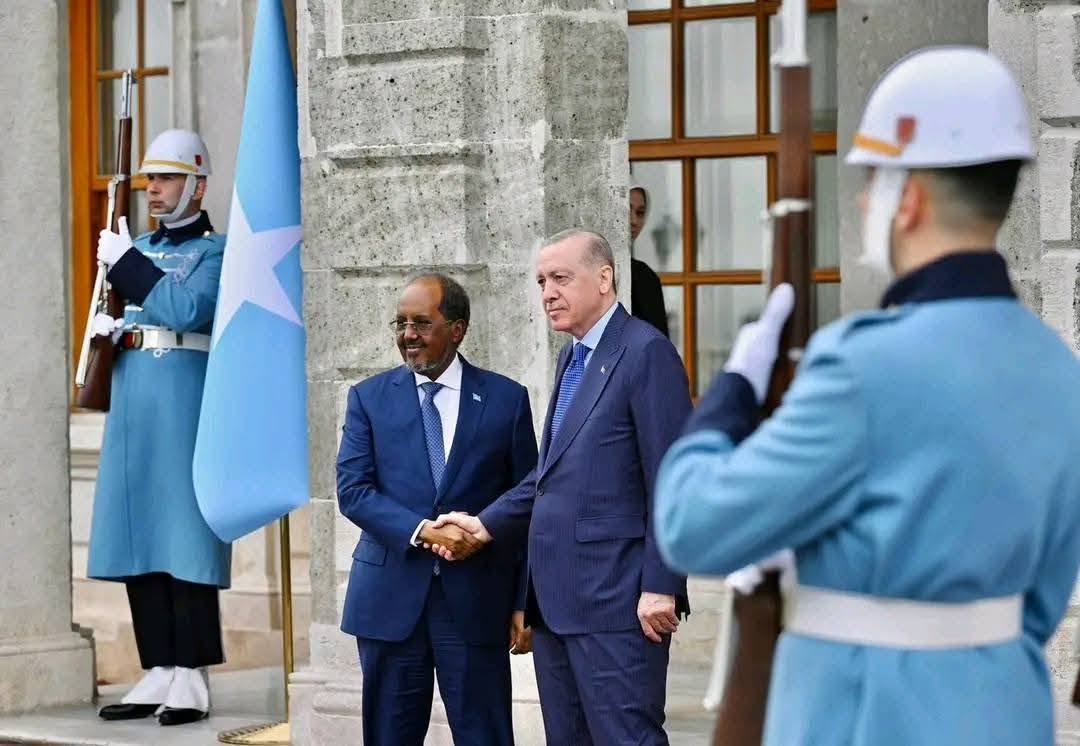
Ankara has a strategic interest in maintaining its relationship with the Federal Government, particularly as the UAE continues to develop relationships with Puntland, Jubaland and Somaliland.
Saudi Arabia has its own interests. Riyadh is increasingly concerned with security developments around the Red Sea, the Gulf of Aden and the Arabian Peninsula. Its disagreements with Abu Dhabi over Yemen and wider regional influence have become more visible.
Turkey and Saudi Arabia may therefore find common ground in supporting Mogadishu’s position on territorial integrity and opposing arrangements that strengthen UAE influence outside the authority of the Federal Government.
However, there is insufficient evidence to conclude that the two countries coordinated Somalia’s decision to confront Abu Dhabi.
For Mogadishu, closer relations with Ankara and Riyadh could provide alternative sources of diplomatic, financial and military support. But replacing one external partner with another will not resolve Somalia’s underlying institutional problems.
The confrontation has acquired another international dimension because the UAE has nominated Lana Zaki Nusseibeh as its candidate for the next United Nations Secretary-General. Her nomination was formally submitted on 21 October 2026.
Turkey has also nominated its candidate, Feridun Hadi Sinirlioğlu, whose nomination was submitted on 1 November.
Somalia’s confrontation with Abu Dhabi could become relevant to diplomatic alignments among African, Arab and Islamic countries.
Turkey and Saudi Arabia may find aspects of Mogadishu’s position compatible with their regional interests, although there is no established evidence that either country is orchestrating the dispute to undermine Nusseibeh’s candidacy.
Nevertheless, the timing is politically significant. The UAE is seeking international support for its candidate while Somalia escalates its accusations against Abu Dhabi.
The wider Horn of Africa and Red Sea implications
Ultimately, the Somalia-UAE dispute is about more than diplomatic representation or cancelled agreements.
The Horn of Africa has become one of the world’s most strategically contested regions. The Red Sea connects the Mediterranean and Indian Ocean through the Suez Canal and Bab el-Mandeb Strait, making it critical to international trade, energy transportation and military movement.
Somalia occupies an important position along this coastline, while Somaliland, Puntland and Jubaland offer access to strategically significant ports.
The UAE has invested in Berbera and maintained relationships with Bosaso and Kismayo. Turkey has established a major military and economic presence in Mogadishu. Saudi Arabia is increasingly focused on Red Sea security, while Qatar maintains diplomatic relationships across the region.
Egypt is concerned about developments affecting the Red Sea, the Nile Basin and its regional competition with Ethiopia. Ethiopia, meanwhile, remains interested in securing reliable access to the sea, making Somaliland and Somalia’s coastline strategically important to Addis Ababa.
The Houthi threat in Yemen has further increased the importance of the region.
In this environment, ports, military facilities, diplomatic recognition and local political alliances are increasingly interconnected. Somalia’s internal divisions are unfolding in a region where external actors have substantial interests and competition for influence can have direct consequences for national sovereignty.
The expulsion order against the UAE ambassador is a significant escalation, but it does not resolve Somalia’s underlying problems.
The disputes over Puntland, Jubaland and Somaliland reflect deeper disagreements over federal authority, regional autonomy and the role of foreign powers.
At the same time, Hassan Sheikh’s administration faces a constitutional crisis, opposition from political rivals and tensions with regional administrations. Al-Shabaab continues to exploit security vulnerabilities, while the withdrawal of Emirati support and uncertainty over AUSSOM financing have complicated the security situation.
There is a danger that Mogadishu is becoming increasingly preoccupied with its confrontation with Abu Dhabi at precisely the moment when the country needs political reconciliation and a coherent national security strategy.
Ultimately, the most important question is not whether Somalia can expel an Emirati diplomat whose mission may already have been withdrawn. It is whether Somalia can preserve its political cohesion and territorial integrity while facing an insurgency, a contested constitutional transition and intensifying competition among regional powers.
If Mogadishu fails to resolve its internal political crisis and maintain the security architecture around the capital, the consequences will extend far beyond its confrontation with the UAE. They will affect the entire Horn of Africa, the Gulf of Aden and the Red Sea.