

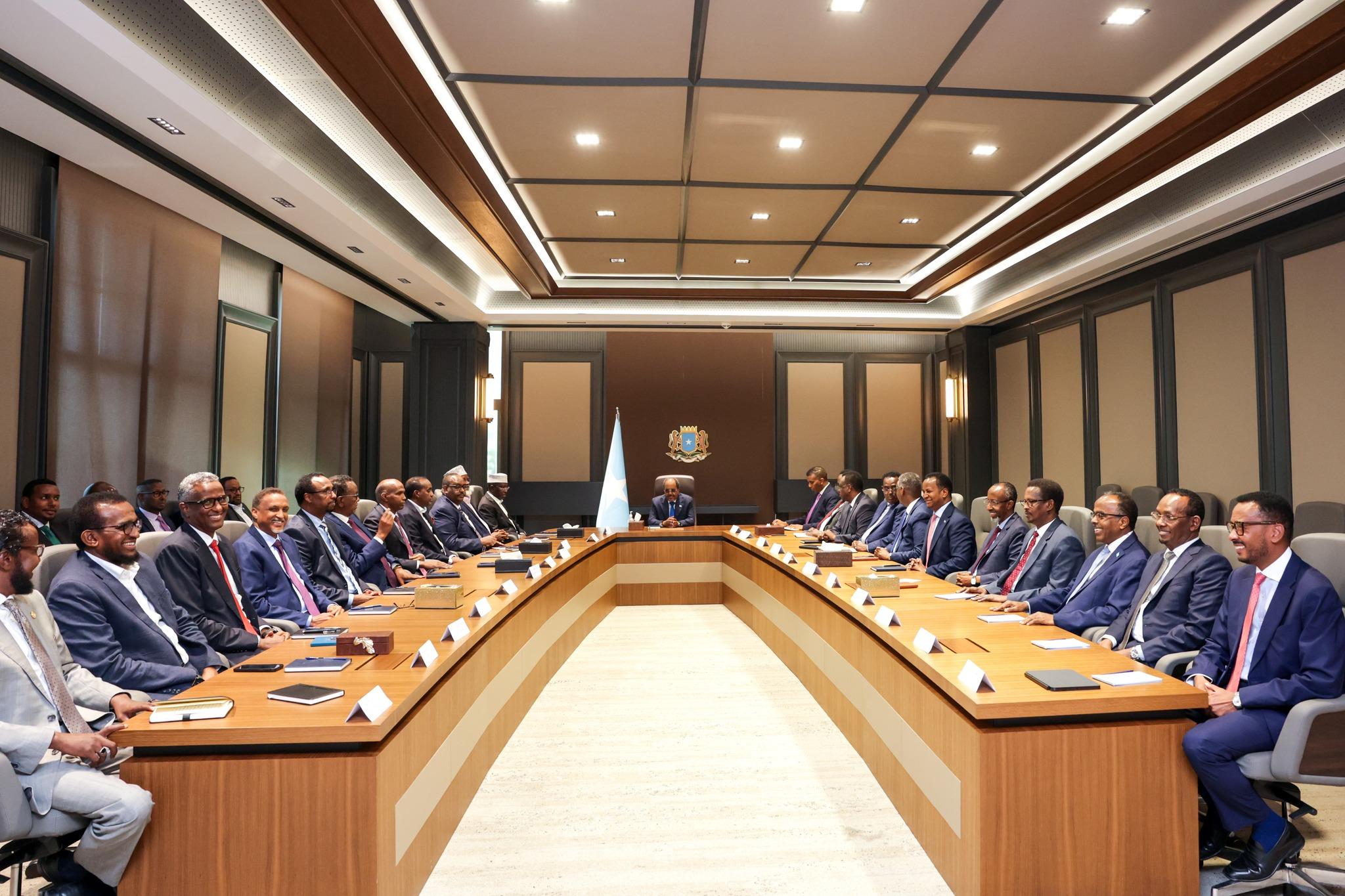

Somalia is confronting a challenging political and security environment as tensions between the Federal Government and opposition groups intensify, while questions grow over the future of the African Union Support and Stabilization Mission in Somalia (AUSSOM) and the ability of national forces to take full responsibility for the country’s security.
The country is entering a sensitive period marked by disagreements over elections and constitutional arrangements, changes in the deployment of foreign troops and persistent security threats in several regions.
These overlapping challenges have renewed concerns about Somalia’s political stability, the cohesion of its security institutions and its preparedness to manage the gradual transition away from international military support.

The political dispute between President Hassan Sheikh Mohamud’s administration and opposition figures has emerged as one of the most pressing challenges facing the country.
The two sides remain divided over the electoral process, constitutional amendments, the powers of state institutions and the future leadership of the country.
Opposition politicians argue that major national decisions, particularly those concerning elections and constitutional arrangements, require an inclusive political agreement.
The Federal Government, meanwhile, maintains that it is committed to implementing a one-person, one-vote electoral system and completing the constitutional review process.
The disagreement has contributed to an uncertain political climate, with concerns that failure to reach an agreement on the electoral framework could trigger a deeper political crisis as the country approaches its next electoral cycle.
President Hassan Sheikh has invited political stakeholders to a national consultation scheduled to take place in Mogadishu from November 14 to 18, 2026, with elections expected to be a central topic.
However, questions remain over whether all major political groups will participate and whether the proposed talks can produce an agreement acceptable to the competing sides.
At the same time, Somalia is facing an important transition in its security arrangements as foreign forces that have supported the country’s campaign against Al-Shabaab begin considering or implementing reductions in their deployments.

AUSSOM has played a significant role in supporting Somali security forces, including through military operations against Al-Shabaab and efforts to secure key towns and strategic locations.
Its troops have also helped maintain security in areas where Somali forces have not yet developed the capacity to operate independently.
Uganda recently announced that it had begun reducing its military presence in Somalia, with plans to withdraw all its troops, including those serving under AUSSOM, by the end of 2027.
The announcement has raised questions about how Somalia will manage the transition and whether its national forces will be adequately prepared to assume responsibility for positions and areas currently supported by international troops.
The withdrawal is expected to take place in stages rather than as a single operation.
This makes coordination between the Somali Government, the African Union and contributing countries particularly important to ensure that security responsibilities are transferred without creating gaps that armed groups could exploit.
Another concern is the potential impact of political divisions on the cohesion and effectiveness of the Somali National Armed Forces.

The military is expected to operate as a national institution serving the public, regardless of political disagreements among the country’s leaders.
However, tensions between rival political groups could complicate military coordination, particularly when units and commanders are deployed to areas experiencing political disputes.
The situation in Baidoa has illustrated how political competition and security tensions can become intertwined, following confrontations involving forces aligned with opposing sides in the struggle over South West State’s leadership.
If national forces become drawn into political rivalries, public confidence in security institutions and the unity of the military could be undermined. Such divisions could also affect operational planning and weaken the broader campaign against Al-Shabaab.

Baidoa has become one of the areas where the consequences of the political dispute are particularly visible.
Changes in South West State’s leadership and armed confrontations in the city have highlighted the potential for disagreements between the Federal Government and rival political factions to destabilise regional administrations.
There are concerns that prolonged political confrontation could divert attention and resources away from counterterrorism operations.
If national forces face internal divisions while international troops gradually reduce their presence, Al-Shabaab and other armed groups could seek to exploit emerging security vulnerabilities.
The situation therefore presents several interconnected challenges for Somalia.
Political leaders need to reach an understanding on elections, constitutional arrangements and the distribution of powers, while ensuring that disagreements are resolved through dialogue rather than military confrontation.
At the security level, the government faces the task of strengthening the national forces through improved training, reliable salaries, adequate equipment and effective command structures.
Maintaining the military’s institutional independence from political competition will also be essential to preserving its cohesion and public credibility.
Ultimately, Somalia’s ability to manage the gradual transition from AUSSOM support will depend not only on the capabilities of its armed forces but also on the political environment in which they operate.
A clear security transition plan, combined with political consensus and effective coordination with international partners, will be critical to preventing security gaps and maintaining stability as foreign forces reduce their presence.