


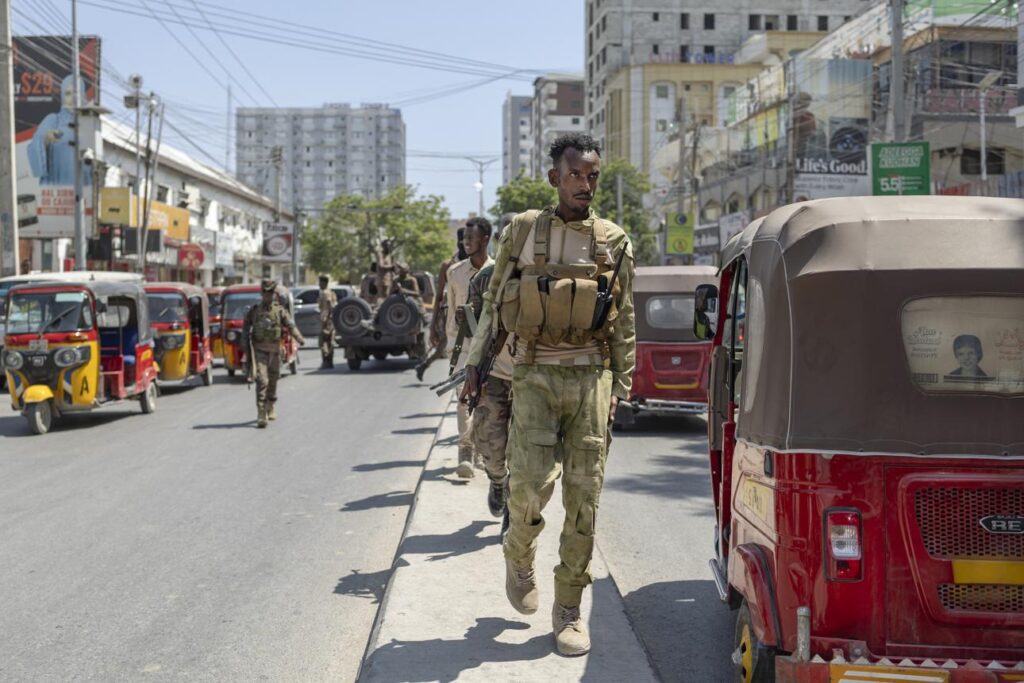


Somalia is entering a sensitive period marked by overlapping political, constitutional and security disputes, with tensions between the federal government and opposition groups extending to the country’s highest judicial institution, the Supreme Court.
Disagreements over constitutional amendments, the terms of federal institutions, the removal of the Supreme Court chief justice and the next electoral process have created a complex crisis requiring both political negotiations and legal clarification.
The dispute is no longer confined to President Hassan Sheikh Mohamud and opposition politicians.
It has raised broader questions about the legitimacy of state institutions, judicial independence, the federal system, the future of elections and cooperation among the country’s security forces.
The central question is whether Somalia’s political leaders can resolve the crisis through dialogue and constitutional procedures, or whether their disagreements will continue to affect national security and stability.
One of the main sources of tension is the dispute over constitutional amendments and the extension of the terms of federal institutions. The federal government maintains that the amended Constitution allows the president and parliament to remain in office until 2027.
Opposition groups and some federal member states reject that interpretation, arguing that the changes cannot be applied to extend the mandates of officials currently in office and that their constitutional terms have already expired.
The dispute reached the Supreme Court after former President Sheikh Sharif Sheikh Ahmed filed a case challenging the constitutional amendments and related government decisions.
On November 5, 2026, the Supreme Court ruled that President Hassan Sheikh’s term had ended on May 15, 2026, while parliament’s mandate expired on April 14, 2026.
The court gave political stakeholders 30 days to agree on an electoral framework and directed that elections be held within 90 days.
The federal government rejected the ruling. The Attorney General argued that the court had not properly addressed the government’s legal objections.
Somalia is therefore facing two opposing institutional positions: the Supreme Court says the current mandates have expired, while the government maintains that the existing leadership can remain in office until 2027.
The situation became more complicated on November 4, when President Hassan Sheikh announced the removal of Supreme Court Chief Justice Dr. Baashe Yusuf Ahmed and appointed Ibrahim Idle Suleiman to replace him.
The presidency said the decision followed complaints about judicial administration and was part of efforts to reform the justice sector.
The Supreme Court rejected the removal the following day, arguing that the president did not have the authority to dismiss its chief justice unilaterally.
Baashe also said he did not feel safe in Mogadishu and accused the government of deploying security forces to the court’s headquarters.
The reported number of personnel involved and some details surrounding the incident have not been independently verified. The government, meanwhile, has maintained that the change was linked to judicial reform.
The competing claims have created uncertainty over who has the legal authority to lead the Supreme Court and raised further questions about how judicial independence and the separation of powers should be protected.
Another major point of disagreement is the electoral system. President Hassan Sheikh and his administration support a transition to direct elections, under which citizens would vote for their representatives rather than relying on the clan-based delegate system used in previous parliamentary elections.
Opposition groups, along with the Puntland and Jubaland administrations, have questioned the process through which the proposed changes are being introduced.
They argue that constitutional amendments and electoral arrangements require broad political agreement and cannot be imposed unilaterally.
The disagreement also concerns who will administer the elections, when they will take place and what safeguards will be established to ensure that all political stakeholders have confidence in the process.
Without an agreed framework, securing acceptance from the federal government, opposition and federal member states could prove difficult.
The political crisis also carries implications for national security, particularly as Somali forces continue operations against Al-Shabaab.
The militant group remains capable of carrying out attacks in different parts of the country, making coordination among the armed forces, intelligence agencies and regional administrations important.
A key concern is that political divisions could undermine security cooperation, particularly if national forces become drawn into political rivalries.
An Associated Press report has highlighted the risk that the dispute could weaken coordination among security institutions at a time when Al-Shabaab continues to stage attacks in Mogadishu and other locations.
The security environment is also being affected by changes to the African Union’s presence in Somalia and plans involving the withdrawal of Ugandan troops.
These developments have raised questions about how security responsibilities at some positions will be managed and what arrangements will ensure continuity in operations against Al-Shabaab.
President Hassan Sheikh’s administration is consequently facing pressure over the Supreme Court ruling, opposition objections and the dispute over the mandates of federal institutions.
The government argues that its constitutional and electoral reforms are intended to move the country towards a direct voting system. Its opponents maintain that such changes must be based on an inclusive political agreement.
The end of the United Nations Transitional Assistance Mission in Somalia (UNTMIS) on October 31, 2026, has added another complication.
The mission had played a role in supporting Somalia’s political process, facilitating engagement between government and opposition figures, and assisting the development of state institutions.
Its departure comes as the country faces a dispute that requires dialogue and confidence-building among political stakeholders.
With the UN mission concluded, Somali leaders face greater pressure to establish an effective mechanism for negotiations and ensure that political disagreements are addressed through an agreed process.
Several issues will shape how the crisis develops.
The first is whether the federal government and opposition can agree on a clear electoral framework specifying the election timetable, the institution responsible for administering the process and arrangements for inclusive participation.
The second is whether a legal resolution can be found to the dispute over the Supreme Court ruling and Baashe Yusuf’s removal. Continued disagreement over the court’s leadership and authority could further undermine confidence in state institutions.
The third is whether the security forces can remain outside political competition and maintain their focus on protecting civilians and conducting operations against Al-Shabaab.
The fourth is whether the federal government and member states can rebuild their working relationship, since any political settlement reached without their participation could face serious difficulties during implementation.
Attention is now focused on whether government and opposition representatives will engage in negotiations over the electoral process and reach an understanding on how to address the constitutional dispute.
The legal status of the Supreme Court ruling and the contested appointment of its chief justice also remain unresolved.
At the same time, the country’s security institutions face the challenge of maintaining operational coordination amid changes to international security support and the continuing campaign against Al-Shabaab.
The decisions taken by Somalia’s political leaders in the coming period will determine how these overlapping disputes are managed and whether the country can avoid further institutional and security disruption.