


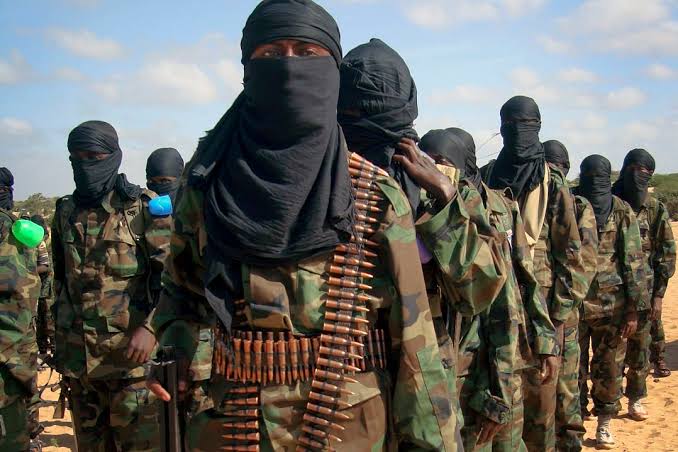


Questions persist regarding the vetting processes for individuals joining security institutions, following various reports indicating that former Al-Shabaab members surrendered to the government, with some subsequently securing positions within state bodies.
Concurrently, government officers and troops have faced allegations of unlawful killings, intimidation, extortion, and illegal forced evictions.
This situation has ignited a debate concerning the necessity for former members of armed groups appointed to office to undergo comprehensive security screening, alongside the imperative for genuine accountability for officials found to have abused civilians under the color of state authority.
Among the incidents generating widespread scrutiny was the February 10, 2024 attack at the General Gordon Military Training Center in Mogadishu.
The attack was carried out by an individual wearing a military uniform who opened fire on foreign officers and trainers present within the facility.
A report published by the Armed Conflict Location & Event Data Project (ACLED) stated that the perpetrator was a former Al-Shabaab defector who was subsequently integrated into the national armed forces, allegedly bypassing official screening and reintegration protocols.
ACLED noted that expedited recruitment processes relying on political sponsors risked undermining required security vetting for new inductees.
This incident highlighted that integrating former armed group members without proper vetting carries the risk of internal infiltration by individuals whose operational allegiance to their prior organization remains intact.
However, that specific attack does not prove that all former Al-Shabaab members integrated into government structures retain active ties to the group.
A report by the European Union Agency for Asylum (EUAA) published in May 2025 provided further details on challenges surrounding Al-Shabaab defectors and their reintegration into society or state institutions.
The report cited statements by General Zakia Hussein, former Deputy Commander of the Somali Police Force, indicating that certain individuals feign defection from Al-Shabaab while attempting to infiltrate the Somali National Army (SNA) or the National Intelligence and Security Agency (NISA) while maintaining active links to the insurgent group.
The EUAA further noted that defector screening faces structural challenges, including insufficient intelligence data, standardized procedural gaps, and potential bias among screening personnel.
These factors complicate distinguishing between genuine defectors and individuals seeking to exploit recruitment avenues to infiltrate state institutions.
International media outlets have documented the backgrounds of several former Al-Shabaab figures who subsequently held office within the Somali government.
Mukhtar Robow Ali, known as Abu Mansuur, was a senior leader within Al-Shabaab, serving as its spokesperson and deputy leader.
He surrendered to the government in August 2017 and was subsequently appointed Minister of Endowment and Religious Affairs on August 2, 2022.
His appointment generated significant political and public debate. Some viewed it as an incentive for further high-level defectors, while others questioned the propriety of appointing a former senior insurgent commander to a cabinet portfolio.
Another example is Ibrahim Adan Ibrahim, known as Nadaara, previously involved in Al-Shabaab’s regional administration in Bay and Bakool, specifically within its education sector, before departing the group in 2016.
On August 11, 2024, Prime Minister Hamza Abdi Barre appointed him Director General of the Ministry of Endowment and Religious Affairs.
These cases illustrate that the Somali government has assigned official positions to former Al-Shabaab members.
Within the security sector, Banadir Regional Police Commander Mahdi Omar Muumin (known as Macallin Mahdi) and Yaasiin Ganey have been named in allegations concerning their prior backgrounds.
Local elders and residents alleged that both officers were previously affiliated with Al-Shabaab before joining the Federal Police.
Grievances were also raised by displaced families following an operation at the former Pharmaceutical Factory site, where media reports indicated over 2,000 families faced eviction.
For his part, Macallin Mahdi has served within security institutions for an extended period. Prior reports indicated he held security posts in Galmudug, while an interview with BBC Somali on December 24, 2025 featured him discussing injuries he sustained during military operations against Al-Shabaab.
Parallel to debates over officer backgrounds are widespread public grievances regarding the conduct of armed personnel operating under state authority.
Reported abuses include unlawful killings, extortion, intimidation, arbitrary arrests, and the forced displacement of vulnerable families. Victims frequently report that military uniforms and government authority are misused for non-security purposes.
The U.S. Department of State 2024 Human Rights Report documented allegations of unlawful killings, torture, and arbitrary detention attributed to state security forces and government-aligned groups.
Citing United Nations data, the report stated that state security forces killed 72 civilians between January and September 2024.
While highlighting the urgent need for investigation and accountability, this data does not specify whether perpetrators were former members of Al-Shabaab or ISIS.
Rigorous investigation remains essential for every incident to establish individual responsibility, avoiding sweeping generalizations against security forces as a whole or all former defectors.
ACLED and EUAA reports emphasize that vetting mechanisms for Al-Shabaab defectors require systemic reform.
Key challenges include intelligence gaps, familial bias, and inconsistent enforcement of screening standards.
Integrating unvetted personnel into armed forces exposes sensitive intelligence, weaponry, and operational capacity to compromise.
Furthermore, infiltration by individuals retaining insurgent ties poses a direct threat to classified data and counter-insurgency operations.
Government protocols require that any former member of an armed group undergo independent security screening, background verification, and monitored reintegration.
Continuous performance and background evaluations within security bodies remain critical, particularly upon the emergence of specific complaints or intelligence updates.
An essential principle is that officers and troops accused of abusing civilians must not be shielded from investigation due to official rank or position.
Any officer found responsible for unlawful killings, torture, extortion, intimidation, or illegal evictions must face judicial prosecution.
Investigations must remain impartial, uninfluenced by family ties, clan affiliation, political connections, or military rank.
Furthermore, the government must establish safe channels for public grievance reporting alongside independent mechanisms to investigate allegations raised against security forces.