

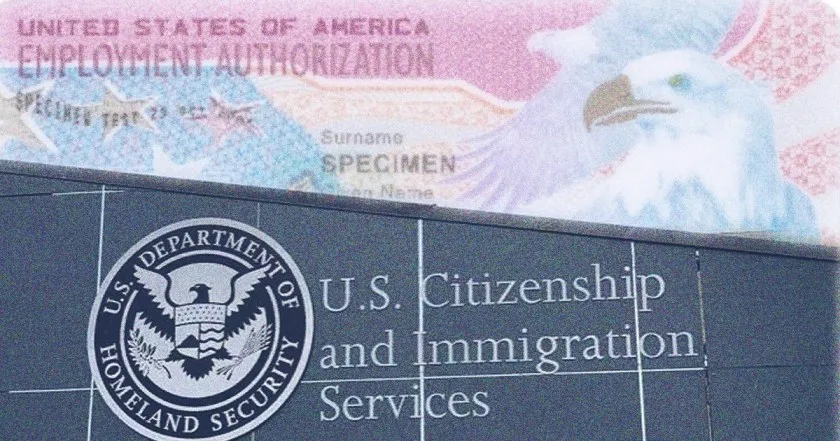

The U.S. Citizenship and Immigration Services (USCIS) has temporarily extended work authorization for certain Temporary Protected Status (TPS) beneficiaries from Somalia, Burma (Myanmar), Ethiopia, Haiti, South Sudan, Syria, and Yemen, providing short-term certainty for hundreds of thousands of workers and their employers while legal disputes over the program continue.
The extension applies only to TPS beneficiaries covered by an existing federal court order.
It does not reverse the federal government’s policy of ending TPS protections for certain groups, nor does it overturn the recent U.S. Supreme Court ruling allowing the administration to move forward with terminating TPS designations.
Under the temporary measure, eligible TPS holders whose Employment Authorization Documents (EADs) have already expired may continue working legally in the United States until July 10, 2026, even if the expiration date printed on their work permit has passed.
USCIS said the court order automatically extends work authorization during this period, meaning the physical expiration date on an EAD does not invalidate employment eligibility for those covered.
The agency emphasized that the extension is narrowly tailored and temporary. It does not renew TPS status, create new immigration benefits, or provide additional travel authorization.
Instead, it preserves the current legal status of eligible beneficiaries while litigation continues.
The move follows the U.S. Supreme Court’s June 25, 2026, decision in Mullin v. Doe, which allowed the administration to proceed with ending TPS protections for approximately 350,000 Haitian nationals and nearly 6,000 Syrians.
The ruling also limited the authority of lower courts to block future TPS terminations.
Writing for the majority, Justice Samuel Alito said courts have only a limited role in reviewing TPS designations, while three dissenting justices argued the decision gives the executive branch broad authority to end humanitarian protections with reduced judicial oversight.
As a result, USCIS described the July work authorization extension as a temporary bridge created by ongoing court proceedings rather than an indication that TPS protections will be restored or expanded.
TPS is a humanitarian immigration program that allows nationals of designated countries experiencing armed conflict, natural disasters, or other extraordinary conditions to live and work legally in the United States for a limited period.
Beneficiaries are generally protected from deportation while their designation remains in effect and are issued Employment Authorization Documents that employers verify through the federal Form I-9 employment eligibility system.
USCIS also issued updated guidance for employers completing Form I-9.
Employers should record “as per court order” instead of the document’s printed expiration date in Section 1 and use July 10, 2026, as the employment authorization expiration date in Section 2, while noting that the extension is based on a court order.
Employers are instructed not to reverify affected employees before that date solely because an EAD shows an earlier expiration.
Unless another court order or new government guidance extends the authorization, affected employees could lose their legal work authorization after July 10, 2026.
Meanwhile, Congress could still intervene. A bipartisan bill aimed at preserving TPS protections for Haitian nationals has already passed the House of Representatives but still requires at least 60 votes in the Senate before it can become law.
Immigration advocacy groups continue pressing lawmakers for broader legislative action, although the outcome remains uncertain.