


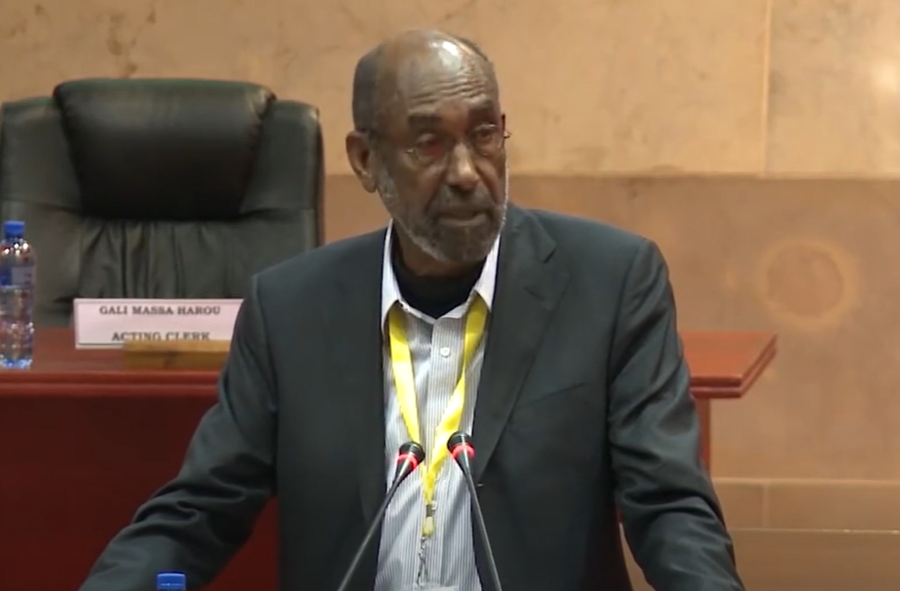


Somali Senator Abdi Ismail Samatar has called for a peaceful resolution to the conflict between the Federal Government and Al-Shabaab, arguing that Somalia must pursue dialogue to end decades of violence and political instability.
Samatar, a member of the Upper House of Parliament, took to X to share his views on the matter, saying prolonged insecurity and political divisions had contributed to civil conflict and corruption, making reconciliation essential to the country’s recovery.
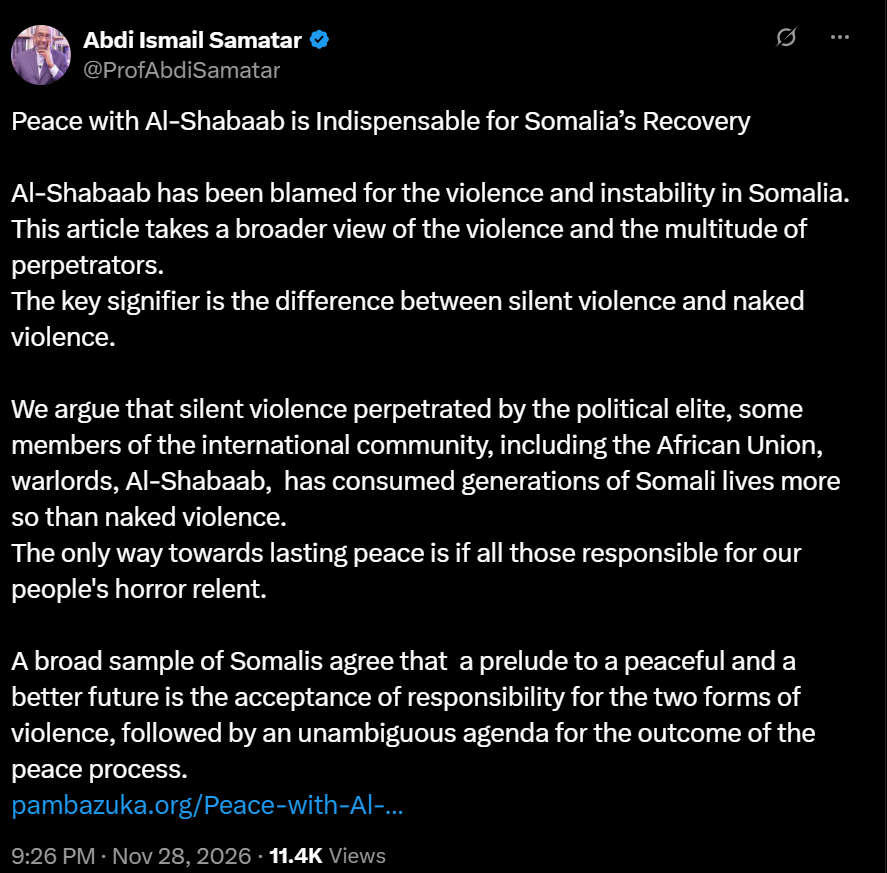

Reflecting on Somalia’s political history, the senator recalled that the country was among Africa’s early democracies following independence in 1960.
However, he argued that by 1967, clan-based political groups had taken control of the country’s political system, a development that eventually paved the way for the military takeover.
He acknowledged that the military government initially achieved notable progress but said it later developed into an authoritarian system.
According to Samatar, opposition groups that replaced the military administration subsequently failed to reach a political settlement, contributing to the civil war and continuing instability.
In his remarks, Samatar argued that Somalia must first establish peace with those responsible for the ongoing conflict before it can address its wider political and governance challenges.
“Peace with Al-Shabaab is a necessity for the country. We were among Africa’s most democratic nations in 1960, but a clan-based political group took control in 1967, leading to the military takeover. Although the military initially made progress, it eventually became a dictatorship. Those who replaced it have still failed to reconcile, resulting in civil war and corruption. To move beyond this situation, we must first establish peace with those causing the conflict,” Samatar said.
His comments amount to a call for the government to consider a negotiated settlement with Al-Shabaab, rather than relying exclusively on military operations to end the insurgency.
The position is likely to renew debate over whether dialogue should form part of Somalia’s broader strategy for addressing the conflict.