


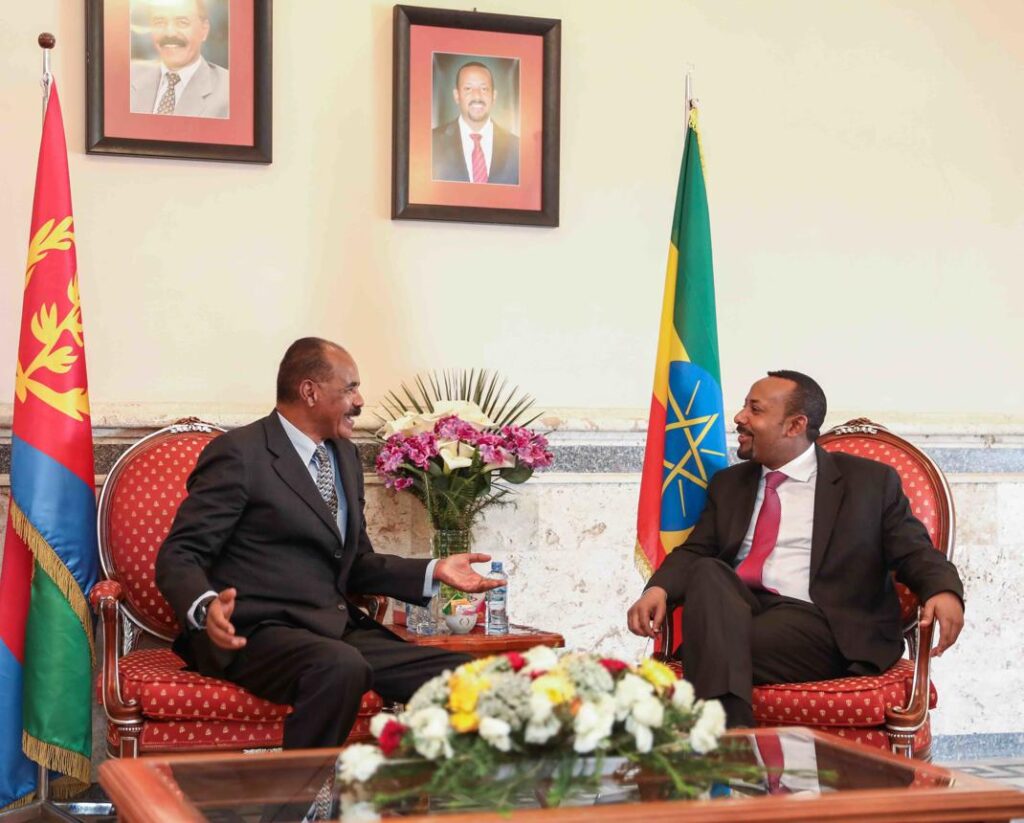


Rising tensions between Ethiopia and Eritrea have heightened concerns across the Horn of Africa, amid fears that the dispute could escalate into another military confrontation with serious implications for regional security and stability.
The two countries remain divided over border security, conflicts in northern Ethiopia and Addis Ababa’s ambitions to secure access to the sea.
Relations have deteriorated further following a breakdown in diplomatic engagement, with both sides exchanging accusations over alleged support for armed groups.
Somalia is closely monitoring the situation because of its strategic position near the Red Sea and Gulf of Aden, as well as its security and diplomatic ties with Ethiopia.
Any escalation between Addis Ababa and Asmara could have consequences for Somalia’s regional relations, maritime security, trade and diplomatic efforts to resolve outstanding disputes.
One of the main issues affecting Somalia is Ethiopia’s pursuit of access to a seaport.
Mogadishu has maintained that any arrangement allowing Ethiopia to use Somali ports must be based on a commercial agreement that fully respects Somalia’s sovereignty and territorial integrity.
The Ankara Declaration signed by Somalia and Ethiopia established a framework for negotiations on maritime access based on respect for Somalia’s sovereignty and territorial integrity.
Against this background, tensions between Ethiopia and Eritrea could further increase the strategic importance of Somali ports and strengthen Somalia’s relevance in regional diplomatic calculations.
A new conflict between the two countries could also draw in other regional states and international powers, potentially making the security situation across the Horn of Africa even more complicated.
Somalia, which continues to confront Al-Shabaab and other security challenges, would face additional pressure to avoid being drawn into competing regional alliances or confrontations.
There are also concerns that renewed fighting could trigger population displacement, disrupt trade and worsen humanitarian conditions in neighbouring countries.
Such developments could place additional pressure on regional governments and humanitarian agencies already dealing with existing crises.
However, it remains uncertain whether the current tensions will develop into a full-scale war. Diplomatic engagement, particularly through the African Union and regional organisations, will be important in preventing another military confrontation.
For Somalia, the situation underscores the importance of protecting its sovereignty, maintaining diplomatic relations with neighbouring countries and avoiding involvement in disputes that could pull the Horn of Africa into another regional conflict.