




Mogadishu (Kaab TV) – Somali pirate groups are increasingly adopting modern technology, including drones and advanced GPS tracking systems, to monitor and target commercial vessels in the Indian Ocean and the Gulf of Aden, according to maritime security experts and regional analysts.
Khadija Mamouni, a researcher at a Morocco-based strategic studies center, said Somali piracy has evolved far beyond the loosely organized criminal gangs that dominated headlines during the late 2000s. She described the current networks as highly organized groups capable of carrying out carefully coordinated maritime attacks using modern surveillance tools, improved communications systems, and regional militant connections.
According to Mamouni, pirate groups are now deploying unmanned aerial drones to monitor ship movements from long distances while using GPS navigation systems and maritime tracking technologies to identify vulnerable commercial vessels traveling near Somali waters.
She said the transformation reflects how piracy in the region has become increasingly sophisticated and financially motivated, with criminal groups adapting to changes in international naval patrols and global shipping routes.
Mamouni also claimed that Somali pirate groups have strengthened operational links with armed factions including Al-Shabaab militants and Yemen’s Houthi Movement rebels.
According to her assessment, these relationships provide pirate groups with access to military-style training, weapons, tactical expertise, and smuggling networks operating across the Red Sea and the Gulf of Aden.
Security experts say pirates continue to rely heavily on traditional wooden vessels known as “dhows,” which are commonly used as floating operational bases. These larger boats transport fuel, supplies, weapons, and smaller high-speed skiffs used to launch attacks far from the Somali coastline.
Maritime analysts warn that piracy near Somalia has been steadily resurging after years of decline following the peak of international anti-piracy operations between 2008 and 2013. During that period, multinational naval missions significantly reduced hijackings through aggressive patrols and armed vessel protection measures.
However, experts say recent geopolitical tensions and shifting global security priorities have created conditions that pirates are increasingly exploiting.
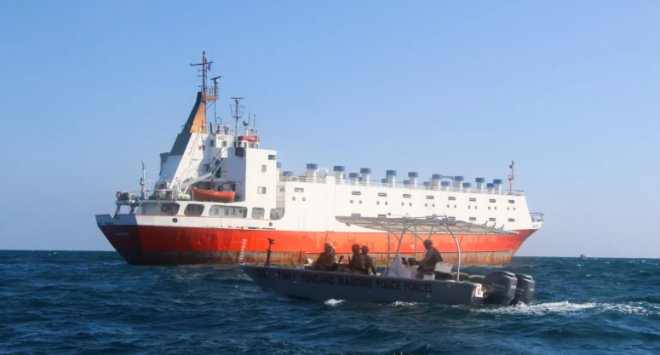
Christopher Hockey, a maritime security specialist, said the recent hijacking of the oil tanker MT Eureka illustrated a major change in the scale and organization of Somali pirate operations. He noted that nearly 30 armed pirates reportedly participated in the seizure of the vessel — a number far larger than what was typically seen during earlier piracy incidents.
The growing piracy threat comes amid escalating instability in the Red Sea and the Strait of Hormuz, where tensions linked to conflicts involving United States, Israel, and Iran have disrupted global shipping routes.
As attacks and military confrontations in the Red Sea continue, many shipping companies have rerouted vessels around the Horn of Africa and along East African maritime corridors to avoid dangerous conflict zones. Maritime experts say the increased traffic near Somali waters has created new opportunities for pirate groups seeking vulnerable targets.
Analysts also warn that weakened coastal governance, economic hardship, illegal fishing, arms trafficking, and the continued presence of militant groups have contributed to the re-emergence of piracy in Somalia’s coastal regions.
Somali pirate attacks are typically carried out using fast skiffs equipped with AK-47 rifles, machine guns, and RPG launchers. Pirates often approach vessels at high speed before boarding them using ladders and ropes. Experts say the addition of drones and digital tracking technology has made pirate operations more organized, mobile, and difficult for maritime forces to predict.
The threat is no longer limited to cargo vessels and oil tankers. Last year, passengers aboard the luxury cruise ship Queen Anne were reportedly instructed to turn off cabin lights and remain inside protected areas while passing through waters considered vulnerable to piracy near the Horn of Africa.
International maritime agencies have repeatedly warned that the Somalia Basin and Gulf of Aden remain among the world’s most dangerous shipping corridors despite years of international naval operations designed to secure the routes.
Security analysts say Somali piracy is increasingly transforming into a transnational criminal enterprise connected to broader regional conflicts and smuggling networks, raising fears that attacks could continue escalating unless stronger maritime security coordination and long-term political stability are achieved in Somalia and the wider region.