


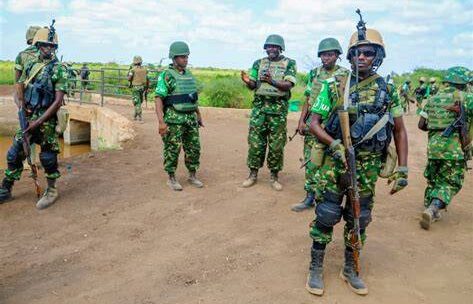


Federal Government of Somalia is facing mounting international pressure to present a roadmap for assuming full responsibility for the country’s security as uncertainty over the future of the AUSSOM deepens following the United States’ decision to end funding for the UN support office that sustains the mission.
The pressure intensified after a recent African Union meeting in Addis Ababa, where AU officials formally requested Somalia to nominate representatives for consultations on AUSSOM’s future.
Those discussions are expected to culminate in a series of high-level meetings in Kampala, including technical consultations from July 22–24, meetings of Chiefs of Defence and Police on July 29, Defence Ministers on July 30, and a Summit of Troop-Contributing Countries on July 31, where the future of the mission will be a central agenda item.
U.S. Decision Creates Major Funding Crisis
The urgency follows a diplomatic note sent by Washington to the African Union on July 1, informing the organization that the United States will no longer finance the United Nations Support Office in Somalia (UNSOS) after December 2026.
Over the past decade, the United States has contributed nearly $2 billion toward UNSOS, which provides the logistical backbone for African Union peace operations in Somalia.
U.S. officials have reportedly become increasingly frustrated by what they describe as insufficient progress by Somali political leaders in assuming greater responsibility for national security and implementing meaningful security reforms.
UNSOS currently operates on an annual budget of approximately $481 million for the 2026–2027 fiscal year, with the United States contributing roughly 26 percent of that funding through assessed contributions.
Without UNSOS, AUSSOM would lose essential logistical support, including food supplies, fuel, water, transport, engineering services, medical care, communications, and casualty evacuation for nearly 12,000 African Union personnel deployed across Somalia.
Diplomatic sources say Washington’s decision reflects not only financial considerations but also growing concern over Somalia’s prolonged political disputes, the slow pace of security sector reforms, and the continued dependence of Somali institutions on international assistance.
Somalia Yet to Present a Comprehensive Transition Plan
International partners are now urging Mogadishu to produce a detailed transition strategy outlining how Somali security forces will gradually assume responsibilities currently carried out by AUSSOM.
President Hassan Sheikh Mohamud has held several meetings with senior military and security officials to assess the readiness of the Somali National Army and police forces.
However, Somalia has yet to publish a comprehensive transition framework specifying which military bases will be transferred first, the timeline for troop withdrawals, the operational readiness of Somali forces, and the international support that will remain necessary during the transition.
Diplomats say the absence of a clear roadmap has complicated planning among troop-contributing countries, many of which are now reassessing their long-term commitments.
Uganda, the largest troop contributor, has already indicated that it intends to withdraw its forces after nearly two decades of deployment in Somalia.
Burundi has also reduced its participation following disagreements over troop allocations under the new AUSSOM structure, raising concerns that additional troop-contributing countries could reconsider their commitments if funding uncertainties persist.
Risk of a Security Vacuum
AUSSOM officially replaced the African Union Transition Mission in Somalia (ATMIS) in January 2025 with a planned five-year mandate running through 2029.
The mission currently consists of approximately 12,000 personnel, including military troops, police officers, and civilian staff.
Security experts warn that if funding shortages force a premature drawdown, Somalia could face a dangerous security vacuum that Al-Shabaab would likely seek to exploit.
The group has already intensified attacks across central and southern Somalia while expanding its influence in several rural districts.
African Union Commission Chairperson Mahmoud Ali Youssouf has called for a transition based on clear strategic benchmarks rather than arbitrary deadlines.
The AU Peace and Security Council has also established a dedicated task force to evaluate alternative funding mechanisms and long-term options for the mission.
Meanwhile, Somali Foreign Minister Ahmed Moallim Fiqi recently met with the AU Special Representative, Ambassador El Hadji Ibrahima Diene, to discuss strengthening security cooperation despite the mission’s financial uncertainty.
While both sides reaffirmed their commitment to continued collaboration, officials acknowledge that diplomatic assurances alone cannot resolve the widening funding gap.
Political Crisis Complicates Security Transition
The security transition is unfolding against the backdrop of one of Somalia’s deepest political crises in recent years.
Disputes over constitutional amendments, electoral reforms, and relations between the Federal Government and several Federal Member States have complicated efforts to build unified national security institutions.
International partners have increasingly linked Somalia’s political instability with the country’s security challenges, arguing that lasting progress against Al-Shabaab requires not only military capacity but also political consensus.
Several donors have privately expressed concern that continued political polarization could undermine the effectiveness of any future security transition, particularly if disagreements between Mogadishu and regional administrations continue to affect military coordination.
The Kampala Summit Could Shape Somalia’s Security Future
The upcoming Kampala meetings are expected to determine not only AUSSOM’s financing but also the broader trajectory of Somalia’s security transition.
Delegates are likely to discuss burden-sharing, alternative funding models, troop levels, and the conditions under which responsibilities can be transferred to Somali forces.
The central debate is no longer simply whether AUSSOM should remain in Somalia, but whether Somali institutions are prepared to sustain national security without the extensive international logistical and financial support that has underpinned peace operations for nearly two decades.
While the Kampala summit may provide temporary solutions to AUSSOM’s immediate funding challenges, analysts caution that it cannot resolve the underlying issue: Somalia’s continued dependence on external security assistance.
Without a credible transition plan, stronger national institutions, and broader political consensus, the country risks remaining reliant on international support long after the current mission was intended to end.