


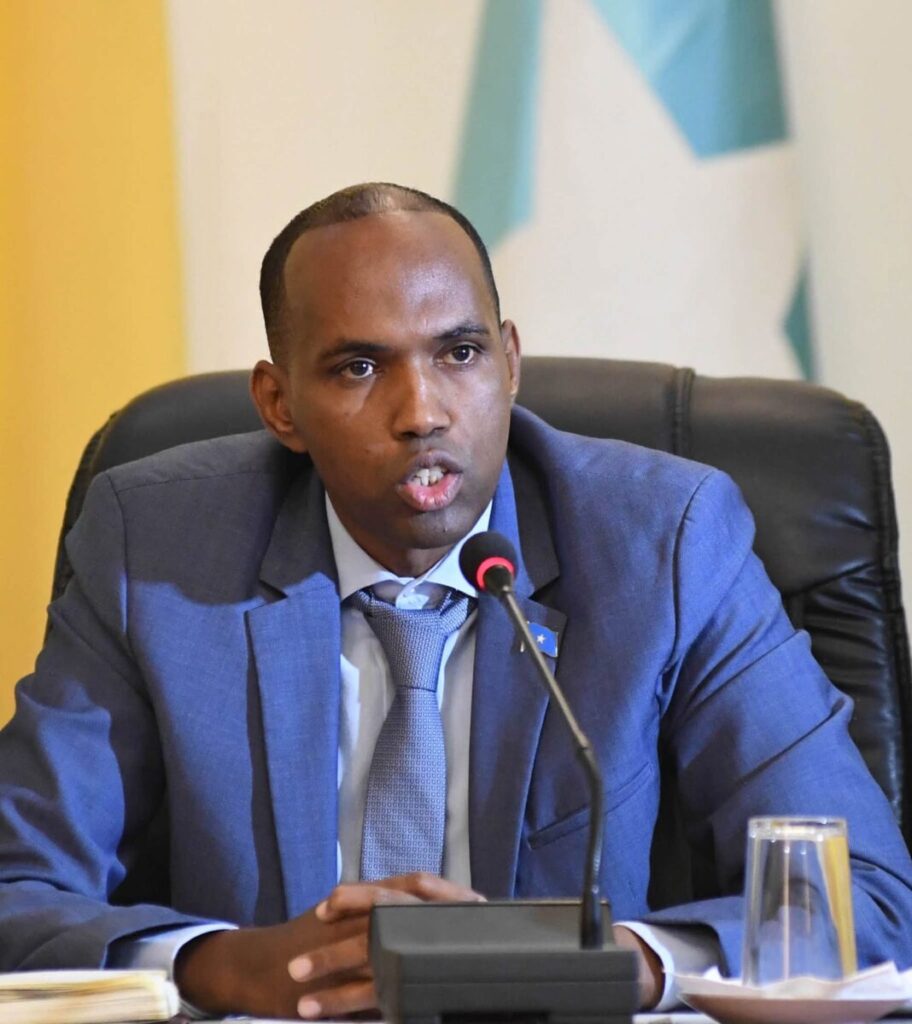


Former Prime Minister of Somalia, Hassan Ali Khaire, has issued a severe warning to companies, investors, and international partners who entered into political agreements, commercial contracts, and concessions with the Federal Government of Somalia (FGS) after April 14, 2026.
Khaire stated that agreements and decisions made by the federal government during this period—if they fall outside the routine daily administration of a caretaker government—could be rendered legally void and subject to challenge once constitutional order is restored.
Khaire’s warning comes a day after the Supreme Court of Somalia issued a critical ruling regarding institutional mandates, declaring that the terms of Parliament and the Government expired on April 14, 2026, while the President’s term concluded on May 15, 2026.
In a statement published on his social media accounts, Khaire declared that any agreement, contract, or policy signed with the federal government after April 14, 2026, extending beyond the scope of a caretaker administration’s standard duties, is legally contestable.
He specifically directed his message to international partners, commercial investors, and private firms, cautioning them against relying on agreements he asserted could face revocation in the future.
‘Any agreement, contract, or policy entered into with the Federal Government of Somalia after April 14, 2026, that falls outside the routine daily operations of a caretaker government, is null and void.
Those agreements and decisions will be challenged and legally revoked once constitutional order is restored.’
This statement demonstrates the opposition’s intent to review state agreements and executive decisions executed during the period identified by the Supreme Court as post-mandate expiration.
The Supreme Court of Somalia issued its judgment on November 5, 2026, regarding a lawsuit concerning Provisional Constitution amendments and the legality of institutional mandate extensions.
The court ruled that the term limits for both houses of the Federal Parliament and the Cabinet ended on April 14, 2026, while President Hassan Sheikh Mohamud’s term concluded on May 15, 2026.
The judges reasoned that the constitutional amendment extending mandates to five years did not explicitly specify retroactive application to sitting institutions in office when the amendment was enacted.
The court further ruled that actions taken by these institutions after their mandate expiration dates are legally void, allowing the executive administration to maintain routine day-to-day governance while barring major policy decisions beyond that mandate.
It ordered political stakeholders to reach an agreement on electoral frameworks within 30 days, with elections to be conducted within 90 days.
Khaire’s warning directly impacts domestic and international entities engaging with the federal government during this window.
Agreements potentially affected include infrastructure contracts, public service concessions, commercial investments, trade deals, and political decisions carrying economic implications.
If major agreements were executed following the date the court declared mandates expired, their legal validity could face intense dispute, particularly if deemed outside routine caretaker governance.
This dynamic introduces significant commercial uncertainty for companies and investors regarding counterparty liability, contract enforcement, and recognition by future administrations.
However, Khaire’s warning does not unilaterally void these agreements. Each contract requires individual assessment, accounting for the court ruling, contractual terms, governing law, and constitutional procedures.
The primary question stemming from Khaire’s declaration centers on the legal standing of agreements signed by the federal government after April 14, 2026.
Under the framework presented by Khaire, major deals exceeding routine caretaker duties could face future legal challenges and nullification.
Nevertheless, not all agreements signed during this period face automatic cancellation. A distinction must be drawn between standard administrative tasks, previously executed procurement, long-term commercial investments, and major sovereign decisions.
Furthermore, legal authority and mechanisms for contract cancellation must be defined according to specific contract terms and statutory frameworks.
The federal government faces scrutiny over its management of agreements and policy decisions enacted post-April 14.
It is expected to clarify its official legal position regarding the Supreme Court ruling, outline executed contracts, and articulate the legal basis for their validity.
Hassan Ali Khaire’s warning to companies, investors, and international partners highlights that the Supreme Court decision has initiated a major debate regarding the legitimacy of state contracts signed after April 14, 2026.
The immediate priority remains identifying contracts affected by the Supreme Court decision and establishing legal resolution mechanisms should political factions remain divided.
The federal government faces scrutiny regarding executive legitimacy, while commercial partners and international investors require legal certainty concerning state commitments in Somalia.