


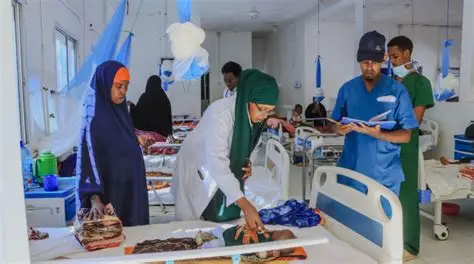


The international medical charity Médecins Sans Frontières (MSF) has reported a sharp rise in casualties following recent fighting in Baidoa, warning that the violence is placing additional strain on an already overwhelmed healthcare system in southwestern Somalia.
According to MSF, clashes that erupted in and around Baidoa on August 17, 2026, left at least 71 people wounded, including women and children.
Medical teams from MSF and Somalia’s Ministry of Health working at Bay Regional Hospital treated the casualties as they arrived throughout the day. The organization also confirmed four deaths, including that of a young girl.
MSF said wounded civilians continued to arrive at the hospital even as it was compiling its report, raising concerns that the final casualty toll could be higher.
The influx of patients has placed significant pressure on health services in Baidoa, where medical facilities were already struggling to meet growing humanitarian needs.
The organization warned that the impact of the fighting extends far beyond those directly injured in the clashes. Baidoa is home to more than half a million internally displaced people who have fled conflict, drought, and insecurity from across southern Somalia.
Many of these families depend heavily on the city’s healthcare services, which are now facing additional pressure due to the violence.
“When violence erupts, the consequences are felt not only by those wounded in the fighting but also by pregnant women, malnourished children, chronically ill patients, and anyone requiring urgent medical care,” MSF said.
MSF supports emergency, maternal, pediatric, nutrition, and outpatient services at Bay Regional Hospital. The organization noted that sudden surges of conflict-related injuries create major challenges for a health system already dealing with high levels of disease and malnutrition.
The latest clashes come at a time when Baidoa is grappling with one of Somalia’s most severe humanitarian emergencies. An MSF assessment conducted in July across 14 displacement sites in the city found alarming levels of malnutrition among children.
The survey, which covered 888 households, found that one in every two children screened was suffering from acute malnutrition, while one in four was experiencing severe acute malnutrition.
Food insecurity remains widespread, with one-third of surveyed families surviving on only one meal per day. Only two percent of households reported having access to three daily meals.
The worsening nutrition crisis has driven a significant increase in demand for medical care.
MSF said more than 21,000 children were treated through its outpatient nutrition programs in Baidoa during the first months of 2026—more than double the number recorded during the same period last year.
Hospital admissions have also risen sharply. According to the organization, 2,890 children suffering from severe malnutrition were admitted for inpatient treatment, representing a 78 percent increase compared to the same period in 2025.
In addition to malnutrition, Baidoa has experienced a growing outbreak of measles. MSF reported treating nearly 2,500 measles cases in 2026, compared with approximately 1,700 cases recorded during the entirety of 2025.
Aid agencies say prolonged drought across large parts of Somalia has forced thousands of families from rural areas into Baidoa after losing livestock, crops, food supplies, and access to water.
Many displaced families arrived in the city with little or no resources and remain heavily dependent on humanitarian assistance.
MSF has also expanded water and sanitation programs in displacement sites, describing access to clean water as a critical component of the humanitarian response.
The organization warned that recurring violence risks worsening an already fragile situation. Families living in displacement camps face a combination of food shortages, disease outbreaks, inadequate services, insecurity, and repeated displacement.
MSF called on all parties to protect civilians, healthcare facilities, and medical personnel, and urged armed actors to ensure that the wounded can safely reach hospitals and health centers.
The charity stressed that the crisis in Baidoa cannot be viewed solely through the lens of conflict casualties. The city is simultaneously facing the effects of drought, displacement, malnutrition, disease outbreaks, and underfunded humanitarian services.
While MSF has increased bed capacity and expanded support to local health facilities, the organization warned that continued insecurity could further undermine healthcare delivery and deepen the suffering of vulnerable communities.
“The combination of conflict, drought, malnutrition, and limited humanitarian resources poses a serious threat to the people of Baidoa,” MSF said, reiterating its call for greater protection of civilians and uninterrupted access to healthcare.
The latest violence has highlighted how quickly armed clashes can overwhelm essential services in a city already struggling with one of Somalia’s most complex humanitarian crises.