


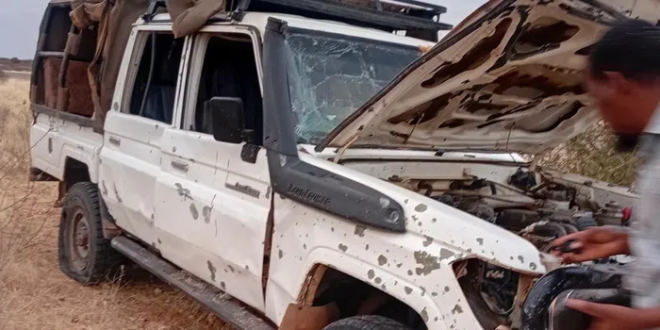


The police commander of the Hagadera police station and his driver were reportedly killed in a suspected landmine explosion that struck the vehicle they were traveling in while it was driving along the road connecting the Saretho area and Dadaab in Garissa County, northeastern Kenya.
The explosion, which occurred at dawn on Friday, has once again revived concerns regarding the security situation on the roads of Garissa County, particularly in areas near the Somali border, where attacks targeting security forces and the vehicles they use have previously occurred.
Reports from the area indicate that the incident happened around 6:00 AM when a Toyota Land Cruiser vehicle belonging to the Hagadera police station was traveling along the Saretho-Dadaab connecting road.
The vehicle reportedly drove over an explosive device suspected to be a buried landmine, causing a powerful blast that heavily damaged the vehicle.
The two men in the vehicle, who were the Hagadera station police commander and his driver, reportedly died at the scene.
So far, further details regarding their identities, official ranks, and the specific circumstances they were in at the time of the attack have not been available.
This explosion highlights the threat that roadside improvised explosive devices pose to security forces and others who use the vital roads of the region.
Following the blast, security forces reportedly arrived at the scene, where they initiated security securing operations and follow-up investigations related to the incident.
The steps taken by the forces are related to verifying the situation at the scene, gathering information on how the explosion occurred, and investigating who might be behind the attack.
However, the exact type of the explosive device, who planted it, and the specific motive behind the attack remain unclear.
Likewise, there is no official, confirmed statement clearly indicating who is responsible for this explosion.
Therefore, ongoing investigations will be crucial in confirming the details of the incident and who was involved.
Some local reports suggest the possibility that the armed group Al-Shabaab is involved in the attack.
However, this suspicion does not yet have official confirmation proving the group’s responsibility.
Al-Shabaab has spent years carrying out attacks in parts of Somalia and regions of northeastern Kenya, repeatedly targeting security forces, government installations, and vehicles utilizing vital roadways.
The areas near the border of the two countries face security challenges related to the movements of armed groups, ambush attacks, and roadside-planted explosives.
Nonetheless, until official information emerges from the investigations, it cannot be confirmed that Al-Shabaab is responsible for this blast.
The road connecting Saretho and Dadaab is vital for the movement of people and vehicles, the delivery of supplies, and the operations of security forces in Garissa County.
Dadaab is also well known for its refugee camps, which house many people displaced by conflicts and humanitarian crises in Somalia and other countries in the region.
The security of the roads near Dadaab and other areas in Garissa County is vital for civilian transport, business people, humanitarian aid workers, and organizations providing essential services.
Incidents of this nature can disrupt transport and create fear regarding travel by people and organizations along the regional connecting roads.
If the security situation deteriorates, delivering supplies and services relied upon by the local community and the residents of the refugee camps could also become difficult.
Garissa County, located in northeastern Kenya near the Somali border, has previously experienced various attacks targeting security forces and vehicles utilizing the regional roadways.
Geographically, the county features roads connecting various towns and settlements, which are crucial for trade, community movement, and government operations.
The long border between Kenya and Somalia also makes border security one of the primary issues managed by the security agencies of both countries.
Any attack on security forces can increase the need for further investigations, road patrols, and the strengthening of intelligence sharing among security agencies.
Meanwhile, the citizens living in those areas are the ones who directly experience the impact of insecurity, especially when incidents affect public transportation, commerce, and access to essential services.
The deaths of two members of the police force represent a loss that adds to the existing concerns regarding the safety of security personnel and civilians who use the region’s roads.
Improvised landmines and roadside explosives pose a threat to vehicles unaware of their presence, and it can sometimes be difficult to detect where they are buried before they detonate.
Incidents of this nature can also affect public confidence in road security, causing certain travel plans to be postponed or altered.
It is important for road users to heed official warnings from security agencies and avoid areas suspected of containing explosive devices.
So far, information gathered from this incident indicates that a suspected roadside landmine explosion struck a police vehicle traveling along the Saretho-Dadaab road, resulting in the deaths of the Hagadera police station commander and his driver.