

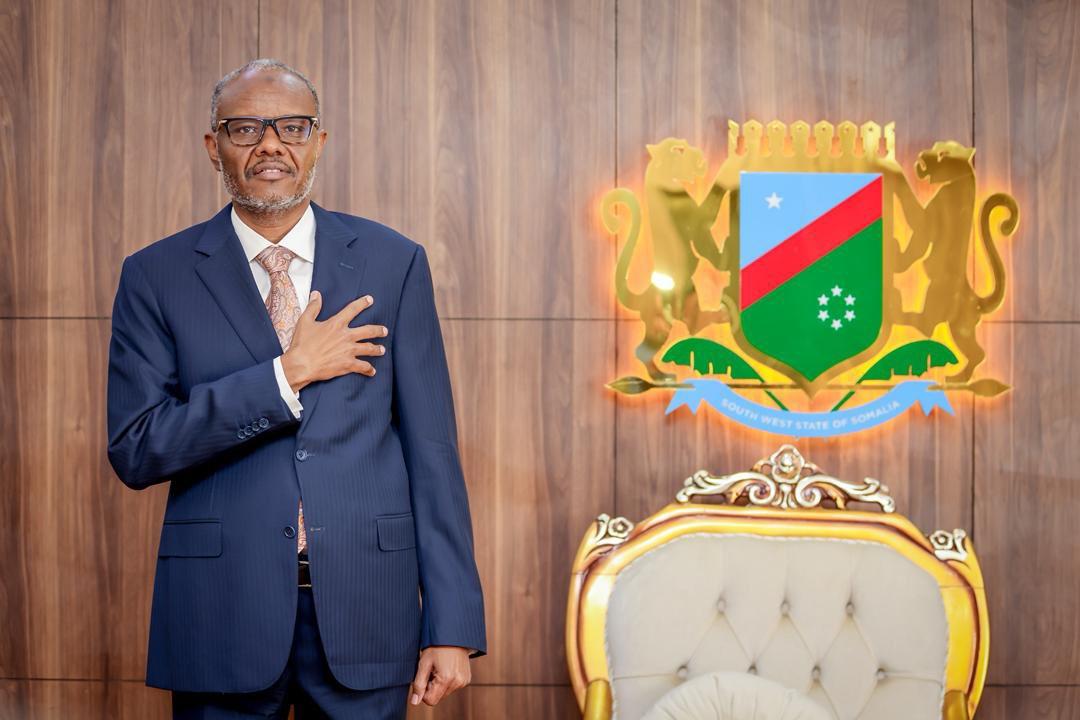

Former South West State President Abdiaziz Hassan Mohamed Laftagareen has strongly rejected allegations made by Somali President Hassan Sheikh Mohamud against the United Arab Emirates, describing them as baseless and defending Abu Dhabi’s longstanding relationship with Somalia.
Laftagareen said the UAE had provided sustained support to Somalia in security, humanitarian assistance and development, including during some of the country’s most difficult periods.
He argued that the two sides shared longstanding historical, cultural and people-to-people ties that should not be undermined by current political disagreements.
He also maintained that Emirati assistance had extended beyond the Federal Government to different sections of Somali society and institutions across the country.
Laftagareen thanked the UAE for its contributions and urged both sides to preserve their relationship and avoid actions that could further damage diplomatic ties.
His remarks come amid escalating tensions between Mogadishu and Abu Dhabi following Hassan Sheikh’s televised address on November 17, in which he accused the UAE of interfering in Somalia’s internal affairs and undermining the country’s sovereignty and unity.
The Somali president alleged that the UAE had entered into port and security agreements with Somaliland, Puntland and Jubaland without the involvement of the Federal Government.
He also accused Abu Dhabi of supporting political actors and armed groups that he said operated outside the national security framework, and of maintaining military facilities and forces without approval from the central government.
Hassan Sheikh described these activities as violations of Somalia’s sovereignty, territorial integrity and national unity.
His government has previously announced the cancellation of agreements with the UAE covering defence, security and economic cooperation, saying the decision was necessary to protect national sovereignty.
The UAE has also publicly rejected the accusations. Anwar Gargash, diplomatic adviser to the UAE president, criticised Hassan Sheikh’s position, arguing that it did not reflect the longstanding relationship between the Emirates and the Somali people.
Gargash said the UAE had stood by Somalia during difficult periods and warned against allowing domestic political disputes to develop into wider regional tensions. He also accused the Somali president of placing personal political interests ahead of national priorities.
Beyond defending the UAE, Laftagareen used his remarks to criticise the Federal Government’s handling of its disputes with regional administrations.
He questioned Hassan Sheikh’s political authority, arguing that the president’s term had expired and that major national decisions required broader political agreement and consultation with federal member states.
Laftagareen also criticised Mogadishu’s approach to Jubaland, Puntland and South West State, saying disagreements with regional leaders should be addressed through dialogue rather than escalating confrontation.
He called for national leadership capable of promoting unity, maintaining peace and security, and strengthening Somalia’s credibility with international partners.
The dispute between Hassan Sheikh and the UAE has increasingly expanded beyond diplomatic statements to involve wider questions over port agreements, security cooperation, relations between federal and regional authorities, and the constitutional powers of the Federal Government.
Somalia’s Ministry of Foreign Affairs has maintained that official relations with foreign countries and security agreements must be handled through the federal authorities. It has warned against parallel arrangements concluded without Mogadishu’s approval.
This position has fuelled debate over how Somalia should manage relations with international partners and what role federal member states should have in negotiating investments and agreements involving ports and security.
Laftagareen’s intervention illustrates how the disagreement between Mogadishu and Abu Dhabi has become intertwined with Somalia’s domestic political divisions.
The Federal Government maintains that national sovereignty and territorial unity must be protected, while some political figures and regional administrations defend continued cooperation with the UAE, arguing that the country’s economic and security partnerships should not be undermined by political disputes.
His defence of Abu Dhabi and criticism of Hassan Sheikh have added another dimension to the dispute, highlighting the growing intersection between Somalia’s foreign relations and disagreements over the balance of power between the federal government and regional administrations.
