

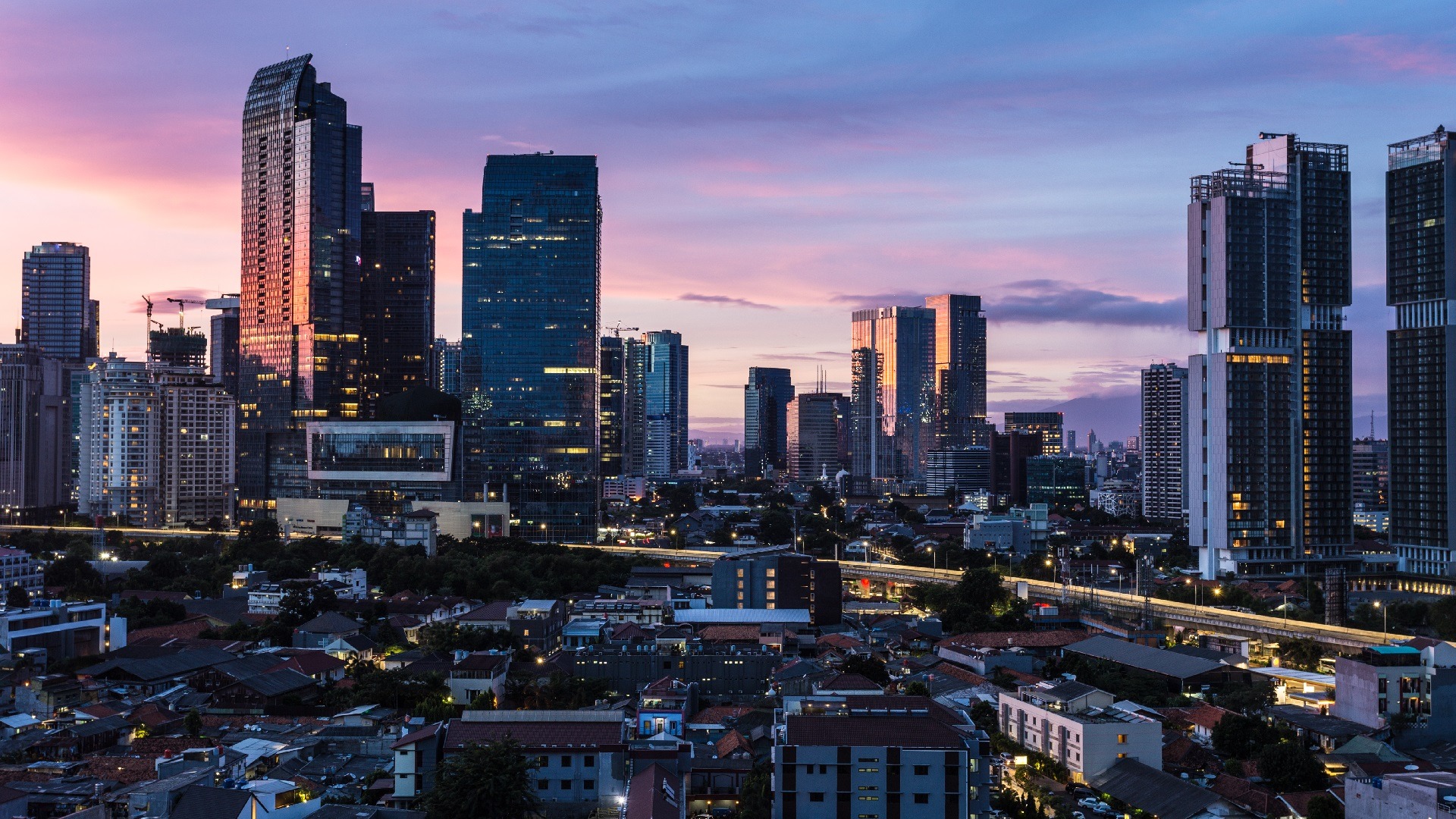

Indonesia’s capital, Jakarta, is facing growing political and security tensions after a wave of protests escalated into violent clashes, raising fresh concerns about public unrest, government accountability, and the role of non-state groups in the country’s political landscape.
The unrest intensified in late August when thousands of people took to the streets in Jakarta and other cities to protest government policies, corruption, and broader governance issues.
Some demonstrations were also organized to commemorate the anniversary of major unrest that shook Indonesia last year.
On August 28, protests near Indonesia’s parliament reportedly turned violent after nightfall. Demonstrators blocked roads and, according to reports, some individuals threw stones and sticks at police officers.
Security forces responded with water cannons and tear gas to disperse crowds, while several transportation routes in the capital were disrupted or temporarily rerouted.
The government had already deployed thousands of police officers around key locations in Jakarta, particularly near the parliament building, in anticipation of large demonstrations and possible unrest.
The latest tensions are closely linked to events that occurred in 2025, when widespread protests and riots resulted in the deaths of 10 people and the arrest of nearly 7,000 individuals, according to Reuters.
This year’s demonstrations have therefore become not only a protest against current policies but also a platform for students and civil society groups to demand accountability for past violence.
A major demand of the protesters has been the swift passage of legislation that would allow authorities to seize assets linked to corruption.
Some demonstrators have also called for tougher penalties against individuals convicted of corruption-related crimes.
The situation deteriorated further after many protesters dispersed and smaller groups remained on the streets.
Reports from Jakarta indicated that riots broke out in several areas, with a police post and motorcycles set on fire as security forces attempted to restore order.
Attention has also focused on the role of GRIB Jaya, a powerful social organization that operates in various parts of Indonesia. Allegations emerged that individuals linked to the group were present in areas where violence occurred.
However, GRIB Jaya has denied directing its members to confront protesters.
The organization’s secretary-general, Zulfikar, stated that the group had not officially instructed members to engage with demonstrators and claimed that some members were present only to help protect local communities.
One of the most controversial incidents involved the death of businessman Bambang Setiyawan during the unrest.
Reports indicated that he was attacked amid the chaos, while social media users and some observers accused individuals allegedly linked to GRIB Jaya of involvement.
The organization has denied responsibility, and police investigations into the circumstances surrounding his death remain ongoing.
The incident has reignited debate about the role of organized civilian groups during major public demonstrations.
Human rights organizations have questioned why non-state actors appeared in situations that many believe should have been handled exclusively by government security forces.
Meanwhile, the Indonesian government has sought to reassure the public that security in the capital remains under control. However, recurring protests suggest that many underlying grievances remain unresolved.
On September 3, human rights groups organized another demonstration in Jakarta, demanding an independent investigation into the violence that occurred during the August protests.
These new rallies highlighted broader concerns about accountability, police conduct, the use of force, and the influence of political and social organizations during periods of unrest.
As Indonesia’s political and economic center, Jakarta plays a crucial role in the country’s stability. Continued unrest in the capital could affect transportation, business activity, education, and government operations.
President Prabowo Subianto is also facing increasing political pressure as his administration attempts to implement major policy initiatives.
Several government programs have sparked debate, including a nationwide free school meals program that recently came under scrutiny after reports that more than 2,000 students and teachers suffered suspected food poisoning incidents in different parts of the country.
Indonesia’s National Human Rights Commission has called for an investigation into the matter.
Analysts say the current unrest reflects broader frustrations over corruption, governance, economic conditions, accountability, and public trust in state institutions.
The challenge for the government will be balancing public order with the constitutional right to peaceful protest.
Indonesia, home to more than 280 million people and one of Asia’s largest economies, remains a country of significant regional and global importance.
As a result, prolonged instability in Jakarta could have wider implications for investment, economic confidence, and political stability.
Observers caution that allegations surrounding GRIB Jaya and other groups should be treated carefully, noting that investigations are still underway and that responsibility for many of the violent incidents has not yet been conclusively established.
For now, Jakarta remains on edge. While the large-scale demonstrations of late August have subsided, commemorative rallies and calls for accountability continue.
Whether the government can address public grievances through dialogue and credible investigations may determine whether tensions ease or whether the capital faces another cycle of confrontation in the months ahead.