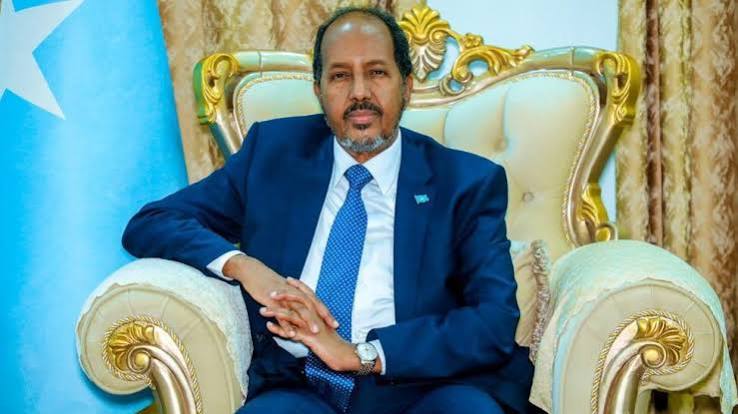
Consequently, any summit bringing together the leaders of Somalia, Egypt, Eritrea, and Sudan is monitored with keen interest, as all four nations are deeply involved in multiple matters directly or indirectly shaping security across the Horn of Africa and the Red Sea corridor.
President Hassan Sheikh’s meeting with Abiy Ahmed in Addis Ababa is also pivotal for Somalia, given that both governments have navigated varying phases of diplomatic strain and reconciliation over recent years.
Both sides are currently keen to reinforce their bilateral diplomatic channels and security cooperation.
Ethiopia places vital importance on Somalia concerning border security and the ongoing offensive against Al-Shabaab, whereas Somalia maintains that bilateral ties must firmly rest on mutual respect for Somalia’s sovereignty and territorial integrity.
Economic and commercial interests also bind the two nations.
The wider region is presently experiencing intense competition over port access, Red Sea maritime shipping lanes, and regional trade integration.
Meanwhile, Ethiopia faces mounting security pressures. Recent regional reports indicate that fighting has re-emerged in the Tigray region, with Addis Ababa alleging that Eritrea, Sudan, and Egypt have extended support to factions opposing the central government in Addis Ababa—allegations that the targeted countries have rejected or denied.
Another critical dimension surrounding President Hassan Sheikh’s diplomatic tour is the robust defense framework shared by Somalia and Egypt.
Somalia and Egypt formalized a defense pact aimed at expanding security and military cooperation.
Villa Somalia underscored at the time that the agreement is designed to scale up bilateral partnership in counter-terrorism and defense infrastructure.
Egypt is also part of the AUSSOM framework, and the Egyptian government has officially stated its readiness to dispatch troops to Somalia.
In February 2026, the President of Somalia was in Egypt for an event preparing the Egyptian forces designated for the African Union Support and Stabilization Mission in Somalia.
However, a report released in September indicated that the deployment of Egyptian forces has experienced delays due to issues related to funding, logistics, and operational planning.
Therefore, although the presence of Egyptian troops in Somalia is a pre-announced plan, the exact timeline and precise framework of their rollout remain subject to official confirmation.
The primary question arising from these new geopolitical maneuvers is whether the rift between Egypt and Ethiopia could impact Somalia.
Geographically and politically, Somalia occupies a crucial strategic position due to its proximity to Ethiopia, the Red Sea, and the Gulf of Aden.
Consequently, Somalia’s diplomatic ties with Egypt, Ethiopia, Eritrea, and Djibouti are directly intertwined with the broader regional security climate.
Whether the dispute between Egypt and Ethiopia will directly transform into a direct conflict played out on Somali soil cannot currently be guaranteed.
What can be confirmed, however, is that Egypt has deepened its security cooperation with Somalia, while both Ethiopia and Somalia are simultaneously engaged in efforts to stabilize their own bilateral relationship.
It is also vital to note that Somalia has no desire to let its territory become a proxy theater for competing regional powers.
The Federal Government continues to seek broad partnerships with all actors while strictly safeguarding core Somali national interests.