

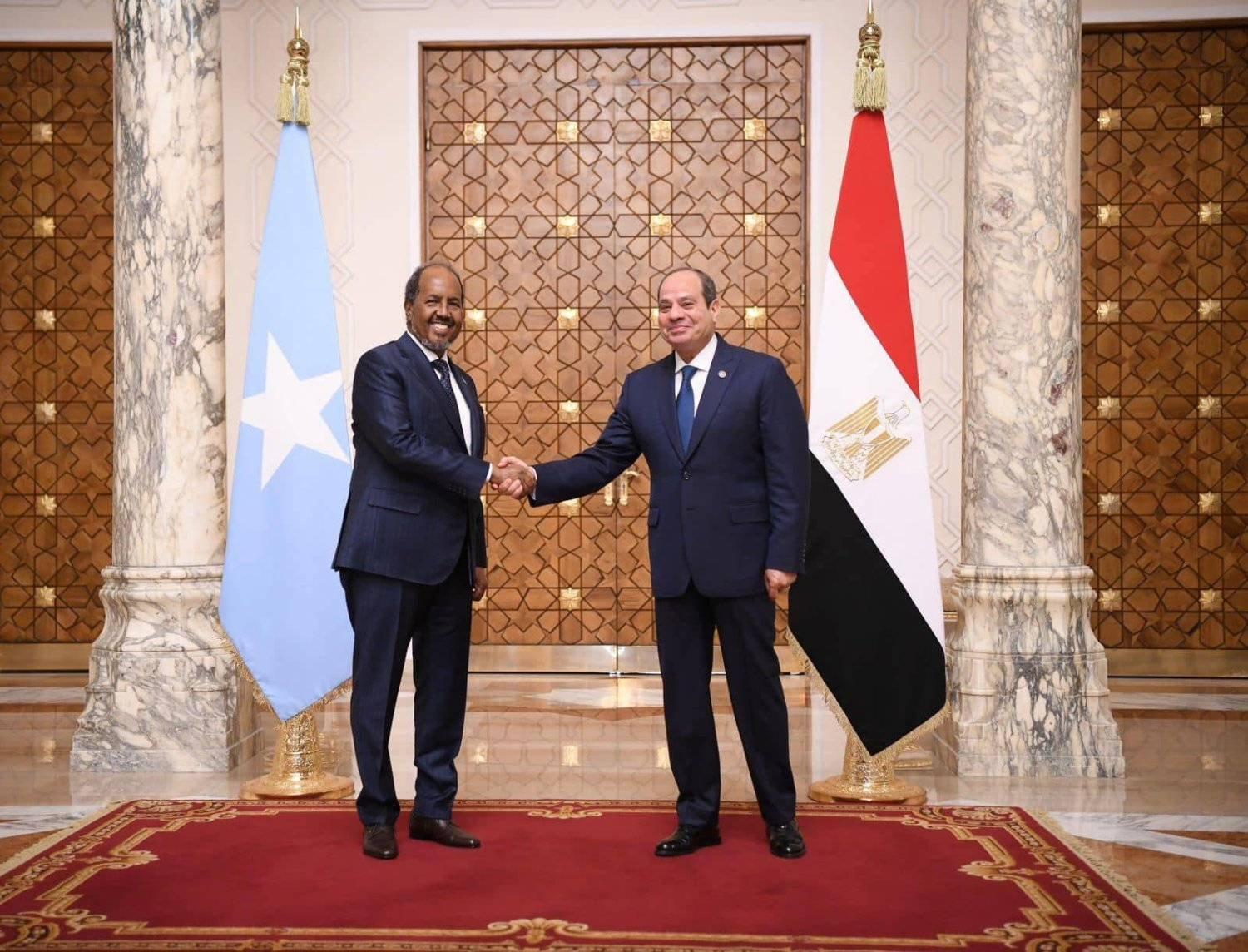

Somalia has increasingly become a focal point for geopolitical competition in the Horn of Africa, attracting the attention of regional powers and major international players seeking political influence, economic opportunities and strategic military partnerships.
Its long coastline, access to important maritime routes, port infrastructure and potential natural resources have made the country an important destination for foreign investment and diplomatic engagement.
Situated along the Gulf of Aden and the Indian Ocean, Somalia occupies a strategically important position close to the Bab al-Mandab Strait, one of the world’s key maritime chokepoints connecting the Red Sea to the Gulf of Aden and the wider Indian Ocean.
The route is vital to international shipping, energy transportation and trade between Asia, Europe and the Middle East.


This strategic location has encouraged foreign governments to pursue partnerships involving port development, maritime security, military cooperation, infrastructure and access to natural resources.
However, the growing presence of external powers has also raised concerns about whether foreign investment is primarily contributing to Somalia’s recovery or being used to advance competing political and military interests.
A report published by Chatham House on October 16, 2026, warned that rivalries between foreign governments could deepen Somalia’s domestic political divisions and increase the risk of a prolonged conflict.
The analysis highlighted the growing importance of Turkey and the United Arab Emirates in Somalia’s current political crisis, noting that their relationships with different Somali political actors could reinforce existing divisions.
A separate study published by the International Institute for Strategic Studies (IISS) in January 2026 examined the competition over ports, foreign military facilities and maritime security across the Horn of Africa.
It also explored how external interests interact with the region’s internal political disputes, particularly those involving Somalia and Somaliland.
Turkey: Expanding military, economic and political engagement


Turkey has developed one of the most extensive bilateral partnerships with Somalia over the past decade.
Its engagement began with humanitarian assistance during the 2011 famine but has since expanded into infrastructure development, military training, defence cooperation, maritime security and energy exploration.
Ankara operates the TURKSOM military training facility in Mogadishu, established in 2017, where Somali soldiers receive military instruction.
Turkey has also become an important defence partner, supplying equipment and supporting the development of Somalia’s security institutions.
Turkish companies have played a role in managing major infrastructure, including Mogadishu’s port and international airport.
The two governments have also expanded cooperation in maritime security and energy exploration, reflecting Ankara’s growing economic and strategic interests in the country.
The relationship has become particularly significant since the signing of a defence and economic cooperation agreement in 2024. Subsequent arrangements have strengthened Turkey’s involvement in Somalia’s maritime and military sectors.
A May 7, 2026, analysis by the Royal United Services Institute (RUSI), titled The New Scramble: Turkey, Somalia and the Battle for the Red Sea, examined how Turkey’s military presence and growing interest in Somalia’s energy resources have transformed the relationship into a broader strategic partnership.
The UAE: Port investments and relationships with regional administrations


The United Arab Emirates has maintained significant economic and security interests in Somalia, particularly through investments in port infrastructure and relationships with regional administrations.
Dubai-based DP World has been involved in the development and operation of Berbera Port in Somaliland, while Emirati commercial and security interests have extended to Puntland and Jubaland.
These relationships have given the UAE an important presence along Somalia’s coastline and in the wider Gulf of Aden region.
The UAE’s engagement has also become a source of disagreement between Mogadishu and some federal member states.
In January 2026, Somalia’s Federal Government announced the cancellation of agreements with the UAE covering ports, defence and security cooperation, accusing Abu Dhabi of undermining national sovereignty.
Somaliland, Puntland and Jubaland rejected the federal government’s decision, maintaining that their respective arrangements with the UAE remained valid.
The disagreement exposed broader questions about the constitutional authority of the Federal Government, the powers of regional administrations and who has the right to negotiate international agreements involving ports and security.
Chatham House has identified the UAE’s relationships with federal member states opposed to Mogadishu as an important part of its regional influence.
Its October analysis also warned that competing foreign relationships could deepen Somalia’s internal political divisions.
Ethiopia: Seeking access to the sea


Ethiopia’s interest in Somalia is closely connected to its position as a landlocked country and its longstanding search for reliable access to international maritime trade routes.
The issue became a major diplomatic dispute in January 2024, when Ethiopia and Somaliland signed a memorandum of understanding concerning access to the sea.
The agreement triggered strong opposition from Mogadishu, which argued that any arrangement affecting Somali territory or sovereignty required the consent of the Federal Government.
The disagreement raised tensions between the two countries and became one of the most significant diplomatic disputes in the Horn of Africa.
The December 2024 Ankara Declaration, facilitated by Turkey, helped reopen diplomatic engagement. Somalia and Ethiopia agreed to pursue commercial maritime access arrangements under Somalia’s sovereign authority, providing a framework for further negotiations.
Ethiopia’s search for sea access remains an important regional issue because it involves not only trade and economic development but also port infrastructure, security arrangements and the balance of influence along the Red Sea and Gulf of Aden.
Egypt: Regional security and competition with Ethiopia


Egypt’s growing engagement with Somalia is closely connected to its wider security interests in the Horn of Africa and its longstanding dispute with Ethiopia over the Nile River.
Cairo considers developments in the region important to its national security, particularly as Ethiopia pursues greater regional influence and access to maritime routes. Egypt has consequently strengthened its diplomatic and security relationship with Mogadishu.
The two countries have expanded cooperation in defence and security, with Egypt also becoming involved in discussions surrounding Somalia’s security transition and international military support.
Their partnership has wider regional implications because it intersects with the dispute over the Grand Ethiopian Renaissance Dam, Ethiopia’s maritime ambitions and the changing security balance in the Horn of Africa.
For Somalia, cooperation with Egypt offers opportunities to strengthen diplomatic and security relations.
However, maintaining an independent foreign policy remains important to ensuring that the country does not become an arena for disputes between other regional powers.
Saudi Arabia and Qatar: Growing Arab diplomatic interests


Saudi Arabia and Qatar also maintain important political, economic and diplomatic relationships with Somalia, although their interests and approaches differ.
Saudi Arabia’s engagement is influenced by its interest in Red Sea security, maritime trade routes and stability across the Horn of Africa.
The security of shipping lanes connecting the Red Sea, Gulf of Aden and Indian Ocean is particularly important to the kingdom’s regional and economic interests.
Qatar, meanwhile, has maintained close diplomatic relations with Somalia’s Federal Government and has supported cooperation in development and other areas.
Doha’s engagement forms part of its broader diplomatic presence in the Horn of Africa and the wider Middle East.
Relations between Saudi Arabia and the UAE have also experienced significant differences over regional issues, particularly in Yemen. These competing interests have implications for their relationships with countries across the Horn of Africa, including Somalia.
As regional rivalries evolve, Mogadishu faces the challenge of maintaining constructive relations with both countries without allowing their disagreements to influence Somalia’s domestic political affairs.
The United States and China: Strategic competition between major powers


The United States and China have different but significant interests in the Horn of Africa, particularly concerning maritime security, trade, military access and regional influence.
Washington has maintained a security partnership with Somalia, including support for counterterrorism operations against Al-Shabaab and assistance to Somali security forces.
Its wider regional presence is also connected to protecting international shipping routes and maintaining security across the Gulf of Aden and Red Sea.
China’s interests include expanding trade and economic relations with African countries, protecting maritime commerce and strengthening its diplomatic presence across the continent.
Beijing also operates a military facility in Djibouti, giving it a strategic position close to major international shipping routes.
The competition between Washington and Beijing adds another dimension to the geopolitical environment surrounding Somalia.
Although their interests do not necessarily translate into direct confrontation inside the country, their wider strategic rivalry could influence infrastructure investment, diplomatic partnerships and security cooperation.
For Somalia, engagement with both powers can create opportunities for development and international support. However, it also requires careful diplomatic management to avoid becoming caught between competing global interests.
Does foreign investment contribute to instability in Somalia?

There is an important distinction between foreign governments investing in Somalia to advance their own interests and claims that they are deliberately financing the country’s destruction.
The latter is a serious allegation that requires specific evidence, including credible investigations, financial records or documented support for destabilising activities.
Nevertheless, foreign competition can contribute to instability through several channels.
One concern is the political support that external governments may provide to rival Somali actors. When foreign powers establish relationships with competing political leaders or administrations, domestic disagreements can acquire an international dimension, making compromise more difficult.
Security partnerships also require careful coordination. If military assistance, training and equipment are channelled through separate political or administrative structures without effective national oversight, they can complicate efforts to build a unified security system under accountable national institutions.
Port agreements and natural-resource contracts present another challenge.
Deals negotiated without transparency, clear legal authority or effective public oversight can generate disputes over ownership, revenue distribution and the division of powers between the Federal Government and federal member states.
Somalia’s involvement in wider regional disputes also carries risks. The country’s ports, coastline and military facilities could become strategically important to governments pursuing objectives that extend beyond Somalia’s own security and development priorities.
Chatham House’s October 2026 assessment warned that these external rivalries could reinforce existing political divisions, particularly when Somali political actors seek foreign backing to strengthen their positions against domestic opponents.
The report also highlighted the danger that prolonged political and armed confrontations could weaken operations against Al-Shabaab and other armed groups.
Who is responsible for protecting Somalia’s sovereignty?

Although foreign governments pursue their own national interests, the primary responsibility for protecting Somalia’s sovereignty rests with Somali institutions and political leaders.
The Federal Government, federal member states, Parliament, political parties and civil society all have a role in establishing a coherent framework for managing international partnerships.
Major agreements involving defence, port management, natural resources and infrastructure should be negotiated transparently, with clear legal authority and appropriate parliamentary and public oversight.
The respective responsibilities of federal and regional administrations also need to be clearly defined to prevent competing agreements from becoming sources of political confrontation.
Equally important is the development of a unified national security structure, with military cooperation and foreign assistance coordinated through accountable institutions rather than competing political interests.
Somalia also needs a consistent foreign policy that allows it to maintain relationships with different international partners without becoming dependent on any single power or drawn into rivalries that do not serve its national interests.
The country’s strategic location gives it opportunities to attract investment, strengthen maritime security and develop international partnerships.
Whether those opportunities contribute to long-term stability will depend not only on the intentions of foreign governments but also on Somalia’s ability to establish strong institutions, resolve internal political disputes and negotiate with external partners from a position of national unity.