

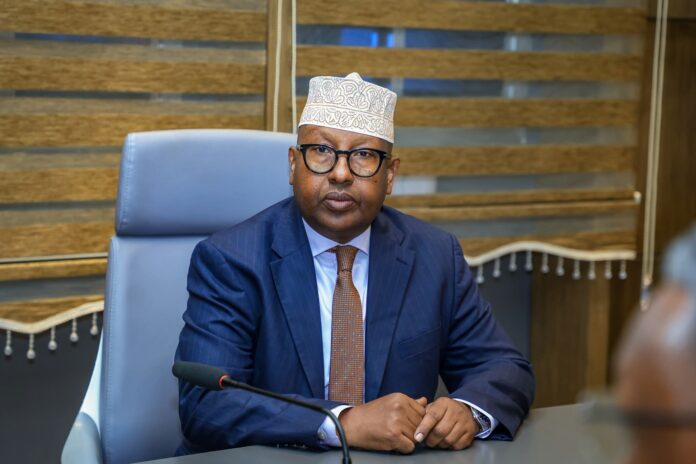

Somalia’s Minister of Defense, Ahmed Moallin Fiqi, has issued a strong warning to opposition politicians, stating that anyone involved in organizing militias or activities that threaten national security should face decisive action.
Speaking amid ongoing political tensions in the country, Fiqi said the government would not tolerate any attempts to undermine Somalia’s security or stability. He specifically warned against the formation of armed groups linked to political disputes.
“Anyone who raises a hand against the country’s security should not be shown leniency. If opposition figures organize militias, they should be dealt with firmly,” Fiqi said.
The minister emphasized that Somalia has paid a heavy price in lives and resources to restore security after decades of conflict. He argued that those sacrifices should not be jeopardized by political actors seeking to use armed force to advance their interests.
Fiqi’s remarks come at a sensitive political moment, with disagreements continuing between the Federal Government, opposition leaders, and some regional political figures over issues including elections, constitutional reforms, and governance.
The defense minister said maintaining security remains a national priority, particularly as Somali forces continue military operations against Al-Shabaab and prepare to assume greater responsibility for the country’s security as African Union forces gradually reduce their presence.
The warning is not the first time federal officials have accused opposition figures of attempting to militarize political disputes.
During previous political tensions and clashes in Mogadishu, government officials alleged that some opposition groups were relying on armed supporters to strengthen their political position.
Opposition figures, however, have at times accused the government of using state security institutions to exert political pressure on its rivals. These competing claims have contributed to a broader debate over the relationship between politics and security in Somalia.
Analysts note that Somalia’s history demonstrates the dangers of political disputes escalating into armed confrontations. Such conflicts have often resulted in civilian casualties, displacement, property destruction, and setbacks to state-building efforts.
Fiqi’s comments also coincide with ongoing efforts to strengthen Somalia’s security institutions.
Earlier this month, Mogadishu hosted the National Internal Security Conference, where officials discussed plans for Somalia to take full responsibility for national security as the African Union Support and Stabilization Mission in Somalia (AUSSOM) gradually scales down its role.
The Somali government has repeatedly stated that it aims to build professional, accountable, and self-sustaining security forces capable of independently protecting the country.
However, challenges related to funding, equipment, training, and force development remain significant.
While the government has a responsibility to prevent illegal armed groups from operating, observers stress that any security measures should be carried out in accordance with the law and with respect for citizens’ rights.
They also note that allegations against political actors should be supported by credible evidence.
Fiqi’s statement highlights the delicate balance Somalia faces between safeguarding national security and managing political disagreements through peaceful and constitutional means.
As political tensions continue, many observers argue that dialogue and legal processes remain the most effective path for resolving disputes and preventing further instability.