


Saudi Arabian officials believe the United Arab Emirates (UAE) played a significant role in facilitating Israel’s recognition of Somaliland, according to a report by the European Council on Foreign Relations (ECFR).
The report also suggests that Saudi officials view the development as potentially linked to Israel’s strategic and security interests in the port city of Berbera.
The assessment was outlined in an ECFR analysis authored by Gulf affairs expert Cinzia Bianco.
According to the think tank, the information reflects views expressed by Saudi officials during interviews conducted as part of its research into growing Emirati influence and regional competition between Riyadh and Abu Dhabi.
ECFR reported that Saudi officials believe the UAE helped strengthen ties between Israel and Somaliland and may have played a role in paving the way for diplomatic engagement between the two sides.
Berbera, a strategically located port on the Gulf of Aden, is viewed by some Saudi officials as an area of interest for Israel’s security and intelligence objectives in the Red Sea region.
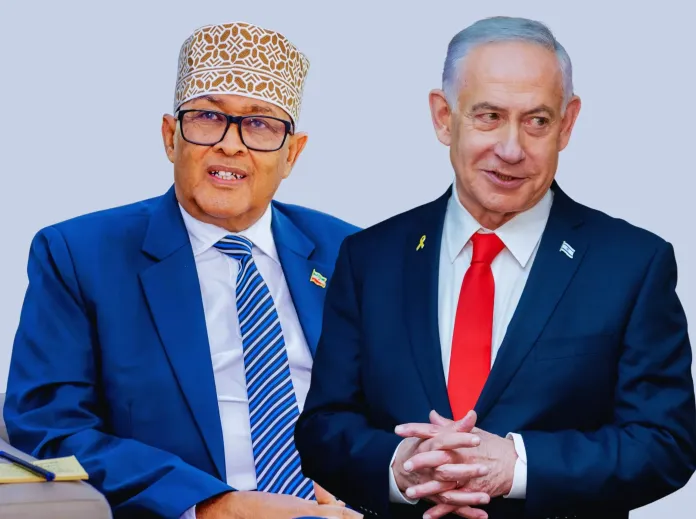
On December 26, 2025, Israel became the first United Nations member state to formally recognize Somaliland as an independent country.
Israeli Prime Minister Benjamin Netanyahu announced the decision, and both sides signed a joint declaration outlining their new relationship. Somaliland also expressed interest in joining the Abraham Accords framework.
The recognition triggered strong reactions across the region.
Somalia condemned the move as a violation of its sovereignty and territorial integrity, while the African Union reaffirmed its support for Somalia’s internationally recognized borders and rejected Somaliland’s recognition.
Berbera’s strategic location has made it a focal point of regional interest. Situated near the Bab el-Mandeb Strait, one of the world’s most important maritime trade routes, the port serves as a gateway between the Red Sea and the Indian Ocean.
Its position has increased its importance for international shipping, trade, and security operations.
Reuters and other international observers have previously highlighted Berbera’s strategic value.
The UAE, through Dubai-based DP World, has invested heavily in the development and management of Berbera Port and related infrastructure, giving Abu Dhabi a significant economic presence in Somaliland.
According to ECFR, Saudi officials suspect that Israel’s growing relationship with Somaliland may be connected to broader security interests in the Red Sea and Gulf of Aden.
The report notes that some officials believe Israel could seek intelligence-gathering capabilities or a limited security presence in Berbera to monitor regional threats, including activities by Yemen’s Houthi movement.
However, ECFR did not present any official agreement or independently verified evidence showing that Israel’s recognition of Somaliland was exchanged for security access in Berbera.
As a result, such claims remain assessments attributed to Saudi officials rather than established facts.
The report also states that analysts have linked Israel’s interest in Somaliland to wider regional security concerns, including maritime security and monitoring developments in Yemen.
Some discussions have focused on the possibility of future intelligence cooperation and security partnerships, although no formal military arrangement has been publicly confirmed.
ECFR further argues that Berbera has become part of a broader network of ports, commercial investments, and security partnerships developed by the UAE across the Red Sea and the Horn of Africa.
Through investments in infrastructure and logistics, Abu Dhabi has expanded its influence in several strategically important locations throughout the region.
The issue comes amid increasing geopolitical competition between Saudi Arabia and the UAE.
While the two Gulf powers remain close partners on many issues, they have also developed differing approaches to regional affairs, including policies related to Yemen, the Red Sea, and the Horn of Africa.
The Federal Government of Somalia has consistently opposed Israel’s recognition of Somaliland and continues to maintain that Somaliland remains an integral part of Somalia.
Mogadishu has also expressed concerns over the growing ties between Somaliland, Israel, and the UAE, particularly regarding developments in Berbera.
If Israel were to establish any form of security or intelligence presence in Berbera in the future, it could further elevate Somaliland’s strategic importance in the Red Sea region.
At the same time, such a development would likely intensify diplomatic tensions, given Somalia’s firm opposition to any actions that treat Somaliland as a sovereign state.
As regional competition in the Red Sea and Horn of Africa continues to evolve, Berbera’s strategic location and growing international interest are expected to remain central to broader geopolitical debates involving Somalia, Somaliland, Gulf states, and global powers.