


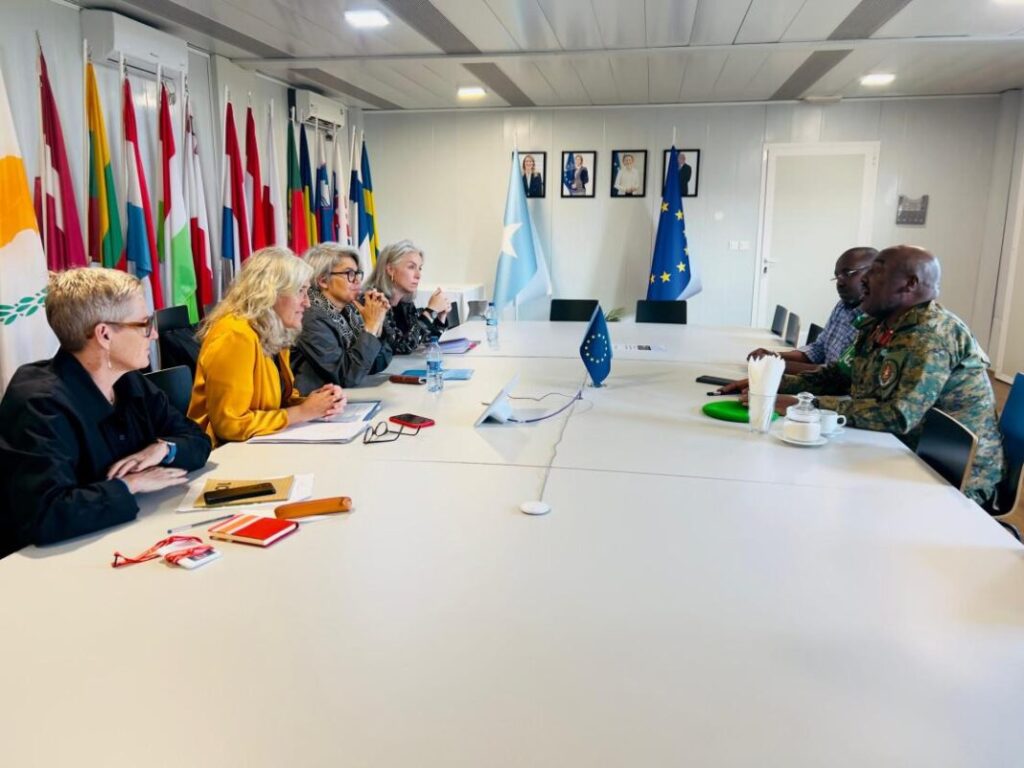


Leaders of the Federal Government of Somalia and opposition leadership are expected to hold a political dialogue summit in Mogadishu aimed at resolving the dispute surrounding the country’s electoral framework.
According to officials closely monitoring the planning of the talks who spoke to Inside Somalia, the summit is scheduled to take place between November 15 and 18, 2026, with mediation supported by the United States, the United Kingdom, Turkey, and the European Union.
These talks come as political friction persists between Villa Somalia and opposition factions, centering on the future of elections, constitutional amendments, and the management of upcoming polls.
The Electoral Dispute as the Core Issue
The primary agenda item expected at the negotiating table is the methodology and administration of Somalia’s upcoming elections.
The Federal Government seeks to press forward with universal suffrage (one-person, one-vote) elections, whereas opposition figures argue that national elections must be governed by an inclusive political agreement involving all stakeholders.
The opposition further contends that a single faction should not be permitted to unilaterally dictate the electoral timeline, procedural rules, or governing bodies.
Reports emerging from Villa Somalia indicate that the administration aims for the summit to yield a political compromise steering the nation toward mutually agreed elections.
What Is Expected from the U.S., UK, Turkey, and the EU?
The four international partners facilitating the talks hold vital political, security, and diplomatic interests in Somalia.
The involvement of these nations and the European Union underscores the international community’s emphasis on resolving political disputes through dialogue rather than confrontation.
The opposition had previously requested a prominent role for the international community in mediation to establish a framework built on mutual trust.
How Will the 2027 Election Schedule Be Addressed?
One of the most contentious issues expected to be debated is the previously announced electoral calendar.
The electoral commission scheduled parliamentary elections for both houses of the Federal Parliament on April 15, 2027, while setting the presidential election for May 15, 2027.
However, the opposition rejects this schedule, arguing it lacks consensus on an inclusive electoral framework.
For its part, the government insists on moving away from the legacy indirect electoral model and transitioning to universal suffrage.
Supreme Court Ruling May Compound Pressures on the Talks
Another critical factor set to weigh heavily on the summit is the constitutional dispute and the tenure of state institutions.
A report published by the Associated Press on November 7, 2026, noted that the Supreme Court adjudicated the presidential term controversy, rejecting the government’s interpretation that constitutional amendments permit the incumbent president to remain in office through 2027.
This development threatens to intensify political pressure during the negotiations, given the profound divergence between the two sides regarding the legality of institutional term limits and the appropriate electoral pathway.
Three Factors That Will Determine the Summit’s Outcome
Three specific dimensions will be closely monitored:
1. Electoral Agreement: Whether the government and opposition reach consensus on the electoral model and timeline.
2. Electoral Management Body: Establishing a collaborative, trusted framework to administer the polls.
3. Constitution and Term Limits: Securing a political and legal resolution to the existing constitutional crisis.
Should these issues remain unresolved, achieving a substantive shift in the nation’s political trajectory will prove exceedingly difficult.
What Happens If the Talks Fail?
A breakdown in negotiations would prolong the rift between Villa Somalia and the opposition, generating acute political uncertainty regarding the state’s direction.
It could also exacerbate tensions between the federal government and regional member states, undermining the political cohesion and coordination essential for national security and the ongoing campaign against Al-Shabaab.
Conversely, a successful electoral accord could enable the country to secure a universally accepted political framework, facilitating peaceful and stable elections.