


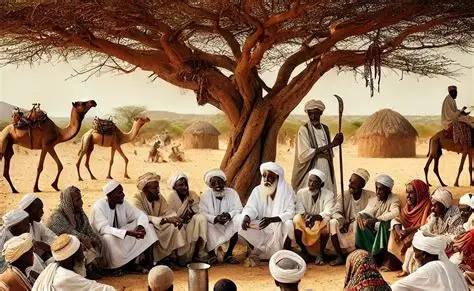


Somalia has long debated the role of clan in politics and state-building. While clan remains an important social system, its influence over political power and government appointments raises a key question: does clan-based politics promote representation and stability, or hinder the development of strong national institutions?
The debate has become particularly important as Somalia moves toward a more formal electoral and constitutional system.
The country adopted a new Constitution in 2026, while efforts to establish direct elections and strengthen national institutions continue. Yet clan considerations remain influential in political negotiations and the distribution of power.
Clan identity itself is not a political invention. For generations, Somali communities have relied on clan networks for social relations, mutual assistance, mediation and conflict resolution.
The problem arises when clan identity moves beyond its traditional social role and becomes the primary mechanism through which political power is obtained or distributed.
In political contests, the question of “What can this person contribute?” can sometimes be overshadowed by “Which clan does this person belong to?” This has contributed to the perception that Somali politics is largely driven by clan interests.
At the same time, it is important to distinguish between a politician’s clan identity and the claim that the person obtained a position because of that identity. The latter requires evidence rather than assumption.
The 4.5 formula emerged during Somalia’s post-civil-war political reconstruction as an arrangement intended to ensure representation for the country’s major clan families and minority communities.
Under the model, the four major clan-family groupings receive equal shares, while minority communities collectively receive the “0.5” share.
The system was designed as a mechanism for inclusion at a time when Somalia was attempting to rebuild political institutions after years of conflict.
It helped bring different communities into the political process, but critics argue that it also institutionalized clan identity within political competition.
Although the 4.5 formula was not formally incorporated into Somalia’s 2012 Provisional Constitution, it continued to play a major role in political representation in practice.
Research on Somalia’s political system has found that clan considerations have also influenced appointments and power-sharing beyond parliament.
This raises a fundamental question: has a system originally intended as a temporary mechanism for inclusion become an obstacle to the development of a modern, citizenship-based political system?
President Hassan Sheikh Mohamud’s clan background is frequently discussed in Somalia’s political debate. However, the fact that a president belongs to a particular clan does not, by itself, demonstrate that his government is organized along clan lines.
Hassan Sheikh was elected president through the federal parliamentary system in 2022. He secured 214 votes in the final round of the presidential election, defeating former President Mohamed Abdullahi Mohamed “Farmaajo.”
The more substantive question concerns how government positions, security institutions, political appointments and resources are distributed.
If several strategically important positions are perceived to be concentrated within the same clan or political network, it can generate concerns about inclusiveness and the concentration of power.
A recent analysis of Somali politics, for example, has highlighted concerns over the concentration of influential positions in Villa Somalia, Banadir and Hirshabelle, while also stressing that members of any clan should not be excluded from public office simply because of their identity.
The distinction is therefore important: clan identity is a fact about an individual; discriminatory or preferential appointment on the basis of clan is a separate claim that requires evidence.
Hirshabelle provides one of the clearest examples of how clan and regional power-sharing intersect.
The federal member state consists of Hiiraan and Middle Shabelle, with Jowhar serving as its capital. Its political history has repeatedly been marked by disagreements over how power should be distributed between the two regions and their major political constituencies.
President Ali Abdullahi Hussein Guudlaawe is associated with the Abgaal clan, while political figures from Hiiraan, particularly those associated with the Hawadle, have repeatedly raised questions about political representation and the distribution of senior positions.
Those disagreements have become particularly visible ahead of the next Hirshabelle leadership contest.
In September 2026, some Hawadle elders and politicians called for electoral activities in Hiiraan to be suspended until an agreement was reached on power-sharing, while another Hawadle political council expressed support for Guudlaawe and participation in the planned election.
This demonstrates that the challenges facing Hirshabelle cannot be reduced to clan identity alone. Security concerns, political competition, economic limitations and disagreements between the federal government and member states also contribute to the state’s political tensions.
Security institutions are among the areas where clan politics is particularly sensitive.
The army and police are intended to function as national institutions rather than representatives of individual clans. If communities perceive a security institution as being dominated by members of one particular clan, public confidence in that institution can be weakened.
Likewise, if senior commanders are perceived to have received their positions primarily because of clan connections, it can become more difficult to convince the public that security institutions are politically neutral.
For Somalia, this issue is closely connected to the legacy of the civil war, when clan-based militias became major actors in the country’s security and political landscape.
Building a professional national security sector that citizens from different communities trust therefore remains an important part of state-building.
Mogadishu is the seat of Somalia’s federal government, Parliament, diplomatic missions and major national institutions. As a result, the position of the Banadir regional administration and mayor of Mogadishu carries considerable political significance.
Appointments involving the Banadir administration frequently generate debate about representation, the city’s diverse communities and its relationship with the federal government.
The clan debate in Mogadishu is therefore not simply about who holds a particular position. It is also connected to wider questions over political influence, administration and control of the capital.
Many Somalis view clan politics as one of the country’s greatest obstacles to development. But Somalia’s difficulties cannot be explained by clan identity alone.
The country has faced decades of civil conflict, insecurity, the threat posed by Al-Shabaab, corruption, weak state institutions, economic difficulties, unemployment, disputes between the federal government and federal member states, and interference or competition involving external powers.
Clan politics intersects with many of these problems, but it is not necessarily the sole cause.
For example, when a region suffers from poor security or inadequate public services, clan competition may contribute to the problem, but weak institutions, limited resources and political disputes can also be important factors.
Viewing clan identity entirely as a negative force would also provide an incomplete picture.
Clan networks have historically provided Somalis with systems of mutual support and mechanisms for resolving disputes. Traditional elders continue to play important roles in mediation, reconciliation and local conflict resolution.
The challenge comes when clan identity becomes a mechanism for distributing state power or evaluating individuals primarily according to their lineage rather than their qualifications and performance.
At that point, clan identity moves from being a social structure into a political instrument.
If Somalia wants to reduce the political influence of clan identity, it may not be realistic to attempt to eliminate clan structures from society.
A more practical objective is to build institutions in which citizenship, competence and performance increasingly determine access to public office.
Government positions should be based on qualifications, experience, integrity and the ability to perform the responsibilities of the office.
The army, police and other state institutions should function as genuinely national institutions in which citizens from all communities feel represented.
Somalia’s political system is also gradually moving toward direct electoral participation. The 2026 constitutional framework provides for a five-year parliamentary term, while the broader reform process has sought to establish a more direct electoral system.
However, moving away from clan-based power-sharing requires trust. Major clans and minority communities alike need confidence that a new system will provide fair political participation rather than simply transferring power from one group to another.
Ultimately, Somalia’s challenge is not necessarily to eliminate clan identity, but to ensure that clan is no longer the primary measure of political entitlement.
The long-term goal would be a system in which citizens can retain their social and cultural identities while the state operates according to equal citizenship, accountable institutions, merit and the rule of law.