


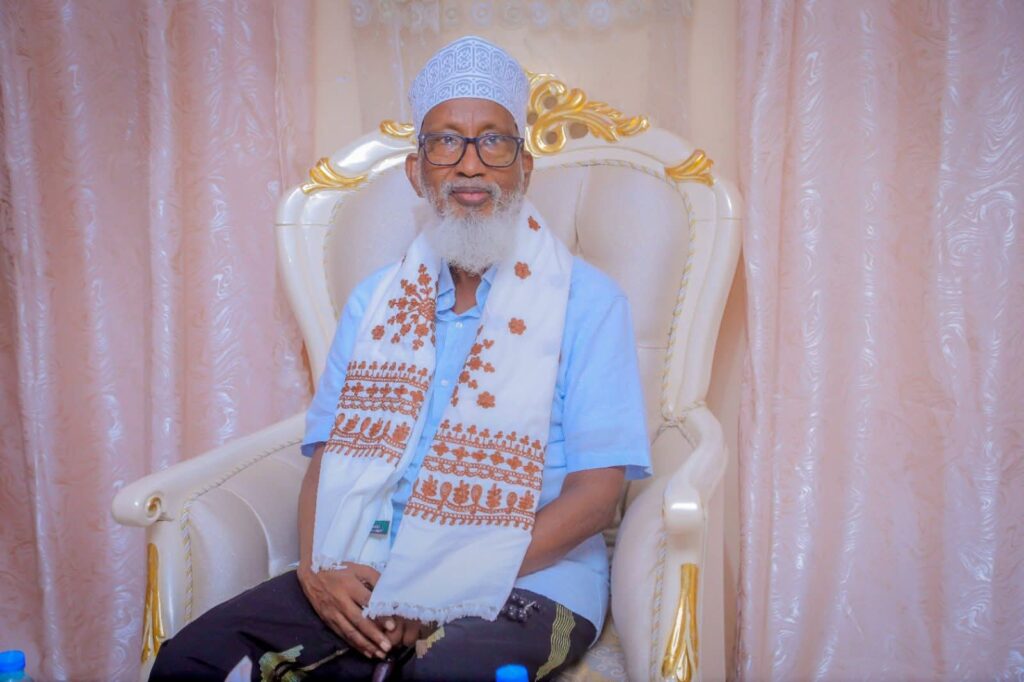


Mogadishu (Kaab TV) – The traditional leader of the Dishiishe clan, Ugaas Xasan Ugaas Yaasiin, has publicly denied claims that he granted authority or representation powers to his brother, Ibraahim Ugaas Yaasiin, amid growing controversy over clan leadership representation within Puntland.
In a written statement, Ugaas Xasan strongly rejected reports suggesting that Ibraahim had been officially authorized to represent him in traditional leadership affairs.
“As Ugaas Xasan Ugaas Yaasiin Ugaas Cabdiraxmaan, the overall traditional leader of the Dishiishe–Ahmed Harti clan, I firmly deny and condemn the false claims that I granted authority or representation to Ibraahim Ugaas Yaasiin, who claims to represent me in matters related to the traditional leadership of the clan,” the statement read.
The denial came just one day after members of the Dishiishe clan announced that they had selected Ibraahim Ugaas Yaasiin as the representative of Ugaas Xasan during a gathering attended by lawmakers, Puntland ministers, traditional elders, women, and youth representatives.
The issue has attracted significant attention within Puntland political and traditional circles because clan leadership structures often play an influential role in regional politics, conflict resolution, and community representation.
Previously, Cabdifitaax Ugaas Yaasiin had served as the official representative of Ugaas Xasan. However, his recent appointment by Puntland President Said Abdullahi Deni as Puntland’s Minister of Aviation and Airports appears to have created a leadership gap that some members of the clan sought to fill through the selection of a new representative.
Sources familiar with the matter say disagreements have recently emerged within sections of the Dishiishe community over questions of representation, influence, and political alignment, particularly as Puntland enters a politically sensitive period marked by ongoing disputes over governance, appointments, and clan influence in regional affairs.
Traditional elders in Somalia and Puntland continue to hold major influence in social and political matters, often acting as mediators in disputes and representing clan interests in negotiations with political leaders. As a result, disputes over traditional representation can quickly become politically significant within local communities.
The latest disagreement is expected to deepen debate within the Dishiishe clan over who has the legitimate authority to speak on behalf of the traditional leadership structure.