

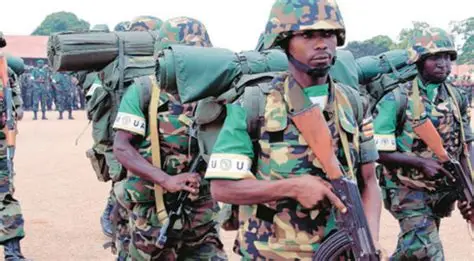

African Union (AU) member states are increasingly questioning how long the continent can sustain its peace support mission in Somalia, as shrinking international funding raises the possibility of an earlier-than-planned withdrawal of African troops.
During an emergency meeting of military advisers to the AU Peace and Security Council, Cameroon and Gabon stressed that every peace support operation must eventually come to an end.
The two countries urged Somalia to accelerate efforts to build self-sufficient national security institutions capable of assuming full responsibility for the country’s security, signaling a notable shift from previous discussions that focused on securing additional international funding for the mission.
Their remarks reflect growing concern among African governments over the financial and political burden of maintaining an open-ended military presence in Somalia.
The debate has intensified after the United States informed the African Union that it will no longer support the UN logistics package backing the mission beyond December 31, 2026, raising fresh uncertainty over the future of the African Union Support and Stabilization Mission in Somalia (AUSSOM).
According to meeting documents, the end of U.S. support would leave AUSSOM facing severe logistical challenges unless an alternative funding mechanism is secured.
The African Union has warned that losing the UN-backed logistical support would significantly affect the mission’s operational capabilities.
AUSSOM’s Heavy Reliance on UN Support
AUSSOM officially replaced the African Union Transition Mission in Somalia (ATMIS) on January 1, 2025, following authorization by the UN Security Council to continue supporting Somali forces in the fight against Al-Shabaab and ISIS while gradually transferring security responsibilities to Somali institutions.
The mission depends heavily on the United Nations Support Office in Somalia (UNSOS) for essential services, including food supplies, fuel, air transport, medical evacuations, strategic logistics, transportation, and equipment support.
AU officials warn that without this network, maintaining military bases, reinforcing vulnerable towns, and evacuating wounded personnel from combat zones in southern and central Somalia would become increasingly difficult.
For more than two decades, international partners have financed the majority of African Union peace operations in Somalia. The European Union has contributed nearly €2.8 billion since 2007 and approved an additional €75 million in April.
The United States has provided roughly $1.6 billion in bilateral support to troop-contributing countries and another $2 billion through UNSOS and its predecessor, while the United Kingdom and other international partners have also provided significant assistance.
However, donor support has come under increasing pressure as governments redirect resources to other global crises and call for Somalia to assume greater responsibility for its own security.
For the 2025–2026 financial year, AUSSOM required approximately $190 million to reimburse troop-contributing countries, but the African Union has secured commitments for only about $120 million.
AU Considers Exit Options
Military advisers discussed three possible scenarios for the mission’s future: a phased withdrawal of AU troops, continuation of the mission through bilateral donor funding replacing UNSOS, or maintaining a smaller regional force financed through bilateral or hybrid arrangements.
The latter two options attracted limited support because they would still require African countries to sustain an expensive military operation without guaranteed long-term external funding. As a result, a managed withdrawal—once viewed as the least desirable outcome—is increasingly being seen by several member states as the most realistic option.
Uganda, the largest troop contributor to AU missions in Somalia since 2007, has also begun calling for a clear exit strategy. Officials in Kampala have warned that Uganda “cannot remain in Somalia forever.” Morocco said it would announce its position after domestic consultations, while Ethiopia reaffirmed its commitment to supporting Somalia’s security efforts.
Security Risks Remain High
Despite discussions about a possible withdrawal, security analysts caution that a premature exit could have serious consequences. Al-Shabaab continues to control or influence large rural areas and regularly carries out attacks against Somali security forces, African Union personnel, and government targets in Mogadishu.
Although Somalia’s armed forces have expanded through years of international training, analysts say they still face significant logistical challenges and lack the independent operational capacity needed to secure the country without external support.
Mohamed Daud Ismail, a senior research assistant with the Armed Conflict Location & Event Data Project (ACLED), warned that without urgent international funding, AUSSOM could face operational collapse as it enters 2027.
He noted that losing UN logistical support would leave strategic towns and supply routes increasingly vulnerable, weaken medical evacuation capabilities, and potentially create new opportunities for Al-Shabaab to exploit security gaps.
The debate marks a significant shift in the international conversation surrounding Somalia. Rather than focusing solely on extending support for Somalia’s security transition, AU member states are increasingly discussing how and when the mission should conclude without creating a security vacuum that militant groups could exploit.
For Somalia, the message emerging from African capitals is becoming increasingly clear: while foreign troops and international donors remain essential for now, their support is unlikely to continue indefinitely.